St Mary’s Church
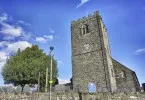
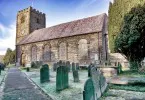
St Mary’s Church, Dolgellau, is a Grade II listed building standing on the site of a medieval one, dating back to at least 1254 when it was mentioned in records. The current church is rare (for Wales) being Early Georgian, it was built AROUND the old one, which still continued to hold services. The old church was only demolished when the new one was completed (around 1716-1723) and then the old building was removed from within it.
The font from the original church, built circa 1250, is on display near the entrance. This was placed during the time of John Ellis, who was Rector from 1646-1665 and was also founder of the Dolgellau Grammar School. A chantry alter is recorded as having been located in the church in 1558.
The church contains a 14th century Effigy of Meurig ap Ynyr Fychan, an ancestor of Hywel Sele and the Nanney/Vaughan families of nearby Nannau. This used to lay in the chancel of the old church, but was moved to one of the north windows. A piece of the wall was removed to accommodate his feet. His sword is dated 1723, when the nave was completed.
The nave was constructed using dressed slate stones and the wooden posts were brought over the hills from Dinas Mawddy using oxen. They used to have brass coffin plates nailed to them, which was a custom at the time, but these have now been removed.
The tower was probably begun around 1727. The churchyard was extended to the north-west by ten roods in 1792.
There was also major restoration in 1864 and the chancel arch dates to this time. A central window was inserted in 1901.
The upper room (on the western end) was added in 1992 by Roy Olsen of Dolgellau. It is bow-fronted with arched windows.
Welcome to Dolgellau
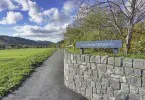
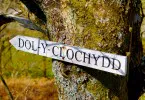
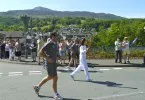
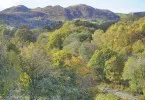
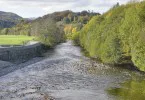
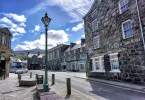
Dolgellau is set in the southern part of The Snowdonia National Park, at the foot of the Cader Idris (Cadair Idris) mountain range with three main routes to the summit.
A Blanket of Cloud Between Dolgellau and Cader Idris
The town is a great base for touring Snowdonia with many popular walks only two or three miles from the town centre. These include Torrent Walk and Precipice Walks (old and new). Another very popular walk/cycle ride starts from the town car park and runs nine miles along the old railway line to Barmouth on the coast. This is the Mawddach Trail (or “Llwybr Mawddach” in Welsh). This walk was featured on Julia Bradbury’s “Railway Walks” series on the BBC a couple of years ago. There is also a very nice pub (the George III) after three miles.
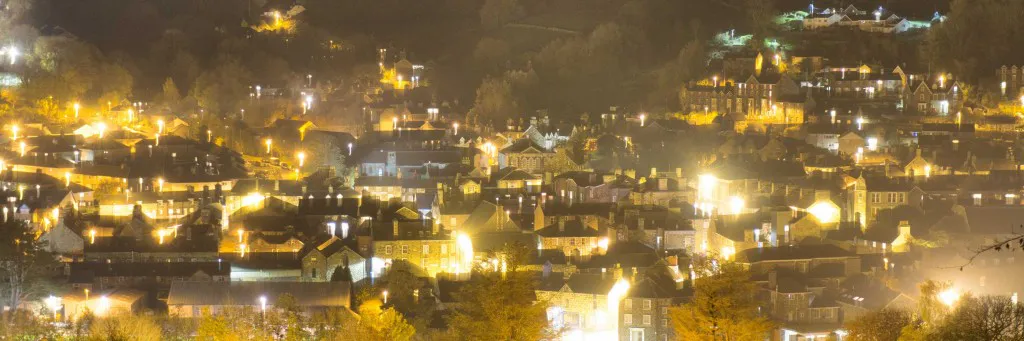
Dolgellau at Night
The area boasts abundant wildlife, including two Osprey nest sites about an hours drive away (one to the north at Glaslyn and another one to the south by the river Dyfi). There is a great deal of bird life around the Mawddach Estuary and the woods and countryside.
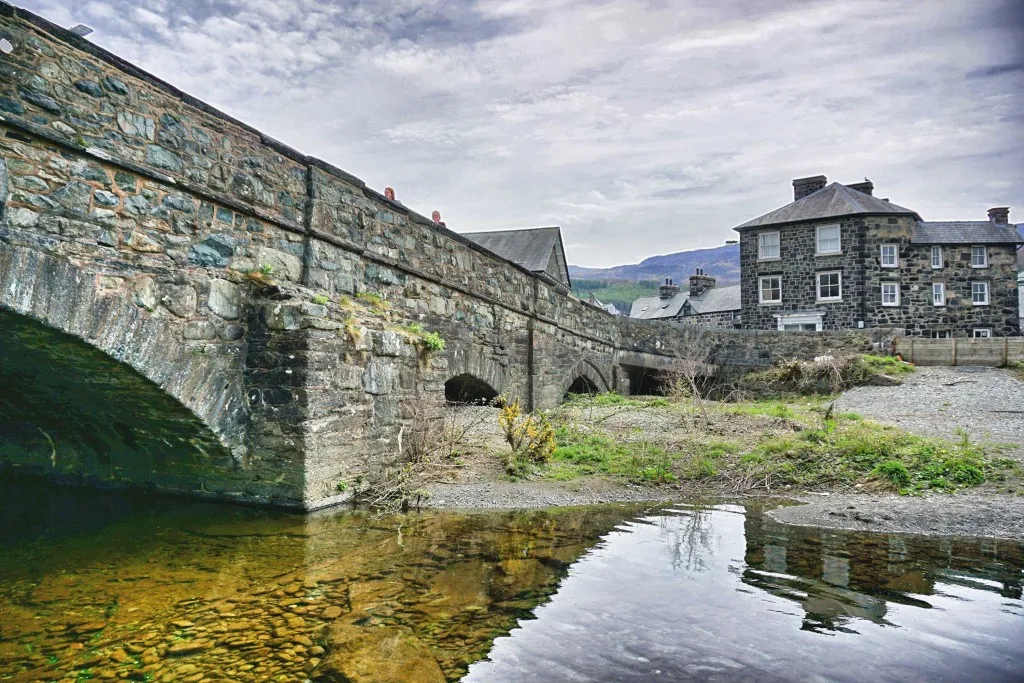
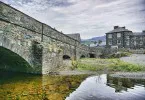
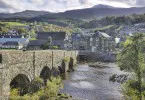
Dolgellau and Y Bont Fawr Bridge
Dolgellau is steeped in history and was formerly the county town of Merionethshire (now Gwynedd). The remains of historic Cymer Abbey (founded in 1198) can also be seen in the nearby village of Llanelltyd. This is again within walking distance of the town (being around a mile and a half away). The route also passes through the Dolgellau (nine-hole) Golf Course, which also serves tea.
Remnants of the ‘gold rush’ of the nineteenth century can still be seen and some of the gold mines can still be found, as well as a Copper Mine at Glasdir (a pleasant three mile walk/cycle ride on a nice quiet road). The town and local area was also the main focal point for the development of the Quakers who were established here after a visit by George Fox in 1657.
Other local attractions a car drive away include many of the Great Little Trains of Wales.
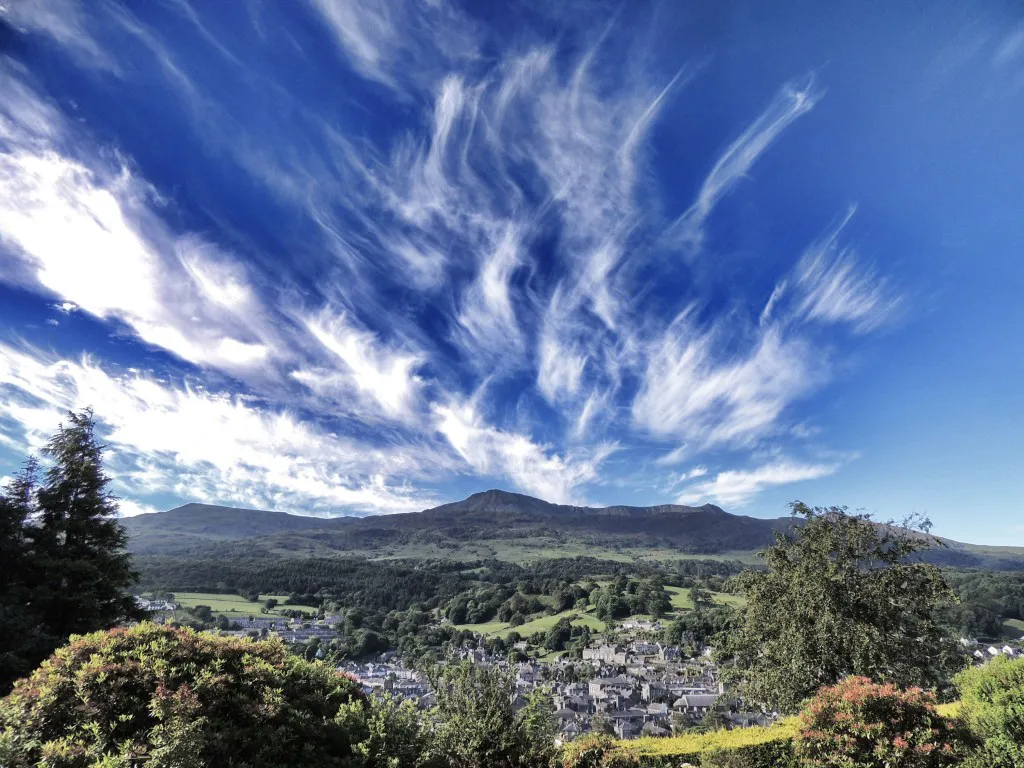
Dolgellau Skies
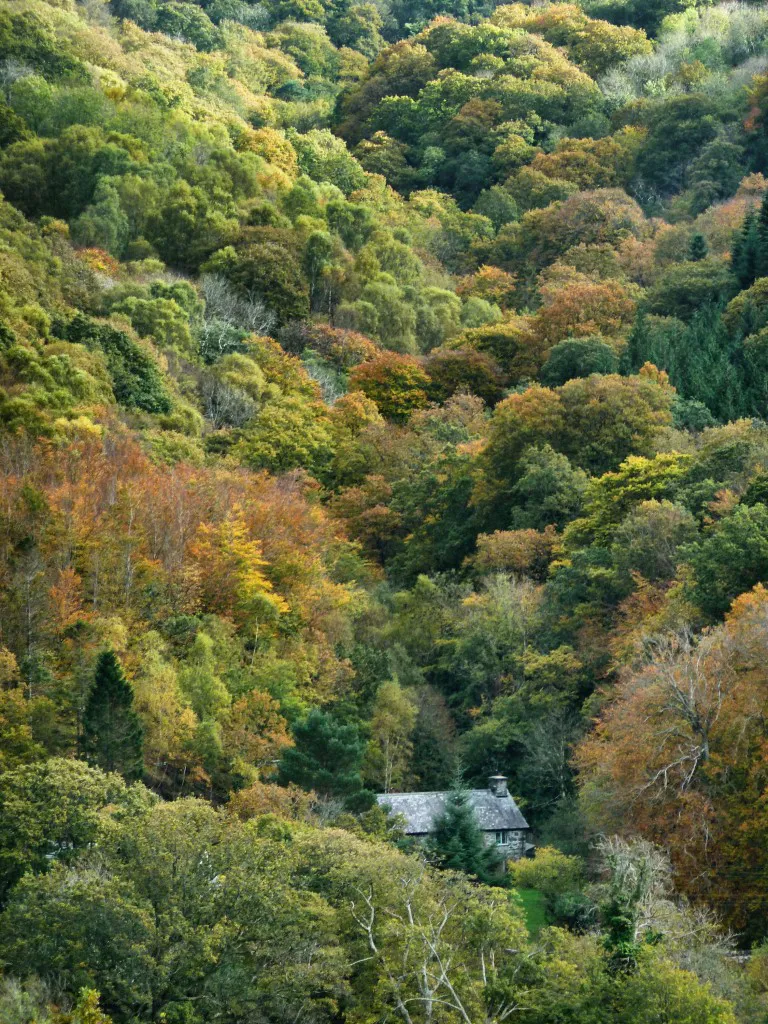
Looking Towards Torrent Walk in Autumn
Llyn Cau & Mynydd Pencoed
Llyn Cau, Mynydd Pencoed & Tal-y-Llyn Lake (Llyn Mwyngil) from Ian King on Vimeo.
Llyn Cau, Mynydd Pencoed & Tal-y-Llyn Lake (Llyn Mwyngil)
This is a circular walk taking in Llyn Cau, Mynydd Pencoed and Tal-y-Llyn Lake (Llyn Mwyngil). The route is 9.2 miles (or 7.2 miles without the optional end circuit around the lake). The full walk has an ascent of 2,900 feet.
The start point is the Minffordd car park (at 350 feet) and the summit is 2500 feet.
Leave the Minffordd (pay & display) car park by the toilets and walk towards the Dol Idris Tea Rooms (a nice place to stop for refreshments, but will be appreciated far more at the end of the walk). Continue along the path and join the Minffordd Path at the gates and sign. This path climbs steeply through the ancient woodland with some steps to help on the more difficult places.
Once you exit the woodland (just past the bridge down low over the mountain stream on your right), you get in to the hidden valley of Cwm Cau (Closed Valley). Follow this path along the until you reach a large long rock (with scars caused by glaciation) and then to the beautiful Llyn Cau (Closed Lake).
Just before you reach the rock you will see a path climbing steeply to your left. Make a note of this as you will be joining this later.
You don’t have to visit Llyn Cau as you will see it from on-high later, but it’s well worth stopping to sit-by one of the most beautiful and peaceful lakes in Snowdonia. It also makes a nice food break before the next big climb.
Go back to the path which climbs up to the ridge. This path is uneven and steep, so take care here. Once of the good things about this route is the fact that you don’t have to come back down this way, the route down is much easier on the knees.
Follow the path and soon you will see the hills to the south. Walk along the ridge with glimpses don to Llyn Cau down to your right and the odd glimpse of Tyn y Cornel Hotel & Tal-y-Llyn (Llyn Mwyngil) to your left.
Follow the path up over the loose rocks and scree to the stile and the summit of Mynydd Pencoed. From here you can peer over the edge and see the whole of Llyn Cau below (if you have a head for heights).
If you want to walk to the summit of Cader Idris, you can see it ahead and it’s only another 400 feet up, although you have to follow the path down before you start the climb. Just follow the path ahead as it curves around to the right.
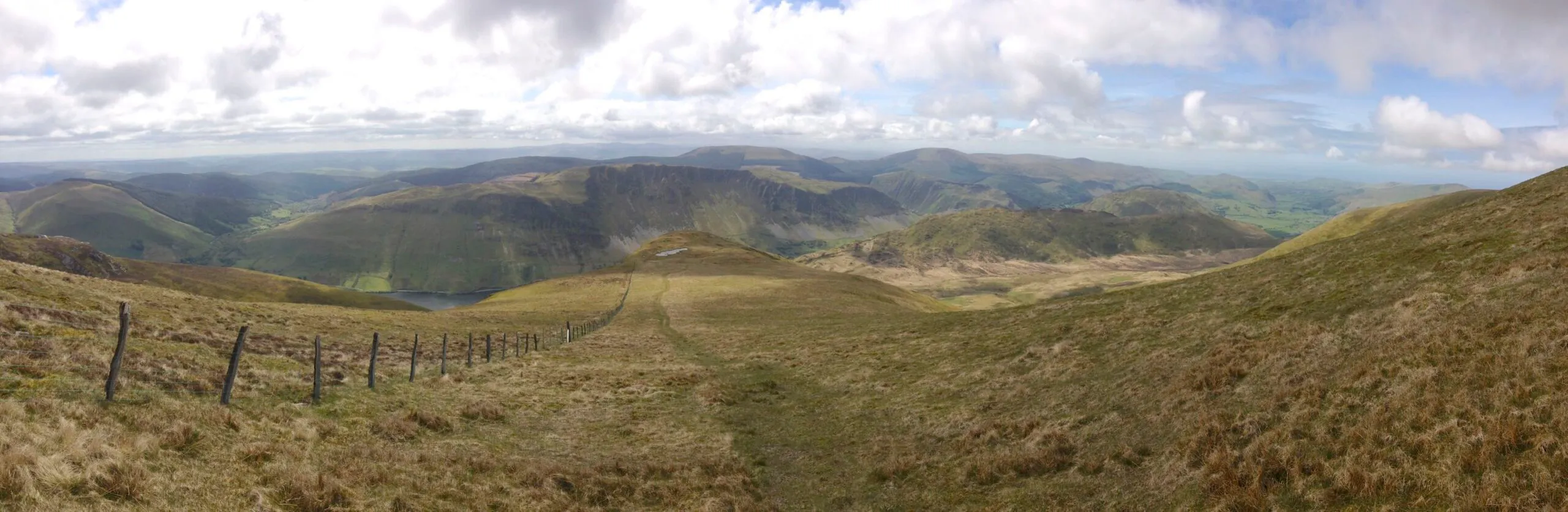
From there, follow the fence to your right until you come to a stile on your left (taking care not to step in a few small ponds beside the path). Once you have crossed the stile, follow the grassy track down the ridge, past a large pretty pond on your left. Follow the grassy farm-track which meanders around the steeper parts, crossing a stream and eventually reaching a quiet farm track. Just before the track ends, it becomes quite rutted which can make it a bit tricky to find your footing in the long grass. Follow the path down and around to Rhiwogof Farm where it joins another track and ends at some green fields and a little wood and stream. Cross the stream and walk past the farm buildings and you come out on the road.
Turn right when you come to the road and walking around the lake anti-clockwise. If you do this, please be wary of the traffic on the far side of the lake (the B4405). Just after the lake ends, keep your eyes open for a footpath sign where you can cut across the fields and rejoin the quiet road. Turn right and follow it back to the car park.
If you want, you can decrease the walk by two miles, by turning left when you come to the road and following this quiet road, then rejoining the B4405 for the final quarter of a mile.
Welcome to Bala
In 1800 a fifteen year old girl, Mary Jones, walked the 25 miles from her home village Llanfihangel-y-Pennant to purchase a bible in Bala. The scarcity of the bible, along with the determination of Mary to get one (she had saved for six years), was a major factor in the foundation of the British and Foreign Bible Society in 1804.
Betsi Cadwaladr, who worked with Florence Nightingale in the Crimea, and who gave her name to the Health Board, came from Bala.
Bala hosted the National Eisteddfod in 1967, 1997 and 2009.
Bala Lake “Llyn Tegid”
Bala Lake (Welsh: Llyn Tegid) is the largest natural lake in Wales. It occasionally freezes over—most recently in the severe winters of 1947 and 1963. The rare gwyniad fish — trapped in the lake at the end of the last Ice Age, some 10,000 years ago — is in danger because its natural home is increasingly unsuitable.
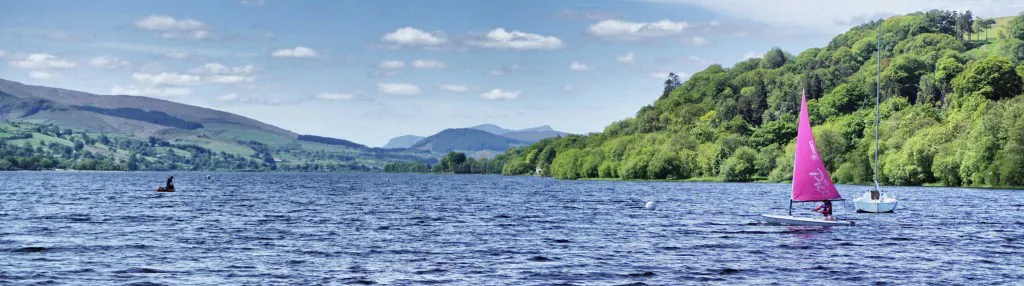
Bala Lake
Tomen y Bala
Medieval earthwork castle of the 11th to 12th Century situated just off the main road. The Castle is 40 meters wide and 9 meters high. It predates the town.
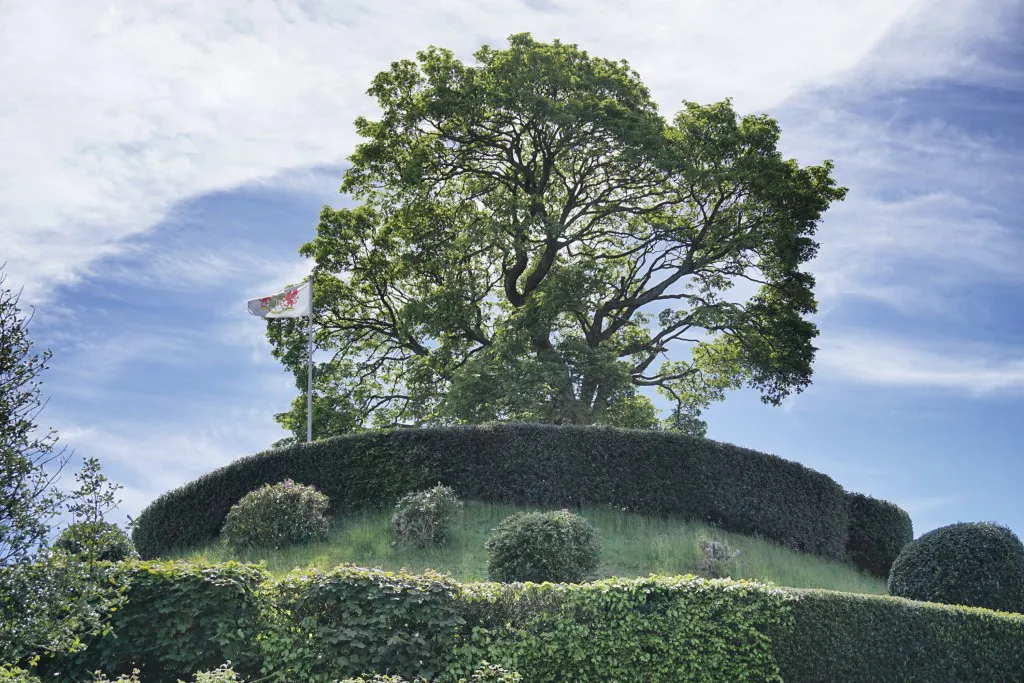
Tomen y Bala
The statue of Thomas Edward Ellis (1859-1899), Liberal MP for Merionethshire.
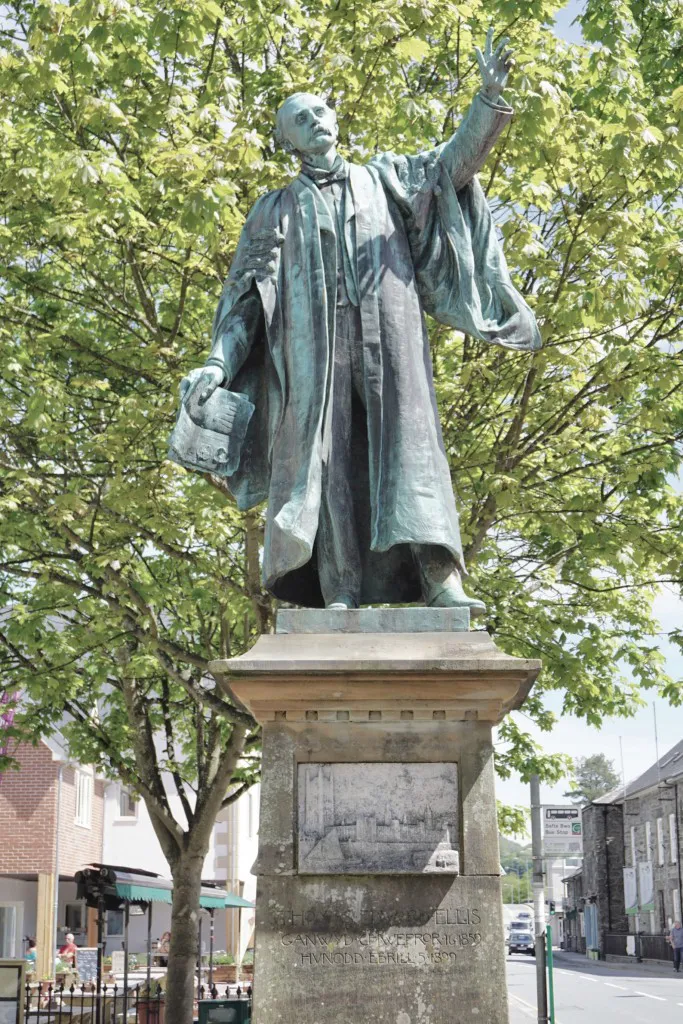
Statue of the Rev. Thomas Edward Ellis, MP in Bala
Dolgellau History Video
Dolgellau History – A Photographic Slideshow with Music from Ian King on Vimeo.
A journey exploring the history of Dolgellau through old photographs. Contains photographs and original music by Ian Jeffrey King.
Louloupurple
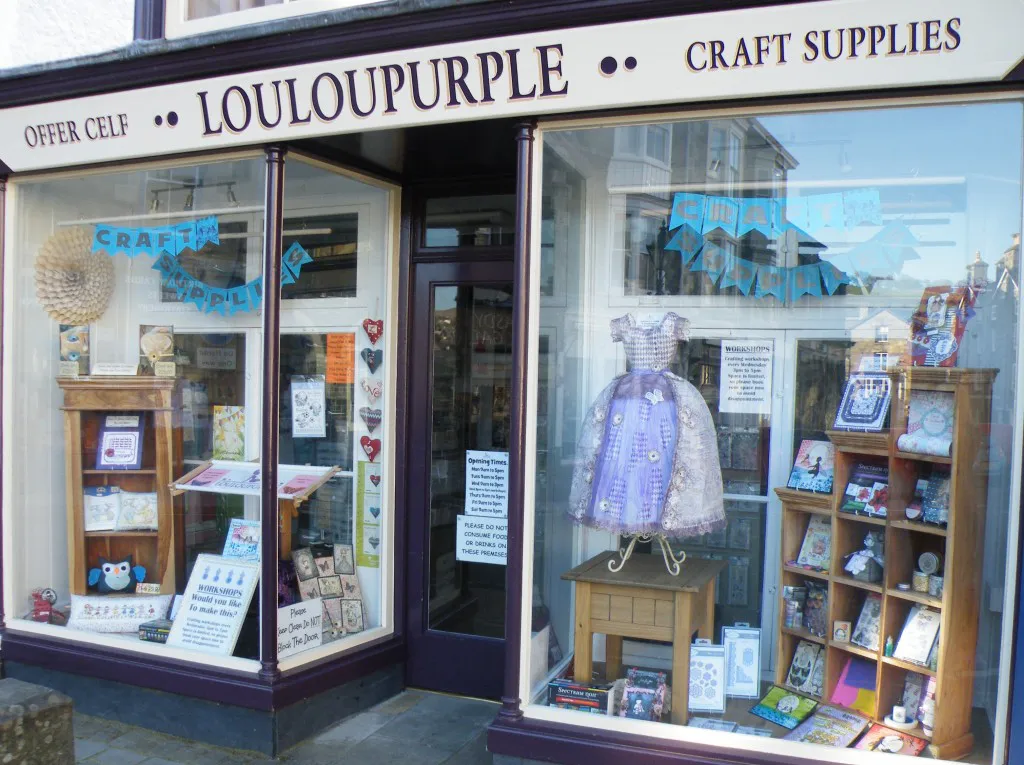
Louloupurple in Dolgellau
Louloupurple is a craft supplies shop that is based in the beautiful mountains of Snowdonia, it is the outcome of my long time passion for crafting.
We now run workshops every Wednesday from 3pm to 5pm. Space is limited to four people per session, so please book your space to avoid disappointment. I have many years of personal crafting experience and hope that I can help and encourage all to find the inner crafter in themselves.
2 Plas Newydd, Eldon Square, Dolgellau, Gwynedd. LL40 1RD.
Dolgellau Chronology 2 (1800s)
1800 – 1899
[19th Century] A drover from the Dolgellau area could received three shillings (15p) a day, and a six shilling (30p) bonus on reaching his destination.
[c.19th Century] People used to ride up Cader and at one time as many as forty to fifty sturdy Welsh ponies were kept at one hotel for this purpose, and another hotel advertised ‘ponies and guides, fixed, moderate prices’. One of the most famous guides was Robert Edwards, who at the age of eighty-four used to hand out printed circulars to visitors, describing himself as ‘being by chance made a glover, by genius a fly dresser and angler, and now, by the all-divine assistance, conductor to and over the most tremendous mountain, Cader Idris’
[1800] Rev J. Evans in A Tour Through Part of North Wales in the year 1798 and at other times, claimed that Dolgellau ‘is improving in building and population from the increasing trade in coarse cloth, it promises to become no inconsiderable place’
[1800] Judah Baptist Chapel built on Cader Road
[1800] Siop y Seren Built
[1800] Tan y Gader Built
[1800] Plas Newydd Bays Added (Overlooking Eldon Square)
[1800] The Town’s Woollen Industry Reached its Peak
[1801] 1801 census records 2,949 residents
[1801] A petition was sent by the parishoners to the Bishop of Bangor, praying that as the Rector lived 2 miles away “the six o’clock service on Sunday be abolished”. Two other service were held on Sundays
[1801] Eldon Square named after the Chancellor of England in1801, Lord Eldon, a friend of the Vaughn’s at Nannau
[1802] Another outbreak of smallpox hits the town, but not as bad as in 1794
[1803] The Town’s First Bank Opens at Y Lawnt
[1803] The Parish bought a hearse, hiring it out at increasing charges each year
[1803] Cader Idris Volunteers established as England declared war on France. The group consisted of six companies and was raised by Sir R. W. Vaughan Bart MP, with its H.Q. at Dolgelley
[1805] John Morris was paid 26 shillings (£1.30) to clean Dolgelley’s streets once a week, for 9 months
[1806] St. Mary’s Opened a New Burial Ground on The Marian
[1808] Richard Fenton wrote ‘The Masonry of Dolgelley merits particular notice. ‘From time immemorial they have been built with very large stones… lifting them with an immense machine which takes above a day to erect, and worked by two men requiring a Lever of vast power’.
[1809] The Clock and Bell was Added to St. Mary’s Church
[c.1810] Cambrian News 1881 – Shop Fach Tan Drain (Eldon-square) occupied by ‘Shon and Shan Jones – grandparents of local bard Ieuan Ionawr. They raised 21 children who were born in the shop, and all grew up to be strong men and women. There were only two beds and a cot in the house, and all had their alloted five and a half hours sleep every twenty four hours. The shop never closed for nearly twenty years, day and night…. some portion of the family was always astir.
[1811] The Marian Given in Trust to the Town
[1811] New County Jail Built
[1813] Town Jail Demolished (To Make Wat for the Clifton House Hotel)
[1813] The Hollow Tree of the Ghost (Ceubren yr Ellyll) Blown Down in a Terrible Storn at Nannau on 13th July
[May 1813] John Greenwood hanged for carrying quantities of forged notes. Had presented a forged £5 to Catherine Evans for a ‘negus’ (a glass of warm spiced wine) at The Golden Lion
[1813] Cambrian Travelling Guide – ‘The principal Inn is the Golden Lion, or Plas Isa ; The Ship Tavern is a very large newly built inn. At the Angel Inn there is very comfortable accommodation for travellers without a carriage’
[1817] (see 1799 entry) William Jones of Drws-y-Nant, Innkeeper, on the 17th October was empowered ‘to keep a Common Inn, Ale House or Victualling-house, for ONE YEAR from the TWENTYNINTH of this present MONTH of SEPTEMBER, in the House where he now dwelleth at Drws-y-nant aforesaid’
[1817] An order was made to reduce the number of foxes in the area. Ten shillings and sixpence (52.5p) for every fox and five shillings (25p) for every cub
[1817] The Poor Law rates reached a maximum of 17/3 (78p) in the Pound
[1820] An arch was completed near Maes y Brynner on route to The Torrent Walk, which coincided with the death of King George III
[1821] The township of Dolgelley contained 2093 residents
[1822] Poor Law – Dolgelley’s pauper relief was reduced to try to stop the ever increasing roll of pauperism. In general, house rents were paid for people on the pauper list, on which everyone was trying to get. Their cottages were repaired for them, weekly cash allowances and lump sums were handed over, children of paupers were apprenticed with heavy premia, many gifts in kind were distributed. Money was even given to enable people to go to America. (Poor Law details from ‘The Story of Two Parishes Dolgelley and Llanelltyd’ – T.P. Lewis)
[1823] A golden torque was discovered near Llyn Gwernan, belonging to the late part of the Bronze Age
[1824] It was ordered that no one who kept a dog should receive pauper relief
[1825] County Hall (Courthouse) Built (for £3000)
[1825] Church Registers Adopted the Spelling “Dolgellau”
[1825] No pauper owning ‘a clock or any useless furniture in the house’ would receive pauper relief
[1827] Dafydd Ionawr Died (Local Bard and Schoolmaster) born 1750
[1827] The National School was founded
[1828] A drastic revision of Dolgelley’s pauper list ended in its reduction by nearly half
[1829] Sunday School at Salem Chapel Now Contains 400 Children and 71 Teachers
[1830] Eldon Row Built
[1830] The Stagecoach Journey from The Golden Lion Hotel to London Takes 24 Hours
[1831] Bodlondeb prison about 1/4 mile up Cader Road, built. It was to replace the Clifton goal which was built in 1751 & closed 1831. The Clifton housed the last two men to be publicly hanged in Merioneth.
[1833] A writer said that 1,400 people employed in flannel. 30,000 pieces made annually, averaging 110 yards each.
[1835] Leigh’s Guide to Wales and Monmouthshire. ‘The tourist will do well to make this (Dolgellau) his central station while he examines the various beauties of the neighbourhood, as there is perhaps no place in the principality from which excursions may be made with so much advantage’
[1835] J Hemingway – Panorama of the Beauty, Curiosities and Antiquities of North Wales. ‘There are many well built houses in various parts of the town (Dolgellau), including a good range, fronted by shops, called Eldon Row, the property of Sir Robert Vaughan; but in general the houses are erected with such extreme irregularity in regard to each other, as to convey but a mean idea of the projector’s good taste’
[1835] J. Hemingway – ‘Part of the building in which a parliament was held by Owen Glyndwr is still standing among a group of old houses, having a post-office in front, near the Ship Inn, and is called Cwrt Plas yn y Dref, ‘the town hall court’
[1835] The Postmistress was Jane Owen, based at Queen’s Square
[1836] Sir Robert Vaughan, in his account books, adopted the spelling “Dolgellau”
[1836] Thomas Roscoe in Wanderings and Excursions in North Wales. ‘ A pleasant walk of about a mile and a half beyond Llanelltyd brings the traveller to Dolgelley, which is encircled by mountains, and seated on the river Wnion, here a broad, shallow stream, over which is a handsome bridge of seven arches. It has a neat church, containing some old monuments; and a commodious county-hall’
[1836] The last Poor Law rate in Dolgellau was 12/4 (62p) in the Pound
[1837] The Poor Law passed into administration of a Board of Guardians.The assessments undertaken by the Board were increased dramatically
[1839] Judah Chapel was Rebuilt
[1839] Sir Robert Vaughan rebuilt The Golden Lion. The King of Sardinia, Grand Duke Constantine of Russia and Prince Louis Lucian Bonaparte have stayed there
[1839] The Dolgelley Board of Guardians decreed that apprenticing to trades be abandoned, if employment could be obtained anywhere as a farm labourer
[1842] Parliament was petitioned by Dolgellau locals to return to the old system of Poor Laws, but the petition failed. Corruption was rampant with the overseers allegedly embezzling much of the proceeds
[1842] Some of the estimates for the parish church expenses included; winding the clock £2.2 shillings (£2.10p) and new bell ropes £8.00
[1843] Sir Robert Vaughan (Local County MP) Died
[1845] The Board School was founded
[1846] August 25th – To be sold at auction… by Mr William Ellis at The Golden Lion… That Capital and Genteel residence, called BRYNHYFRYD. The house consists of an excellent Dining Room, Breakfast Rooms, Man’s Pantry, Housemaid’s Closet, excellent cellars, one of which contains good Spring Water, and many other conveniences…. The house has been chosen and occupied by her Majesty’s Judges while on circuit. For further particulars apply to Messers. OWEN and GRIFFITHS, Solicitors, Dolgelley.
[1846] Edward Parry – Cambrian Mirror or a New Tourist Companion through North Wales. A traveller sitting over his wine was asked to describe Dolgelley, when taking a handfull of nutshells, and placing the cork on its end, he threw the shells carelessly around it, saying the same time, ‘there is the plan of Dolgelley: the cork represents the church and the shells the small Houses’
[1847] Mormon preacher Edward Roberts visited the Dolgellau and Llanelltyd areas
[1850] The Town Now Had 11 Mills
[1850] An Old Rhyme of Dolgelley (by Thackeray). When you go to the town of Dolgelly, don’t stay at the Lion Hotel, There’s nothing to put in your belly, and no one to answer the bell.
[1851] Shop Fach Eldon-square was pulled down (see c 1810 entry). Owned by Sir Robert Vaughan, it was occupied for several years by David Jones, bookbinder, a zealous and active temperance advocate
[1855] The Grammar School Headmaster eaned between £35 to £40 per annum
[1855] A committee selected to arrange for lighting and watching the town at a cost of £80 per year
[1855] Ship Hotel, with some land, was rented at £20.13 shillings (£20.65p) and The Golden Lion at £19.15 shillings (£19.75p) per year
[1862] £70,000 worth of gold sold by Clogau Gold Mine to England
[1862] The last Brigantine (Ship) was built in Penmaenpool and was the “Charlotte”, Capt. Black in charge. Boats were launched broadside in Penmaenpool. Locals were employed to help launch by rocking the boat. Vast quantities of free beer were taken prior to assist in this dangerous job
[1864] St. Mary’s Chancel Added
[1864] A Mr Smith, a keen walker, left Machynlleth in September to climb Cader Idris. He refused to pay a guide the 15 shillings (75p) fee to take him up and down the mountain. Night was approaching and bad weather forecasted. Against the guides’ advice, Mr Smith went on alone. Six weeks passed and nothing more was ever heard of Smith. His brother came to make enquiries, but to no avail. The following May, a man’s dog started barking whilst on Cader, and its owner, looking over a precipice, saw a dead body – a skeleton in clothes, having been ravaged by foxes and ravens. A knapsack found nearby confirmed the body’s identity as that of Smith. He had fallen some 1300 feet
[1864] As a market town, Dolgellau paid £255 18s 6d Excise Duties for the year ended 24th June
[1865] As a market town, Dolgellau paid £256 19s 3d Excise Duties for the year ended 24th June
[1866] As a market town, Dolgellau paid £279 5s 1d Excise Duties for the year ended 24th June
[1867] As a market town, Dolgellau paid £307 9s 1d Excise Duties for the year ended 24th June.
[1868] Tabernacl Chapel Built
[1868] The Railway Arrives
[1868] Y Dydd (The Day) Newspaper First Published
[1868] The navvies working on the extension of the railway line from Bala to Dolgellau used to pour into The Old Tavern (Drws-y-nant, see entry 1817) for drinks. Attached to the the inn was a lean-to, since demolished, called Cegin-y-Gwyddelod, (The Irishmen’s kitchen). This was set aside for the Irish navvies, for the Welsh refused to drink with them
[1868] The “Hen and Chickens” hotel was demolished because of the arrival of the railway. The hotel stood on the site of the old Toll House on the north side of Y Bont Fawr (also later demolished)
[1869] Charles Darwin wrote to Sir J.D. Hooker “We have a beautiful house, with a terraced garden, and a really magnificent view of Cader right opposite. Old Cader is a grand fellow, and shows himself off perfectly with every changing light”. He was living at Caerdeon near Bontddu and writing his Descent of Man at the time
[1869] Dolgellau Court. Mary Thomas was found guilty of leaving her pigs to stray in Lombard Street on the 1st May. John Thomas a postman was found guilty of allowing his donkey to stray on the 5 May on the turnpike road from Dolgelley to Towyn. Both were fined 2/6 with costs, or if in default, 7 days imprisonment. They were charged with the offences by Police Constable Evans
[1870] Neuadd Idris Built
[19th Century] The Welsh Gold Rush
[c. 1870] Robert Meredith founded a light leather tannery, dealing with sheepskins (see 18th Century entry).
[1870] (March 15th) Miss Mary Owen, landlady of the Golden Goat Inn, was found not guilty of causing drunkenness at her Inn, when it could not be proved that she had knowingly supplied the accused with drink
[1870] Meredith Richards presented 19 handsome and interesting volumes for the use of inmates of the workhouse. These were in English and a number of Welsh volumes would also be supplied. He had also previously presented flower seeds for the decoration of the pasture in front of the workhouse
[1870] (12th June) Prisoner Edmund Williams alias ‘Ned of Grogwyn’, escaped from Dolgellau County Gaol. He was undertaking 18 months imprisonment for burglary. He scaled a wall and made his escape supposedly to Liverpool. He was aged 28, five to five and a half feet tall and had a speech impediment. A handsome reward was offered for his apprehension
[1871] Rev Francis Kilvert drove by omnibus from Barmouth junction to ‘Miss Roberts’ Hotel, The Golden Lion, Dolgelly’, staying for a few days.(Kilverts Diary) (on 12th June)
[1871] Kilvert’s guide on Cader Idris, a Mr Pugh told him that ‘This is the highest point of Cader Idris’, laying his hand on a peak of wet living rock, ‘not that’, pointing at a great conical pile of stones built upon the peak by sappers and miners during the Ordnance Survey ‘The Captain of the surveying company had his tent pitched on the top of Cader Idris for 3 summer months and never left the place. He had 18 men to wait upon him. And how many clear views do you think he got in that time? Nine’
[1872] Mr. John Meyrick Jones, Meyrick House was given Royal Patronage for his Welsh tweeds by Her Royal Highness, The Princess of Wales
[1872] The Caernarvon and Denbigh Herald – ‘CHRISTMAS DECORATIONS… The shops decorated with the greatest taste were Shop Newydd (Mr Richard Jones); Mr D.E. Hughes, draper; Mr Griffith Jones, grocer; Mr Richard Mills do; Mrs Miles & c. Several butchers displayed a fine show of Christmas meat, and that the window of Mr Edward Jones was of a very superior character’.
[1873] A visitor wrote ‘No visitor should visit Dolgellau without seeing the primitive way flannels and tweeds are made’.
[1875] Tolls into Dolgellau abolished. From a slate on one of the old toll houses on the road from Bala. ‘Every Horse or other Beast drawing any Coach, Chariot, Chair with four wheels 6d (2.5p), For every other Horse or Beast drawing any wagon with four or two wheels 4d (2p), For Every Horse or other Beast laden or unladen and not drawing 1.5d (1p); For every drove of Oxen, Cows or Meat Cattle per score and so in proportion for any less number 10d (4p). For every drove of Calves, Hogs, Sheep, Lambs or Goats per score and so in proportion for any less number 5d (2p)
[1875] The town’s fire engine was almost unserviceable when called upon to deal with a small fire at The Red Lion, the last time it was used. Previously used by ‘the waterman and the local board officers’ to water the streets of the town during very dry weather
[1875] Gerard Manley Hopkins (Jesuit Priest & Poet) reputedly wrote the poem Penmaen Pool about 1875 in the visitors book at the George III Hotel
[1877] Cadwalader Jones of Parc Farm was the Last Person to be Hanged in Dolgellau for the Murder of Sarah Hughes (Took Place on 23rd November
[1877] Eglwys Bethel (M.C.) built. (M.C. is Welsh for Calvinistic Methodists)
[1878] Dr. Williams School for Girls Established
[1879] Penmaenpool Tollbridge Built Across the Mawddach which replaced 24 hour (one man power) ferry service across the river. The ferry service was still going in May 1892. The bridge had to have a large centre span (30 foot) should there be a resurgence of the boat building trade at Maes Y Garnedd, Llanelltyd and a seagoing vessel need to pass through
[1880] Ebenezer Chapel Built
[c.1880] Dolgellau woollen export trade creates shipbuilding industry on the Mawddach. Produce taken by packhorse from Dolgellau to Llanelltyd, then on to Barmouth by Sloop for transportation to Liverpool. Exporting to South Carolina, Africa, Germany Holland. British Army fought in Dolgellau woollen clothes
[1881] Cwrt Plas yn Dre (Old Parliament House) Demolished. Cambrian News November: ‘The Old Parliament house was bought by Mr Thomas Roberts, ironmonger, Bank Buildings, for the purpose of erecting new business premises. One of the greatest attractions in Dolgelley is gone , and no business convenience will ever repay the loss’. It was rebuilt at Milford Road, Newtown, where it is currently a Quaker Friends Meeting House
[1881] May – Cambrian News – the house of Mr Evan James, mason, took fire. The river Arran and mill stream… supplying an abundance of water… the fire was soon put out. Its close proximity to a large block of buildings consisting of Y Dydd Printing Office, The Unicorn and Talbot hotels… (had the fire spread)… a large portion of the town would have been in imminent danger
[1881] January 14th – Cambrian News – ‘TOWN IMPROVEMENT – At last the old houses at the top of Eldon-square, the property of Mr Jones, of Glandwr, are being pulled down…. the thickness of the wall of the gable-end, including the chimney was seven feet’.
[1881] Dr Williams Schools’ Principal Head Teacher was Emily Armstrong, a 35 year old spinster from Middlesex. Ellen Pritchard (29) from Islington and Eliza Cowell (38) of Newcastle were Governesses. Mary Tritton (18) was the only other pupil teacher. The school had 19 boarders, a cook, housemaid, kitchenmaid and laundress
[1881] Richard Willams (37) was the town’s Postmaster. The Post Office was also a draper’s shop. Assistants there were Taliesin F. Williams (19), William Pugh (18) and William Powell (17)
[1881] Dolgelley Union Workhouse had, as its Municipal Workhouse Master, William Williams residing there with his wife Dorothy and sons Griffith and Edward. Evan Williams was the Workhouse Task Master, with Sarah Jones a domestic worker and Anne Evans the Workhouse nurse. It contained 58 pauper inmates, the oldest being 81 year old Lewis Pugh, an Agricultural worker, and 1 month old Hugh Williams, son of Gwen Williams, the youngest. The Workhouse had the following handicaps recorded against some of the paupers; ‘idiots’ 7, ‘imbeciles’ 6, and 1 ‘lunatic’
[1886] T.H. Roberts Built
[1890] The 13th Century Silver Guilt Chalice and Paten from Cymmer Abbey were Found Hidden Under a Stone in Cym-y-mynach
[1891] The Gossiping Guide To Wales was Published
[1893] Salem Chapel Built
[1894] Gill’s Imperial Geography ; WALES; INDUSTRIES: Dolgelley, Welshpool and Newtown make flannels and blankets
[1895] The Provincial Eisteddfod was held at Dolgellau on the 16th and 17th August. These were getting common in Wales since the National Eisteddfod was suspended. Special praise was given to committee secretaries, Rev John Jones of Rhydymain, and Mr Lewis Williams, an auctioneer in Dolgelley
Plas Nannau (Nannau Hall)
Nannau
The current Georgian house was started circa 1788 by Sir Robert Howell Vaughan and completed by his son in 1796 after his death in 1792. There was a house-warming celebration on January 1st 1797 with a set of glasses engraved for the event).
The current house is probably the fifth to stand on the site (or close proximity) of the earliest one. The house is built of dressed blocks of local dark grey stone, with the recessed parts having sandstone surrounds. It has a shallow pitched slate roof.
Part of the tower of the previous 17th century house is incorporated in the south-west corner and bricks from the 16th century house can still be seen inset into the back wall. Sir Clough Williams-Ellis (creator of Portmeirion, some twenty-five miles away) designed some alterations to Nannau in 1934, but I am unsure what these were or if they were implemented.
The Pavilion Wings (which can be seen on early photos and postcards) were located behind the house and were added by Sir Robert Vaughan (2nd Baronet) in 1805, from designs by the architect Joseph Bromfield (1744-1824) who also designed the new house at Caerynwch in 1780 and is reputedly the architect of the main Nannau house, although this cannot be confirmed. The wings were demolished in the late 1960s-1970, although the cellars seem to have survived, as do the arches of the east (right) wing and some of the outline of the buildings behind.
Nannau Postcard circa 1911 (showing one of the pavilion wings)
Behind the west (left) wing there used to be a kitchen which was built to celebrate the coming of age of Robert Williames Vaughan, 3rd Bart in 1824. To the rear of that is an old Smokehouse, including openings at the base of one wall to permit the entry of smoke and another utility building is next to that, both of these are in a good state. Also to the rear are the remains of an old squash court flooring.
There are also three ponds in the garden, which still survive, although they are now overgrown.
The house was listed Grade II* in 1952. It is important to point out that it is Grade II STAR and not just Grade II. This is a breakdown the percentage of graded buildings (although based on buildings in England, I think it is roughly the same in Wales):
Grade II – 92%
Grade II* – 5.5%
Grade I – 2.5%
Plas Nannau (Nannau Hall)
Nannau
Plas Hen / Caerynwch
Plas Hen (The Old Court) was the original 15th century manor house of Caerynwch. The current owners can trace their family back to Bleddyn ap Cynfyn, Cadwgan and Madog (Lord of Nannau).
Records from 1650 show that Caerynwch was in the ownership of Robert Vaughan ap Tydur Fychan (d. 1693) who married Margret Vaughan (daughter of Hengwrt). The house then descended through the female line by marriage to the Humphreys and again through marriage to the Richards Family (Catherine Humphreys marrying Sir Richard Richards of Coed in 1785).
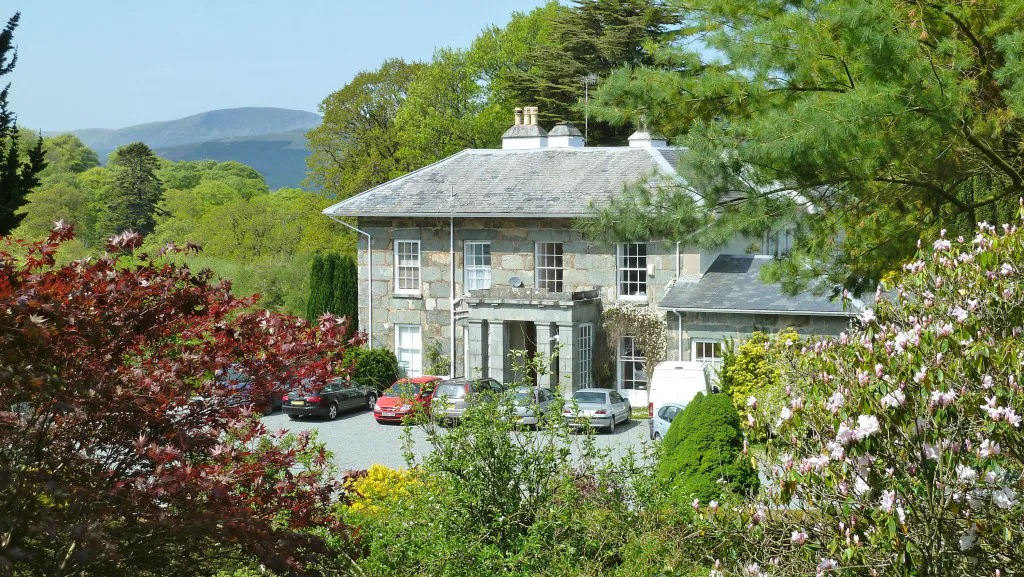
Caerynwch