The Snowdon Mountain Railway
The Snowdon Mountain Railway takes you on an unforgettable trip up to 3,560 feet (1,085 meters) and the top of the highest mountain in England and Wales, Mount Snowdon, “Yr Wyddfa” in Welsh. The trip takes you from the pretty town of Llanberis through beautiful scenery before reaching the summit and the panoramic views across Snowdonia and far beyond.
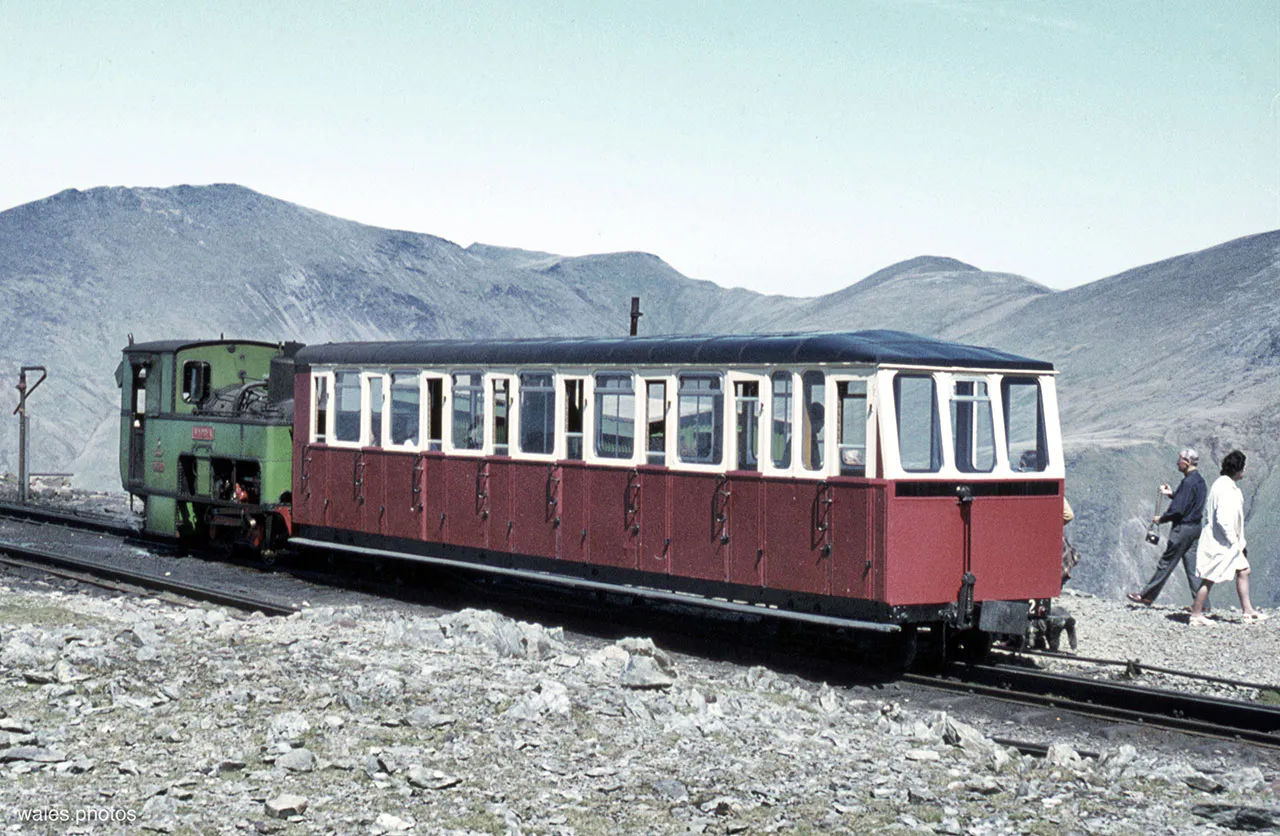
The Snowdon Mountain Railway c.1971
The opening of the Welsh Highland Railway and its station at Rhyd Ddu on the south-west of Snowdon led to a decrease in visitors at Llanberis, so it was decided to build a railway to claim back some of the lost trade. After much debate and arguing, the “Snowdon Mountain Tramroad and Hotels Company Ltd.” was formed and work started on the huge engineering project in 1894.
The work involved one hundred and fifty men, with only shovels, picks and dynamite. In the process, two viaducts and several bridges were built, plus a three-hundred foot cutting through the mountain rock. All-in-all, nearly five miles of track was laid with a one-in-seven gradient and all this was done in a mere fourteen months.
The Snowdon Mountain Railway
A patented rack-and-pinion system was already in use in the Swiss Alps and America. Locomotives were purchased from Switzerland (four of which are still in operation), with the loco “Enid” clocking up nearly two-million miles since she started in 1896.
The Llanberis Lake Railway
The Llanberis Lake Railway is a one-foot eleven-and-a-half inch (597 mm) gauge railway that takes you on a five-mile return journey along the northern shore of the beautiful and tranquil lake of Llyn Padarn. The carriages are pulled by ex-Dinorwic Slate Quarry locos.
The railway officially opened in May 1971, with much of the route running along the old trackbed of the Padarn Railway which ran to Y Felinheli (Port Dinorwic) on the Menai Strait (this railway closed in the early 1960s). The new track was extended into the village of Llanberis in 2003 with a new station near its neighbour, The Snowdon Mountain Railway.
The journey passes the thirteenth-century ruin of Dolbadarn Castle and travels through the Padarn Country Park. The return trip of around one hour includes a short stop at the popular picnic spot at Cei Llydan and the National Slate Museum at Gilfach Ddu (which was the main engineering works for the Dinorwic Quarry).
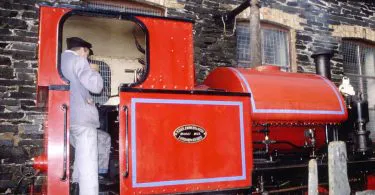
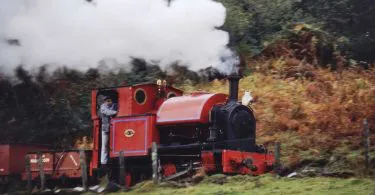
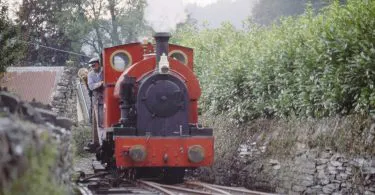
The railway uses three steam locos, “Elidir“, “Dolbadarn” and “Thomas Bach” as well as several steam locos which are used as works trains and backups for the passenger trains.
Railway Facts (Ffestiniog & The Welsh Highland Railway)
The Ffestiniog Railway Company operates the two-foot (597mm) gauge Ffestiniog and Welsh Highland Railways, which carry up to 400,000 passengers a year.
The Ffestiniog Railway
The Ffestiniog Railway is recognised by the Guinness Book of World Records as the oldest operational railway company in the World, being founded by Act of Parliament in 1832. 2015 marks the 150th anniversary of the start of passenger services in 1865. In 1863, it became the first narrow-gauge railway in the World to introduce steam engines – two of which are still in use today, with a third undergoing restoration – the oldest locos in the World still operating on their original railway and celebrated their 150th birthday in 2013. It is the only railway in the World to operate double-ended Fairlie steam locomotives.
It runs the oldest railway works in the World, where new steam locomotives and carriages have been built in the 19th, 20th and 21st centuries – Merddin Emrys was built in 1879 and is still in regular use today. In August 2010, the UK’s newest steam loco, Lyd entered service. Since the 1950s, the Ffestiniog Railway has become a leader in railway preservation and is now one of the UK’s top and North Wales’ Number One tourist attraction. The line reopened to Blaenau Ffestiniog in 1982.
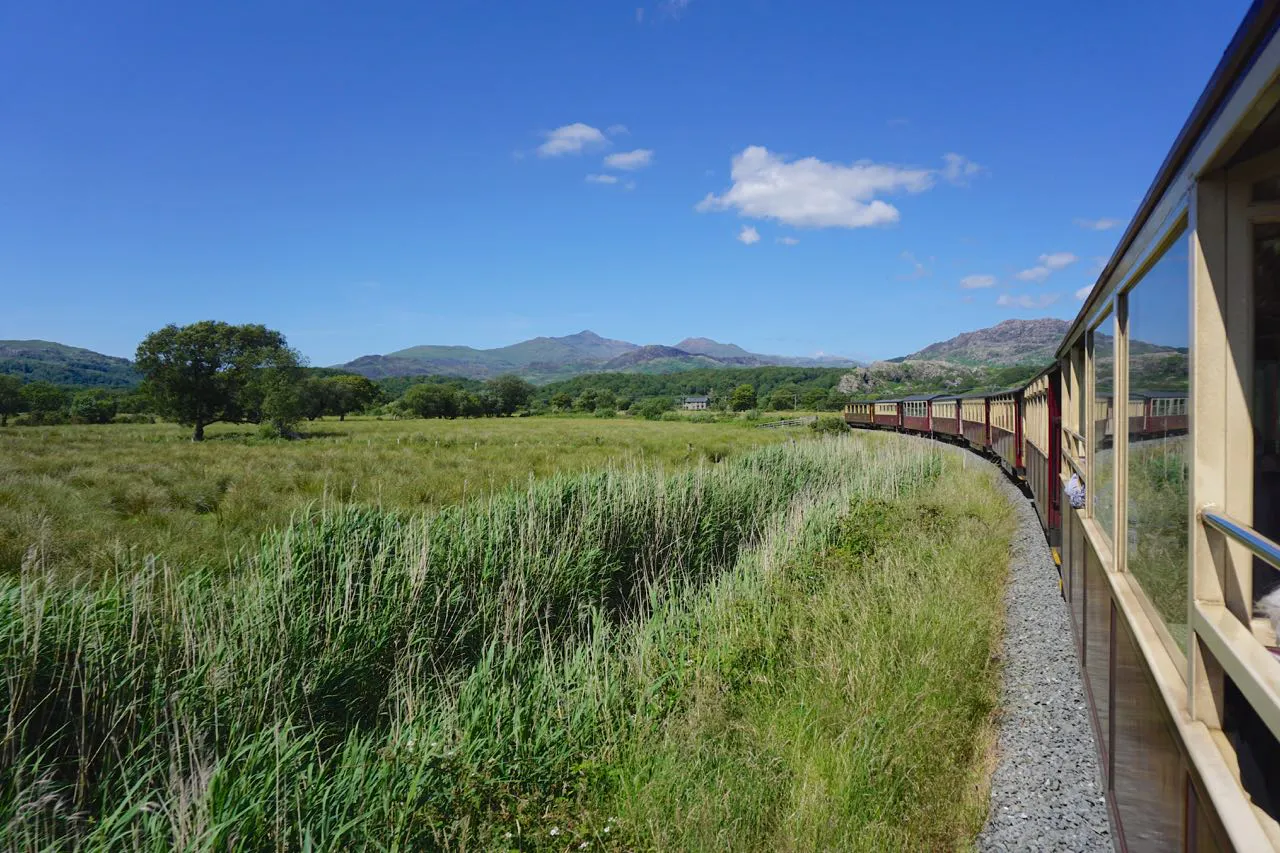
The Welsh Highland Railway
Welsh Highland trains cross the width of the Snowdonia National Park, past the foot of Snowdon and the beautiful village of Beddgelert, before travelling the length of the Aberglaslyn Pass – voted the most beautiful spot in the UK by members of the National Trust. The Welsh Highland operates the most powerful narrow gauge steam engines in the world – Beyer Garratt NG/G16s weighing over 60 tons. These are the only locos capable of hauling long trains on some of the longest and steepest gradients to be found on any railway in the UK.
On April 20, 2011, the Welsh Highland was officially opened throughout from Caernarfon to Porthmadog. At 25 miles, the WHR is the longest heritage railway in the UK. Its connection with the Ffestiniog enables passengers to travel between Blaenau Ffestiniog and Caernarfon – almost 40 miles of narrow gauge steam. Rebuilding the 25 mile Welsh Highland Railway cost £28 million, most of the work being carried out by volunteers. £12.5m of the funding came from the Welsh Assembly Government, the EU and the Millennium Lottery fund, the remainder being raised through donations and fundraising schemes. In 2014, a £1.25 million rebuild of Porthmadog Harbour Station was completed to enhance customers’ experience.
In addition to employing 85 full-time staff, rising to over 100 during the peak season, independent research shows that the Ffestiniog and Welsh Highland Railways generate £25 million for the local economy each year – £250 for every man, woman and child in Gwynedd – and create a further 350 jobs in the area. Two supporting societies have 8,000 members and over 1,000 volunteers regularly work on the railways.
For over three decades, between 70 and 80 young people have worked on the railways each year as part of the Duke of Edinburgh’s Award Scheme. Pupils from local schools carry out work experience on the railways throughout the year and Boston Lodge Works trains young people through its apprenticeship scheme.
For further information or to arrange a visit festrail.co.uk or Facebook: facebook.com/festrail.
Welsh Highland Railway
The Welsh Highland Railway (WHR) or Rheilffordd Eryri, runs 25 miles from Porthmadog to Caernarfon on the north-west coast of Wales, making it the UKs longest heritage railway. It’s also arguably the most scenic railway in Wales, taking in the Aberglaslyn Pass, Beddgelert, the foot of Snowdon, Llyn Cwellyn, before arriving back on the coast in Caernarfon and it’s majestic castle.
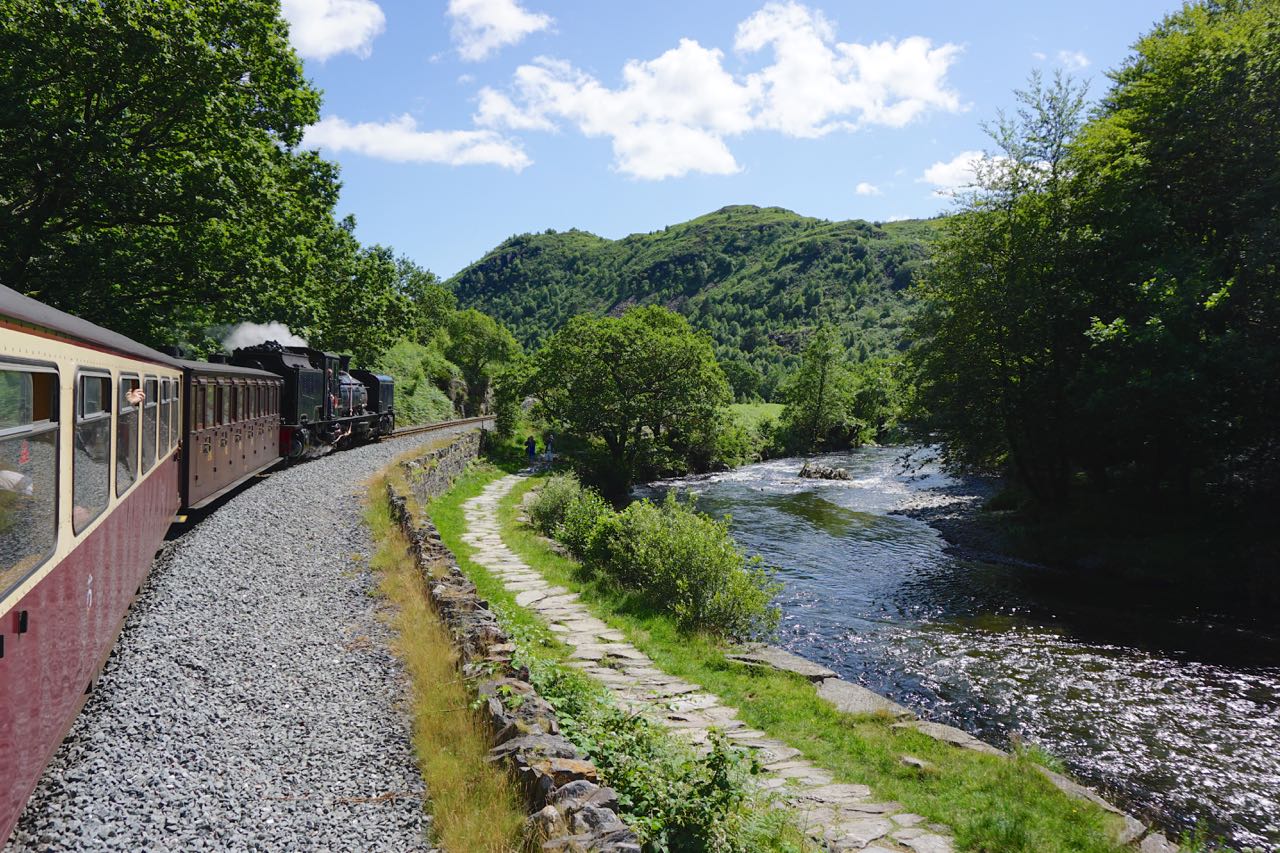
The Welsh Highland Railway at Aberglaslyn
You can travel in comfortable third-class or luxurious Pullman carriages (plus an observation carriage). Each full one-way trip from Porthmadog takes around 2 hours 15 minutes with a stop of around 1 hour 15 minutes in Caernarfon. There are two full return trips per day in peak season and one in off-season (please check their website at festrail.co.uk for a full timetable).
Salem from The Welsh Highland Railway
The line originally ran from Porthmadog to Dinas near Caernarfon, the extension being built on the trackbed of the former standard gauge railway. The trains run on a single track line with passing loops at Pont Croesor (the Glaslyn Osprey viewing centre), Beddgelert, Rhyd Ddu, Waunfawr and Dinas.
Llyn Cwellyn from The Welsh Highland Railway
There are currently five steam locomotives running on the WHR.
Map showing all The Great Little Trains of Wales
The Welsh Highland Heritage Railway
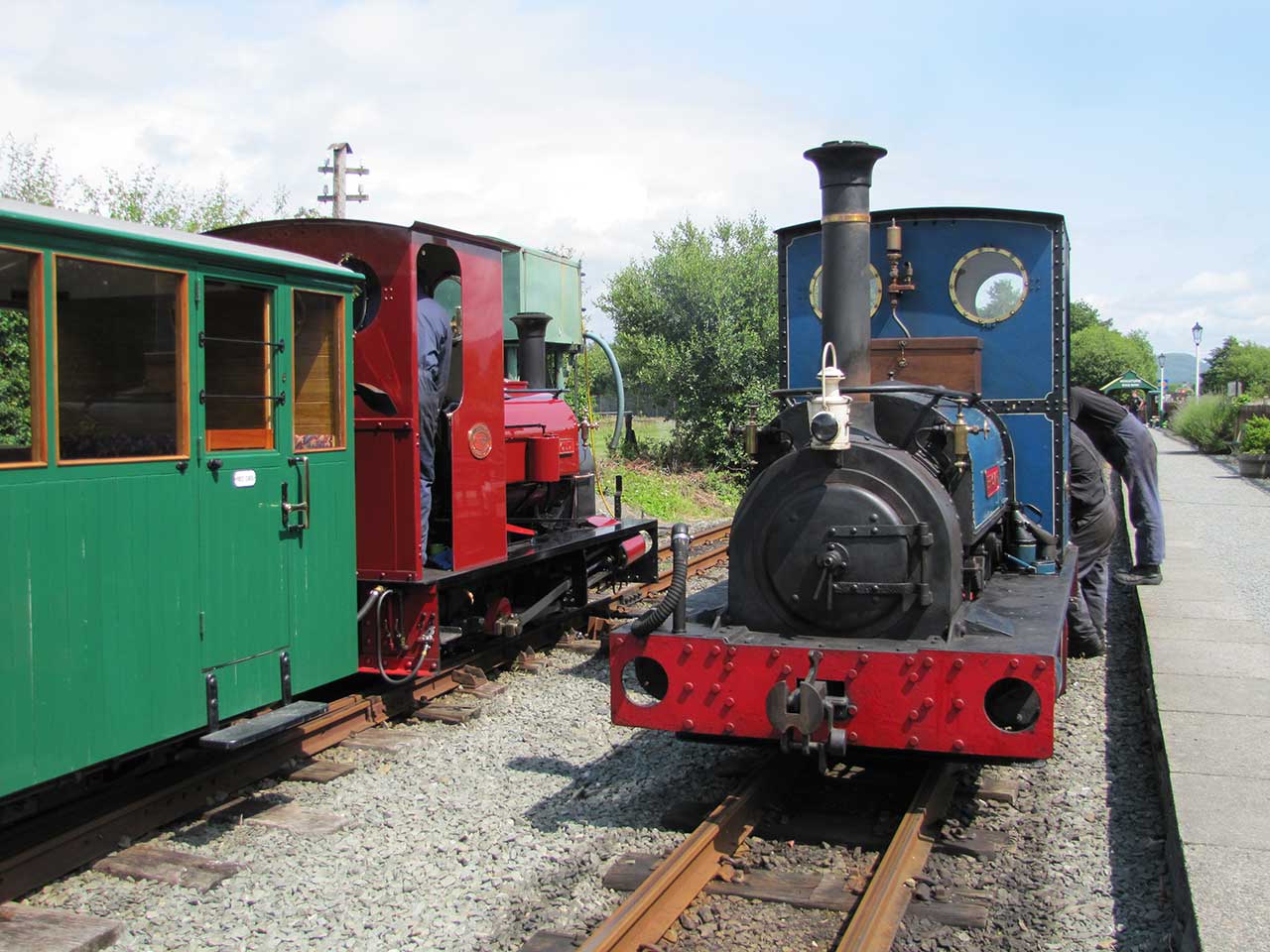
The Welsh Highland Heritage Railway – Photo © Mike Chapman
The Welsh Highland Heritage Railway formed in 1961 and is nearly entirely run by volunteers. It currently runs from March to November from their main station opposite the Network Rail station in Porthmadog (on Tremadog Road).
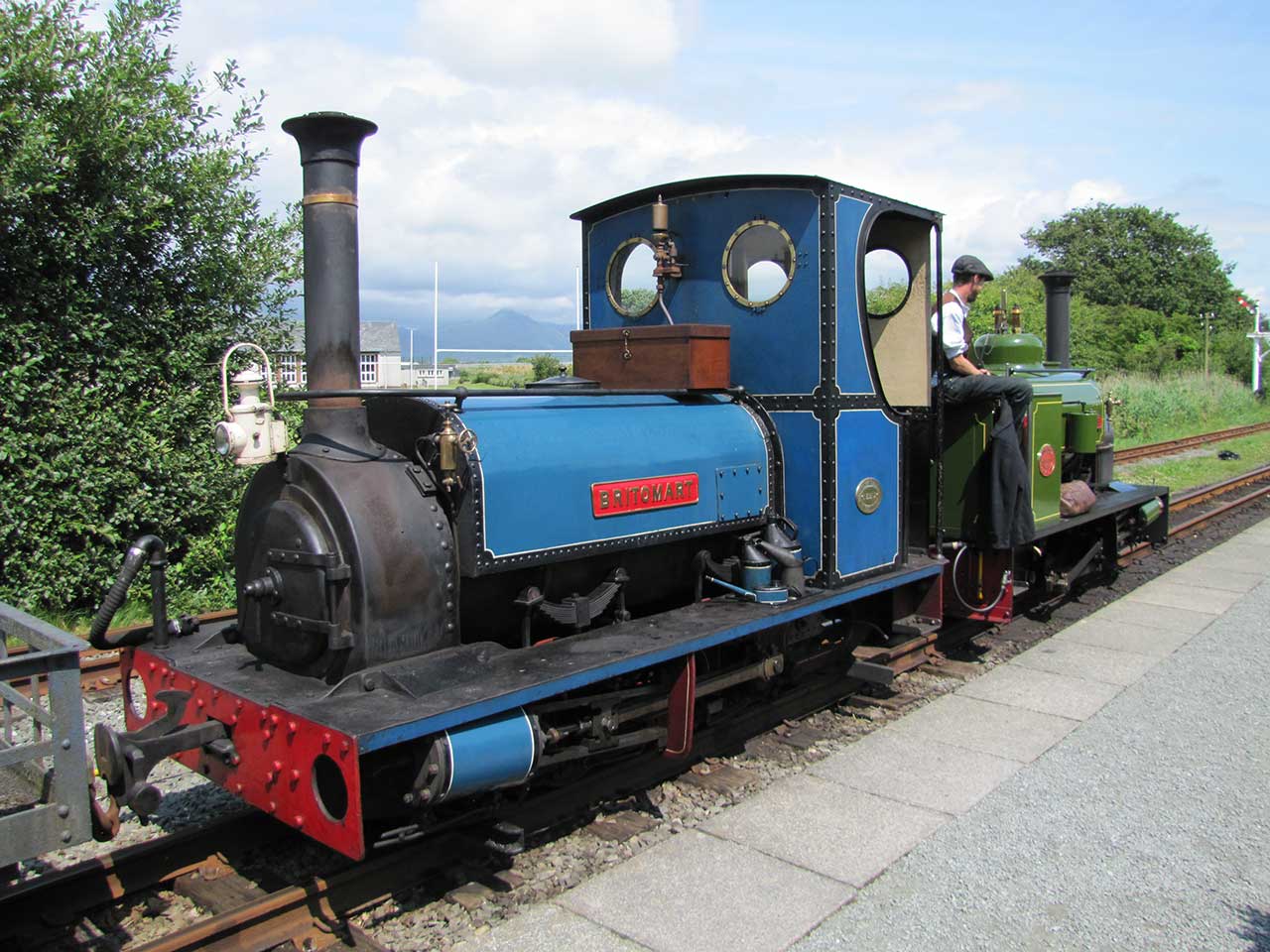
The Welsh Highland Heritage Railway – Photo © Mike Chapman
Trains run for half a mile (0.8 km) to Pen-y-Mount Junction, where the railway connects with the Welsh Highland Railway mainline. The train stops at Gelert’s Farm halt on its return to allow passengers to visit a museum and a miniature-gauge railway.
The return trip lasts an hour, which includes a free guided tour around the museum.
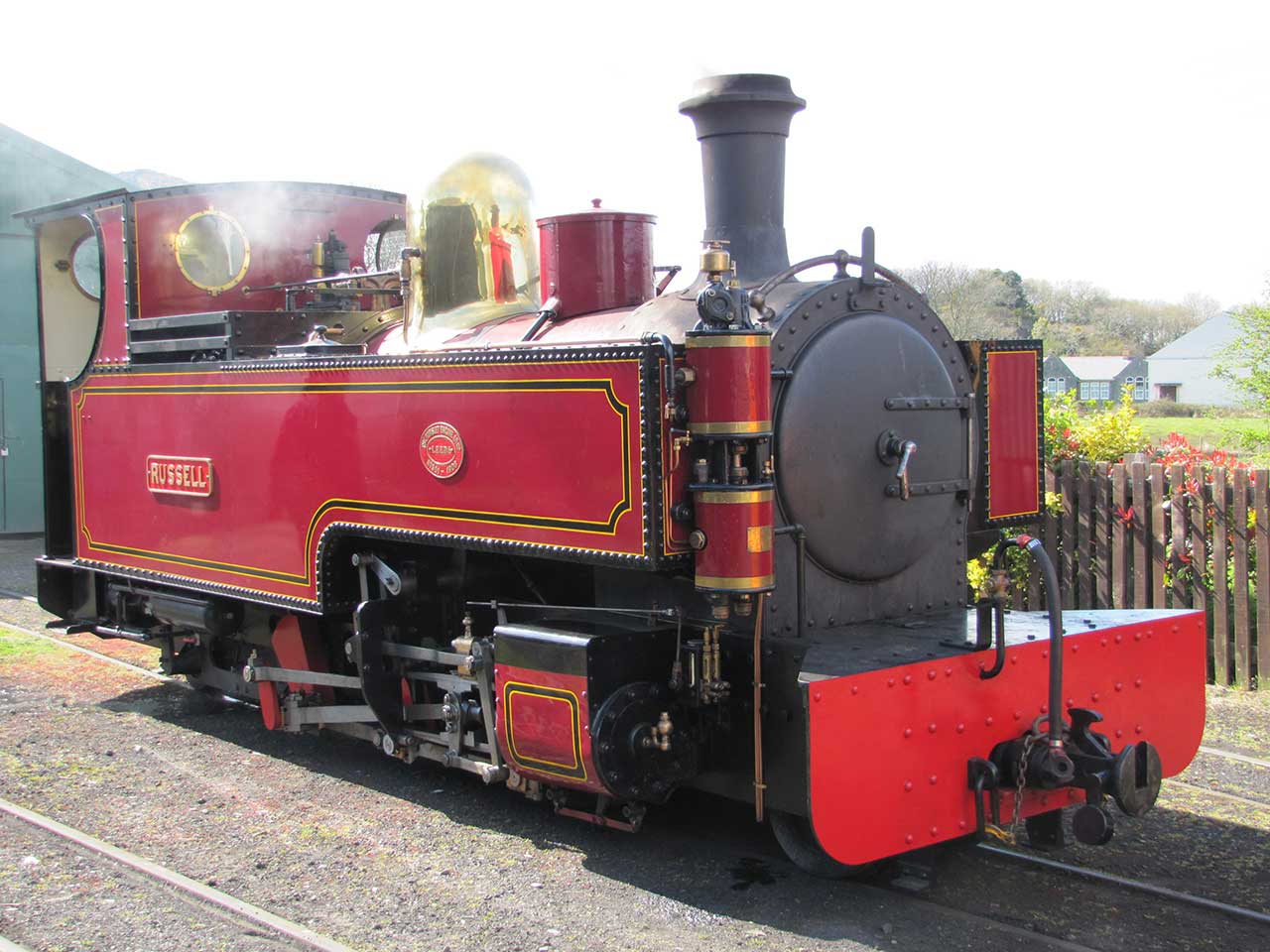
The Welsh Highland Heritage Railway – Photo © Mike Chapman
Visit their website at whr.co.uk for more information.
Map showing all The Great Little Trains of Wales
The Great Little Trains of Wales
If you like things a little more ‘steamy’, the how about a visit to one of “The Great Little Trains of Wales”. There are fine examples of Narrow Gauge Railways at “Ffestiniog”, Tal-y-Llyn”, “Llanberis Lake Railway” and the “Welsh Highland Railway”.
Most of these were built for the slate industry in the late nineteenth century and have been modified for people (carriages with seats have been added!).
Map showing all The Great Little Trains of Wales
The Talyllyn Railway
The Talyllyn Railway runs seven and a quarter miles along the beautiful Fathew Valley from the seaside town of Tywyn (on the Cardigan Bay coast) to Nant Gwernol. There are some lovely walks en-route, including woodland walks at Dolgoch and Nant Gwernol and should you fancy a longer stroll, you can walk to the ruins of Castell-y-Bere and Bird-Rock “Craig yr Aderyn” from Abergynolwyn.
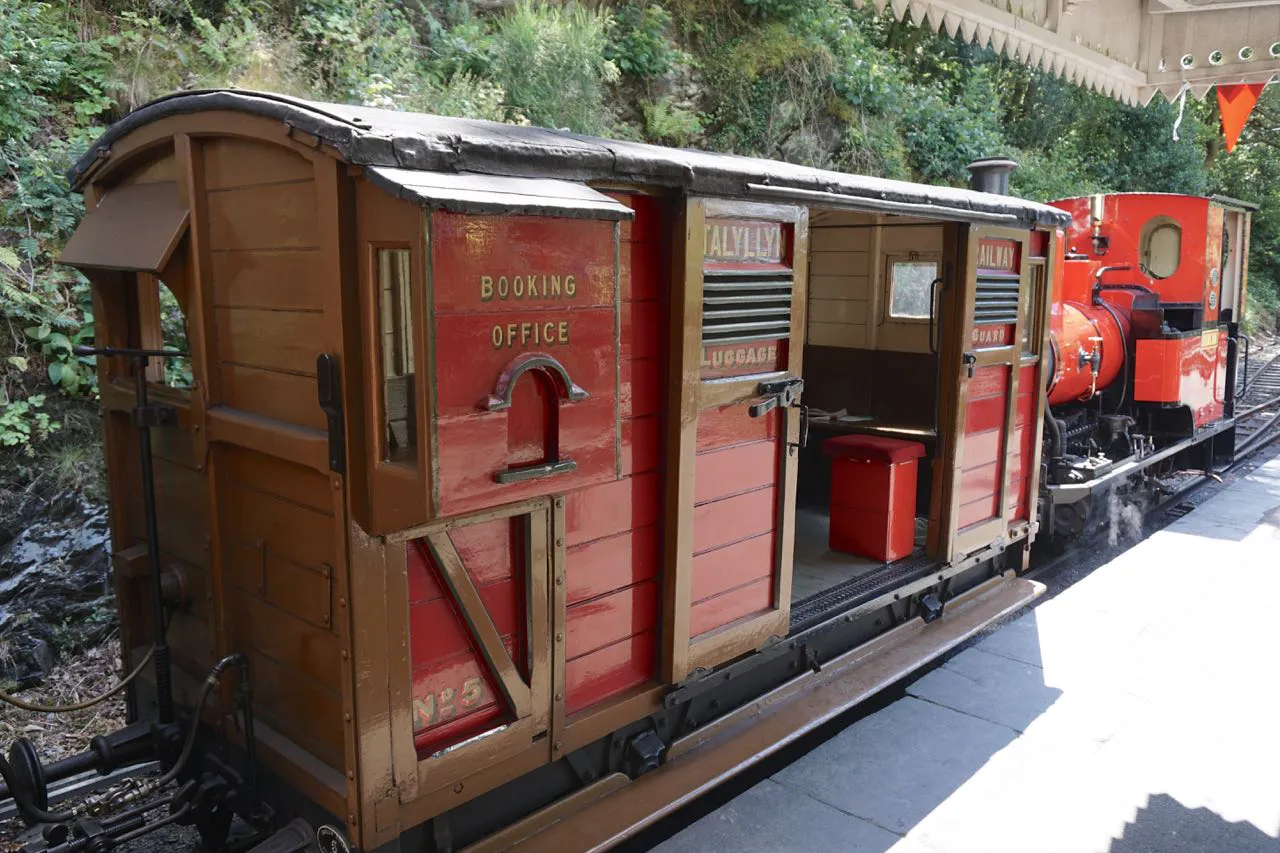
The Talyllyn Railway – Guards Van at Abergynolwyn Station
The railway is a 2 feet 3 inches (686 mm) gauge, built to carry slate from the Bryn Eglwys quarries near Nant Gwernol to Tywyn. The line was opened in 1865 and closed in 1946 due to a major rockfall in the quarry. It was the first narrow-gauge railway in Britain authorised by Act of Parliament to carry passengers using steam engines.
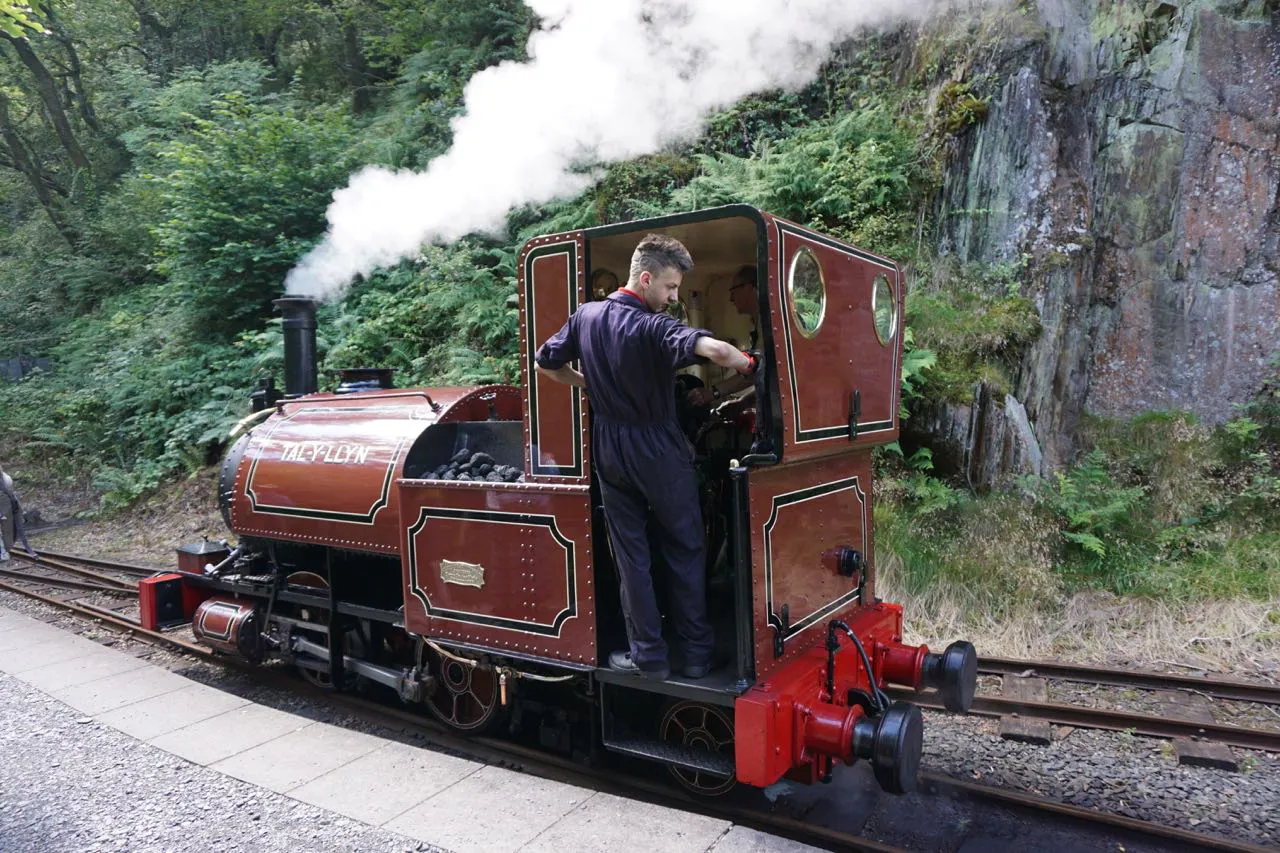
The Talyllyn Railway – Tal-y-Llyn Loco at Nant Gwernol Station
The Talyllyn Railway Preservation Society was formed in the 1951 and has gone from strength to strength. Talyllyn was the world’s first railway to be preserved as a heritage railway by volunteers and was the inspiration of the Ealing Comedy film “The Titfield Thunderbolt”. Work started to extend the route along the old mineral line from Abergynolwyn to Nant Gwernol in 1968 with regular passenger trains running in 1976.
Every August you can also “Race The Train” from Tywyn to Abergynolwyn and back. The aim is to run the fourteen and a half mile cross-country course before the train does (the train takes around one hour forty-five minutes). You can read more about the race at racethetrain.com.
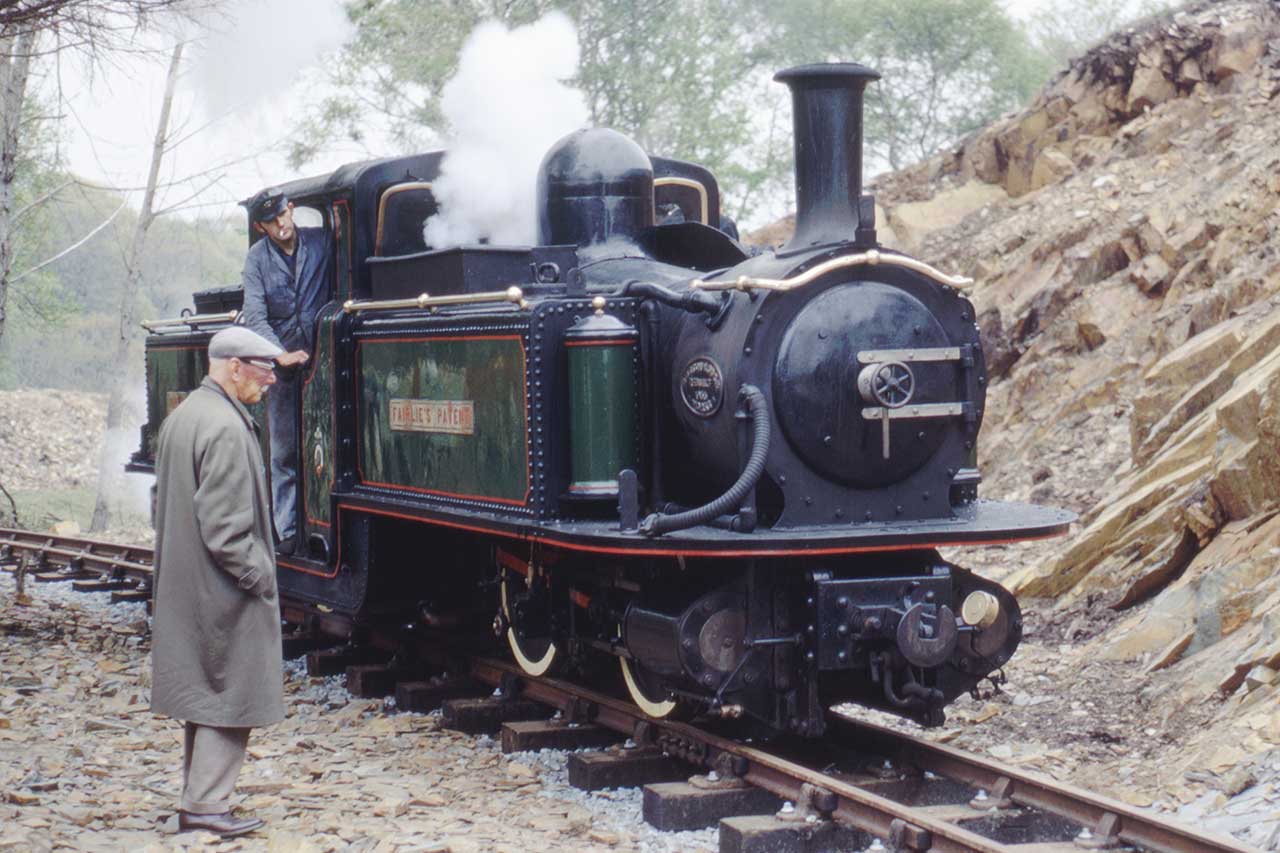
Fairlie Patent Engine in 1968
The line featured in the short film “Railway with a Heart of Gold” by American producer Carson Davidson in 1953 and one of The Rev. W. Awdry’s “Railway Series” of books, “Skarloey Railway” was based on the Talyllyn Railway.
A Sign at Nant Gwernol Station, Reads.
“When the railway was built, all of the buildings were of brick or timber construction because even though the slate quarries were already in operation, no slate came by this route until the line opened. Although Nant Gwernol has always been the limit of locomotive haulage, passenger services only ran as far as Abergynolwyn and there was no station here until 1976.
Slate wagons and supplies for the quarries were brought here and waited in one of three sidings to he hauled up to the quarry tramway, with wagon loads of slate going the other way.
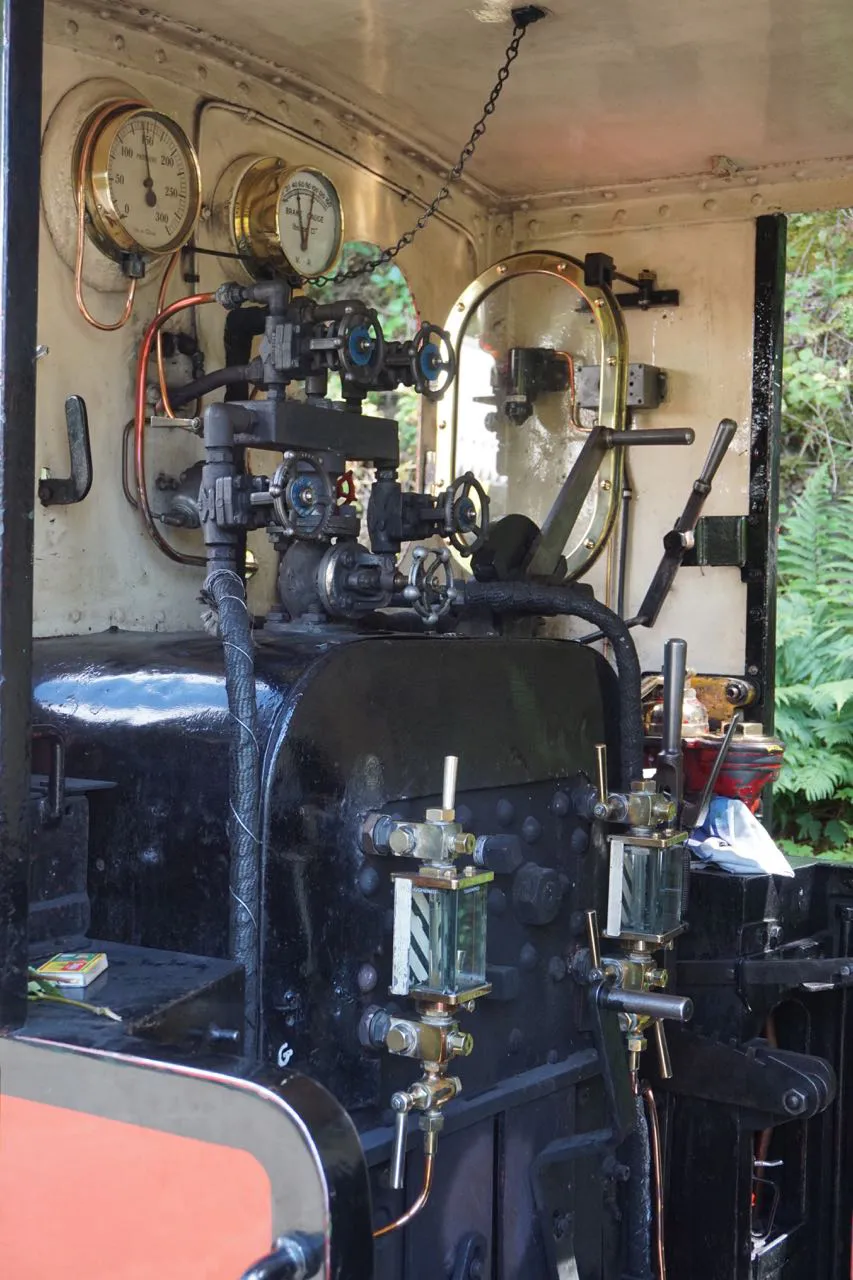
The Talyllyn Railway – Interior of Duncan
With the closure of the quarries in 1947 the line from here to Abergynolwyn lay derelict until upgraded for passenger trains in the early 1970s. The station here is a slightly scaled-down copy of the 1866 wooden buildings at Tywyn Pendre and Abergynolwyn and was built for the opening of the extension in 1976.
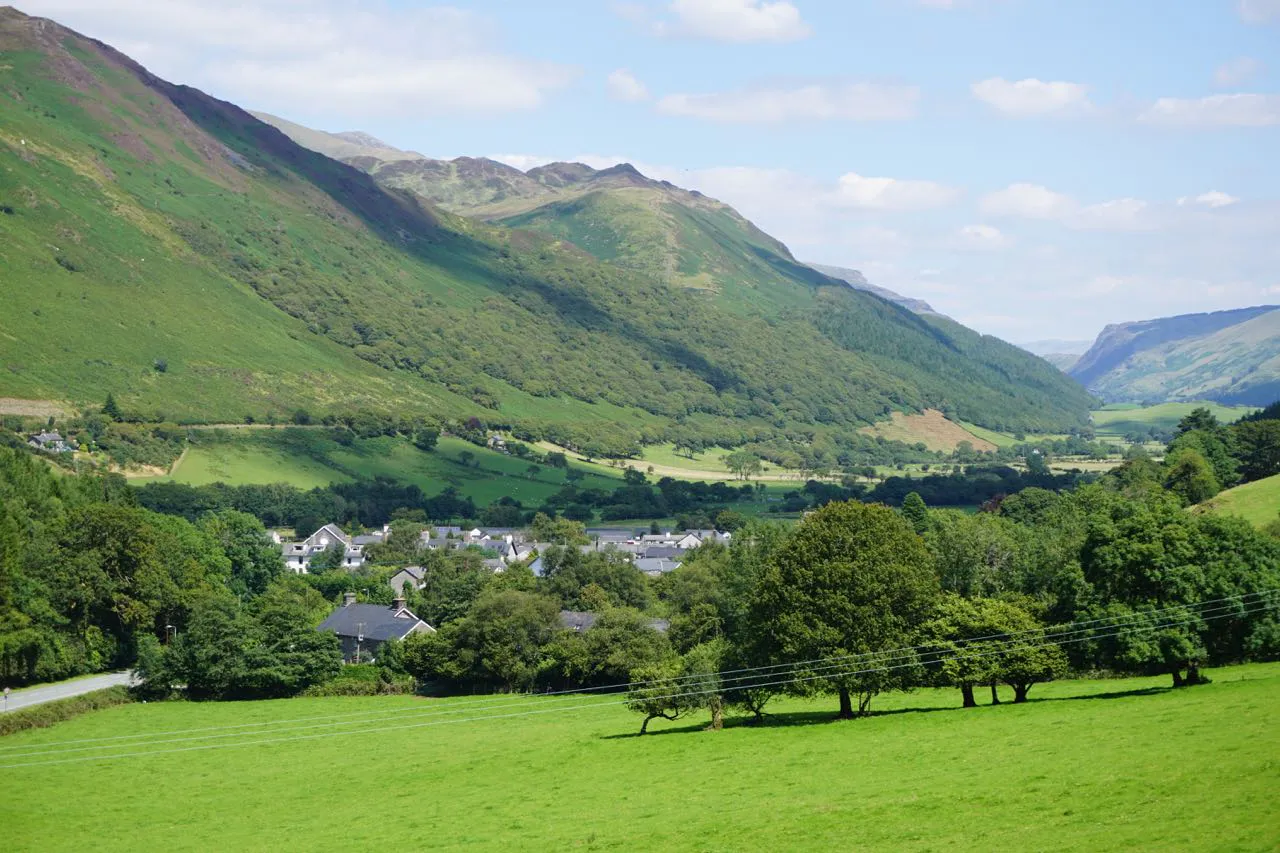
Abergynolwyn
It is possible to imagine the amount of work done, mainly by volunteers, to widen the trackbed sufficiently to take passenger vehicles. Look at the curve off the far end of the platform and you will see a short length of track parallel to main line. This is about where the original line ran; very close to the edge of a 150 drop and just wide enough for the engine to scrape by with its train or small wagons”.






Map showing all The Great Little Trains of Wales
The Corris Railway
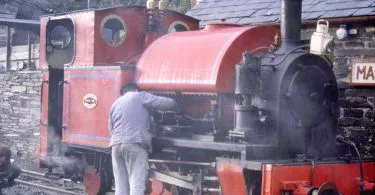
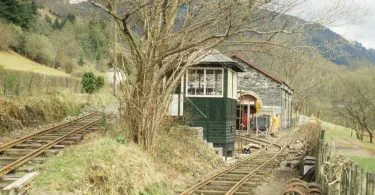
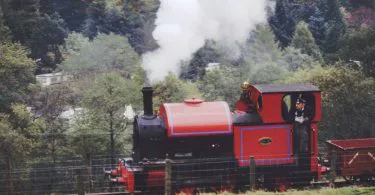
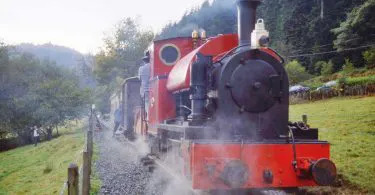
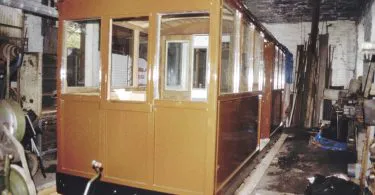
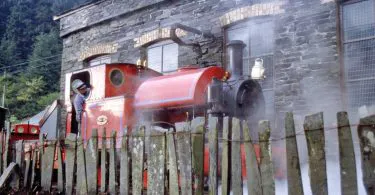
The Corris Railway was built in 1859, originally being a horse-drawn tram-road until the arrival of steam engines in 1878. It is the first narrow-gauge railway in Mid-Wales. The first passengers were carried in 1883 and it closed to passengers in 1930 and completely in 1948.
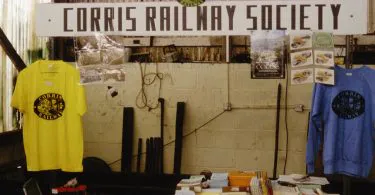
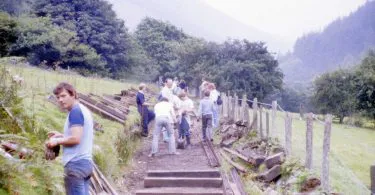
The Corris Railway Museum opened in 1970 with occasional passenger services re-commencing in 2002 and regular steam-hauled services in 2005. The round trip takes fifty minutes and includes a guided tour of the 137-year old engine shed and workshops at Maespoeth. The Corris Railway Society is run by volunteers.
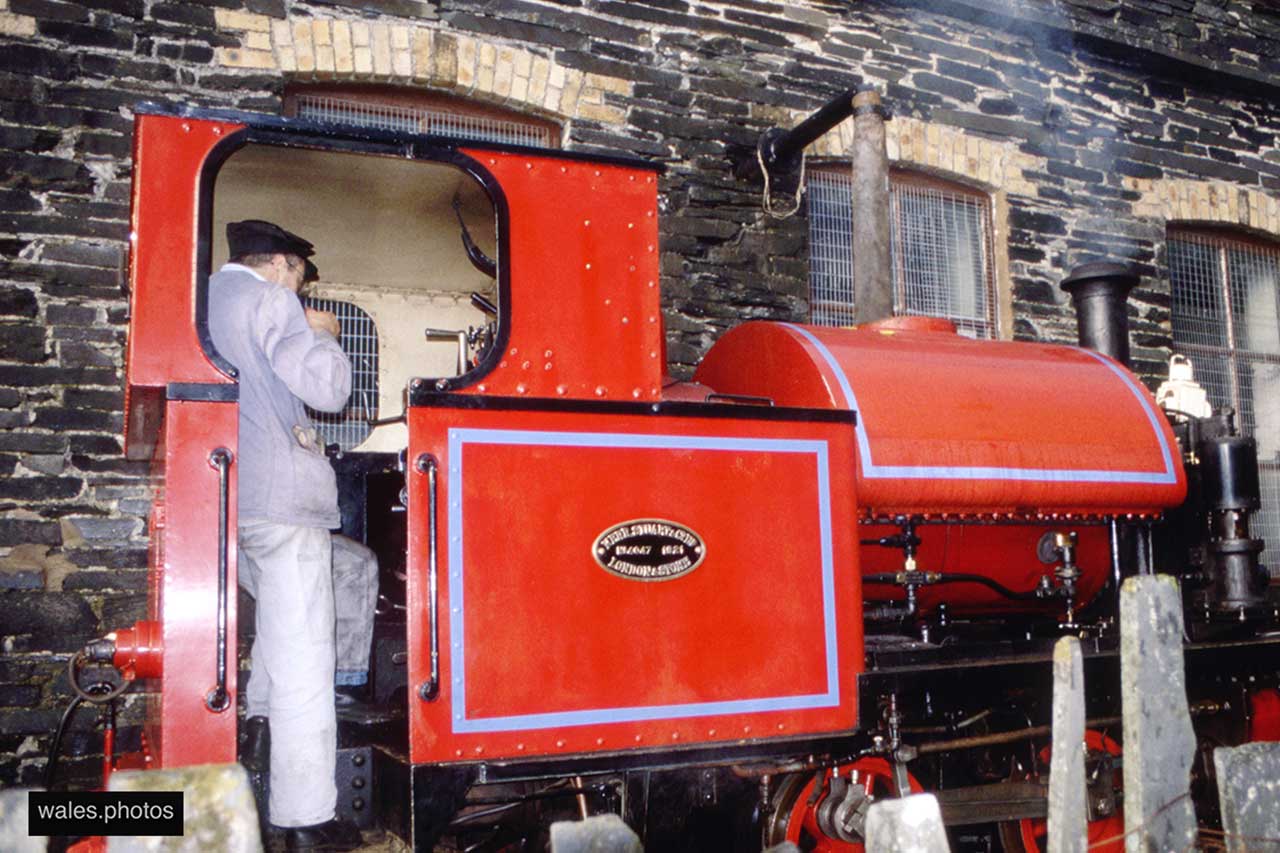
Map showing all The Great Little Trains of Wales