Railway Facts (Ffestiniog & The Welsh Highland Railway)
The Ffestiniog Railway Company operates the two foot (597mm) gauge Ffestiniog and Welsh Highland Railways, which carry up to 400,000 passengers a year.
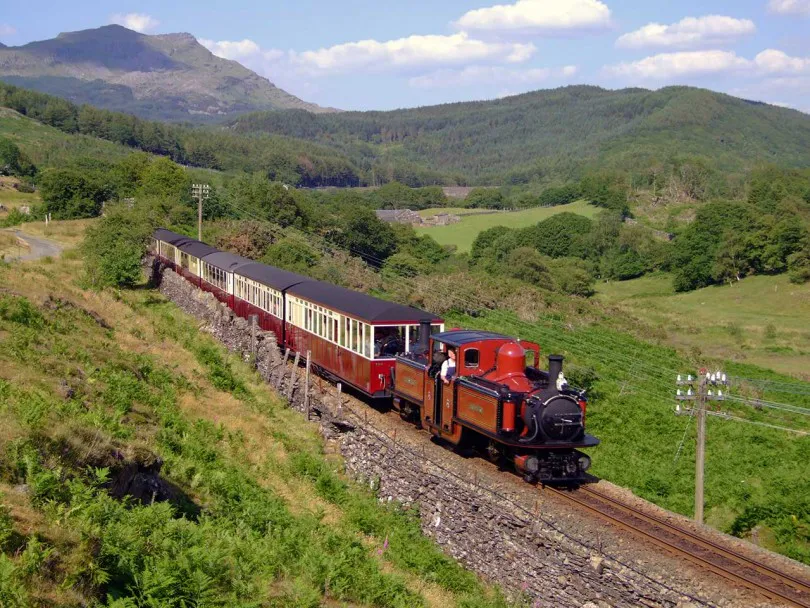

The Ffestiniog Railway is recognised by the Guinness Book of World Records as the oldest operational railway company in the World, being founded by Act of Parliament in 1832. 2015 marks the 150th anniversary of the start of passenger services in 1865.
In 1863, it became the first narrow gauge railway in the World to introduce steam engines – two of which are still in use today, with a third undergoing restoration – the oldest locos in the World still operating on their original railway and celebrated their 150th birthday in 2013. It is the only railway in the World to operate double-ended Fairlie steam locomotives.
It runs the oldest railway works in the World, where new steam locomotives and carriages have been built in the 19th, 20th and 21st centuries – Merddin Emrys was built in 1879 and is still in regular use today. In August 2010, the UK’s newest steam loco, Lyd entered service.
Since the 1950s, the Ffestiniog Railway has become a leader in railway preservation and is now one of the UK’s top and North Wales’ Number One tourist attraction. The line reopened to Blaenau Ffestiniog in 1982.
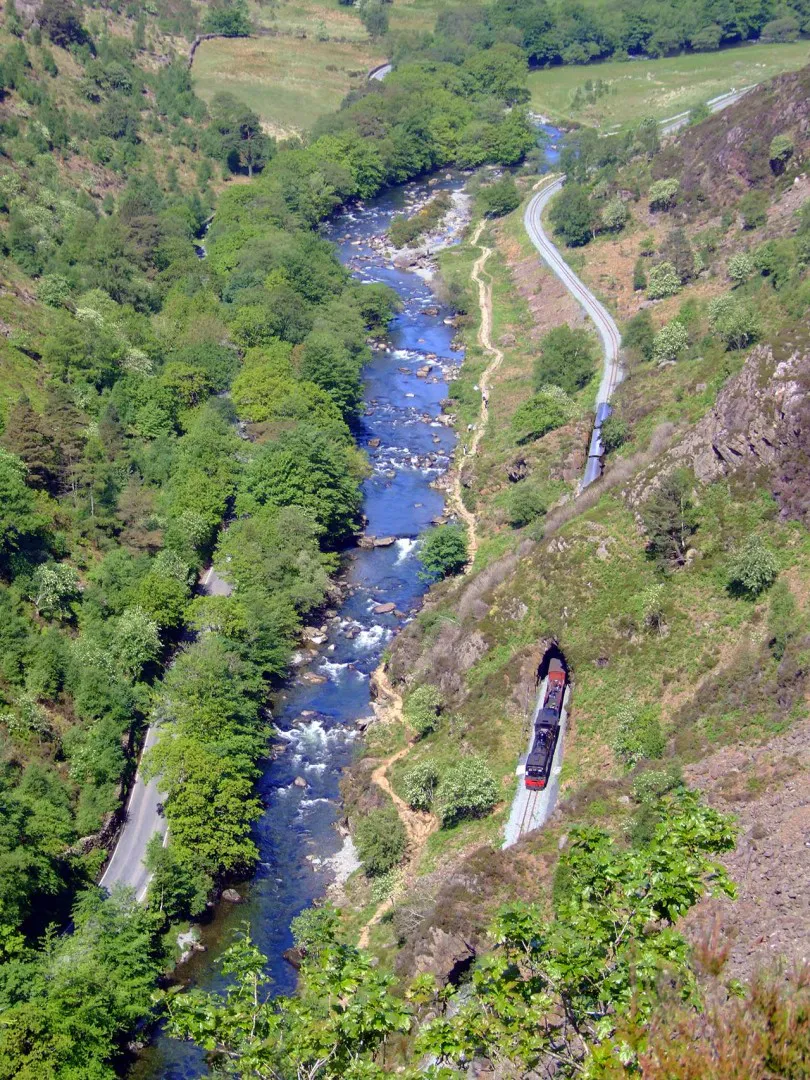
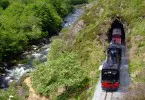
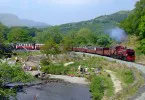
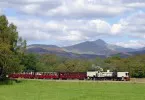
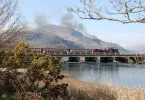
Welsh Highland trains cross the width of the Snowdonia National Park, past the foot of Snowdon and the beautiful village of Beddgelert, before travelling the length of the Aberglaslyn Pass – voted the most beautiful spot in the UK by members of the National Trust.
The Welsh Highland operates the most powerful narrow gauge steam engines in the world – Beyer Garratt NG/G16s weighing over 60 tons. These are the only locos capable of hauling long trains on some of the longest and steepest gradients to be found on any railway in the UK.
On April 20, 2011, the Welsh Highland was officially opened throughout from Caernarfon to Porthmadog. At 25 miles, the WHR is the longest heritage railway in the UK. Its connection with the Ffestiniog enables passengers to travel between Blaenau Ffestiniog and Caernarfon – almost 40 miles of narrow gauge steam.
Rebuilding the 25 mile Welsh Highland Railway cost £28 million, most of the work being carried out by volunteers. £12.5m of the funding came from the Welsh Assembly Government, the EU and the Millennium Lottery fund, the remainder being raised through donations and fund raising schemes. In 2014, a £1.25 million rebuild of Porthmadog Harbour Station was completed to enhance customers’ experience.
In addition to employing 85 full-time staff, rising to over 100 during the peak season, independent research shows that the Ffestiniog and Welsh Highland Railways generate £25 million for the local economy each year – £250 for every man, woman and child in Gwynedd – and create a further 350 jobs in the area. Two supporting societies have 8,000 members and over 1,000 volunteers regularly work on the railways.
For over three decades, between 70 and 80 young people have worked on the railways each year as part of the Duke of Edinburgh’s Award Scheme. Pupils from local schools carry out work experience on the railways throughout the year and Boston Lodge Works trains young people through its apprenticeship scheme.
For further information or to arrange a visit festrail.co.uk or Facebook: facebook.com/festrail.
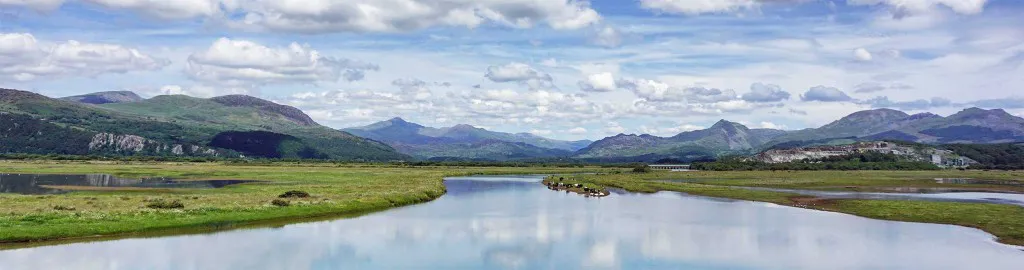
View from The Ffestiniog Railway
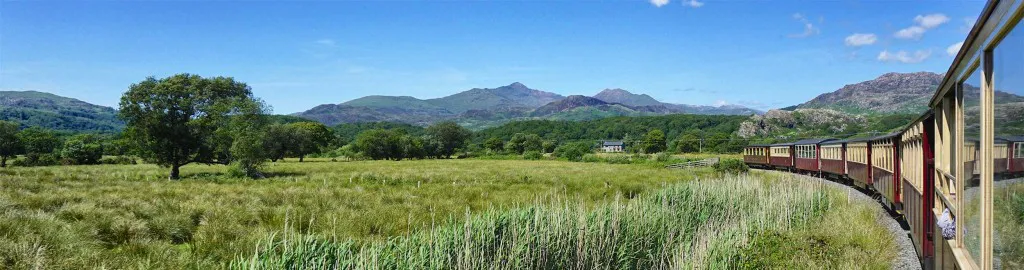
View from The Welsh Highland Railway
Cwmorthin Slate Quarry
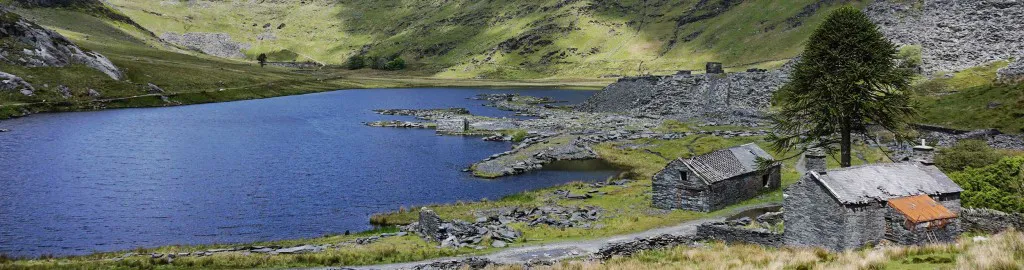
Cwmorthin Slate Quarry
You may think a slate quarry is the last place to spend a peaceful afternoon wandering around, especially with the high-energy goings on at nearby Llechwydd and it’s trampolines, zip-wires and and downhill mountain bike tracks, but Cwmorthin has a tranquil charm with it’s abandoned buildings and beautiful lake all sitting in a slate-lined mountain bowl. It’s the perfect place to bring your camera for those atmospheric shots.
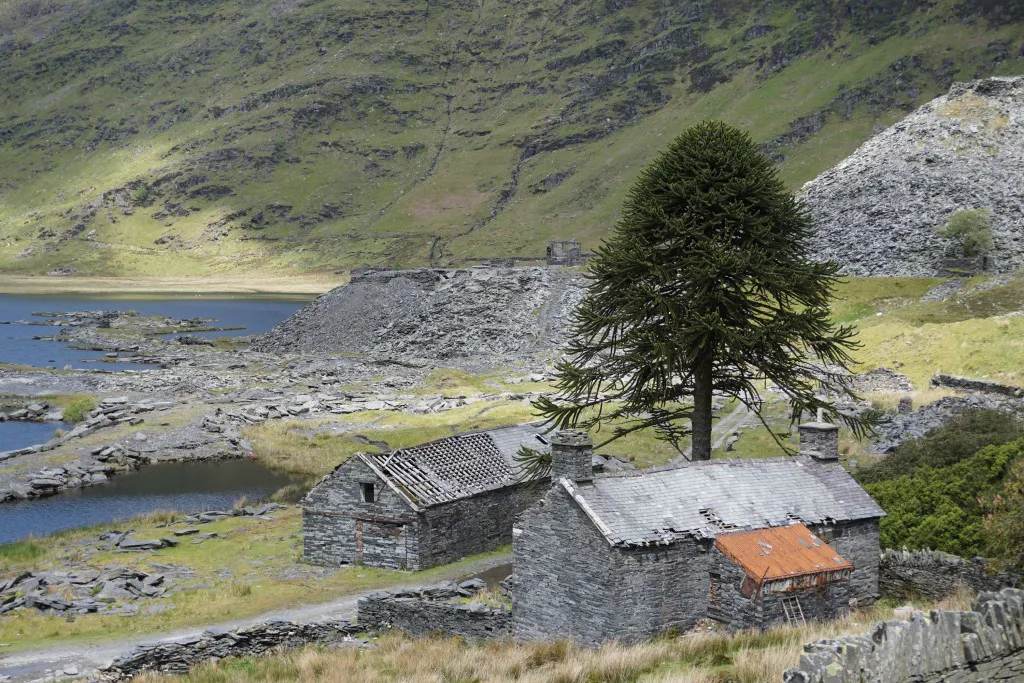
Cwmorthin Slate Quarry
There are several places to park at Tanygrisiau; there is a large car park as you drive towards the station, a small station car park, one by the popular Café and one at the quarry entrance. What’s more, they are all free. Tanygrisiau is also a station on the Ffestiniog Railway, near Blaenau Ffestiniog.
Slate extraction began at Cwmorthin in 1810 with work carrying on right up to 1997, although there were long periods when the site fell silent during it’s latter years with various transfers of ownership. Only around 10% of the slate made it out of the quarry, so the other 90% can be seen all around (and high above). With around 96,000 tons of slate leaving between 1861 and 1876, this makes around a million tonnes of waste in just those fifteen years.
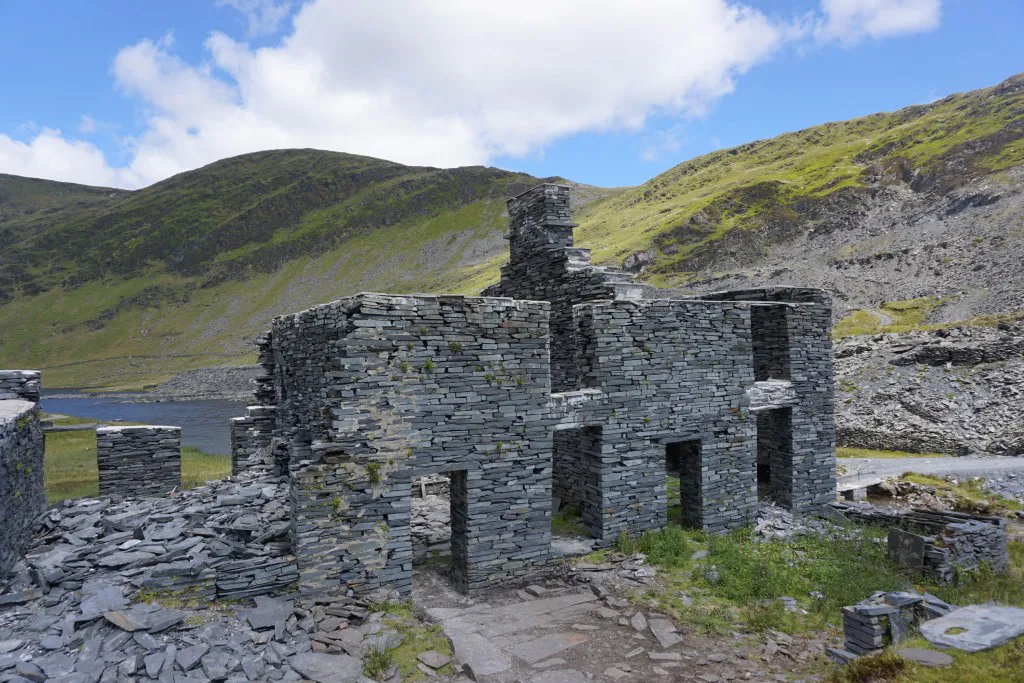
Tai Llyn, Cwmorthin Slate Quarry
It was a dangerous place to work with 21 deaths out of a workforce of 550 between 1875 and 1893 alone. This gave the quarry the nickname of “The Slaughterhouse”.
Read about Cwmorthin at cwmorthin.org.
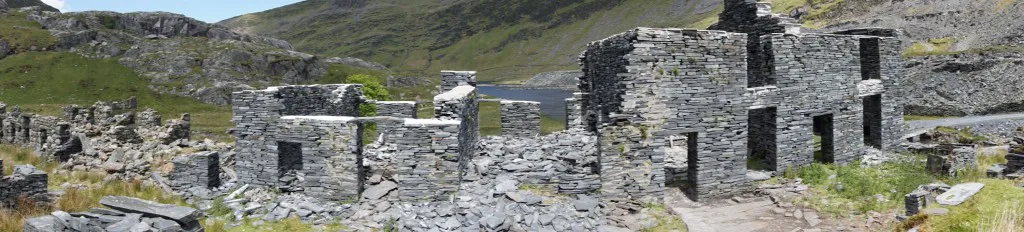
Cwmorthin Quarry, Tanygrisiau
The Welsh Highland Heritage Railway
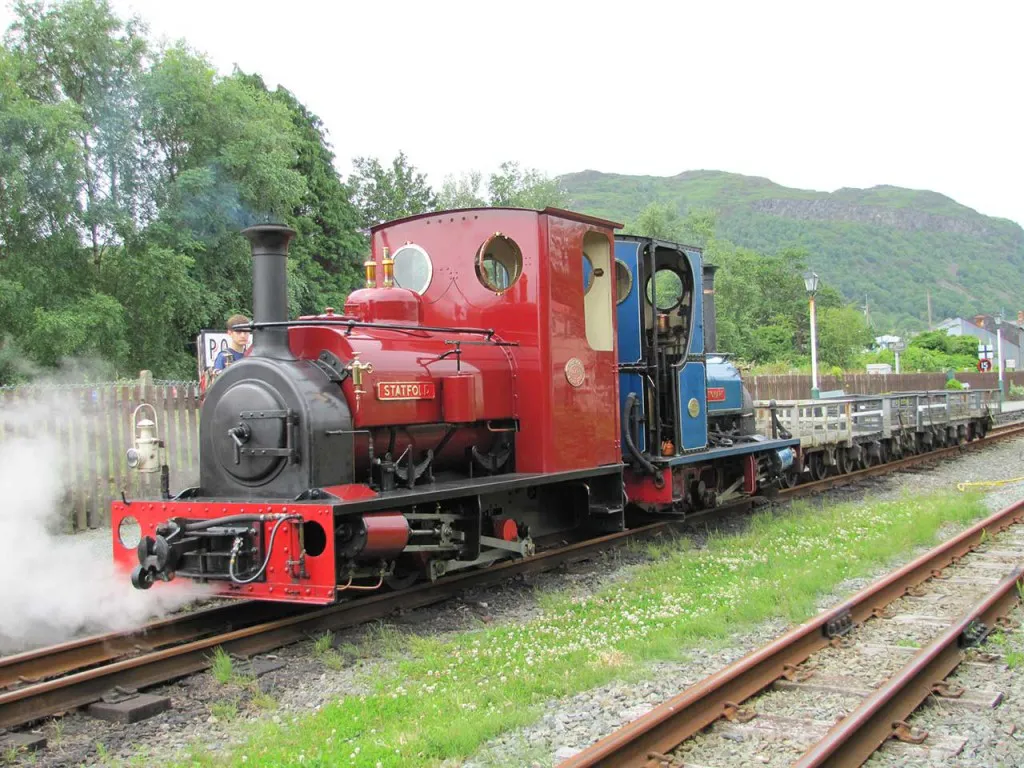
The Welsh Highland Heritage Railway – Photo © Mike Chapman
The Welsh Highland Heritage Railway formed in 1961 and is nearly entirely run by volunteers. It currently runs from March to November from their main station opposite the Network Rail station in Porthmadog (on Tremadog Road).
Trains run for half a mile (0.8 km) to Pen-y-Mount Junction, where the railway connects with the Welsh Highland Railway main line. The train stops at Gelert’s Farm halt on it’s return to allow passengers to visit a museum and a miniature-gauge railway.
The return trip lasts an hour, which includes a free guided tour around the museum.
Visit their website at whr.co.uk for more information.
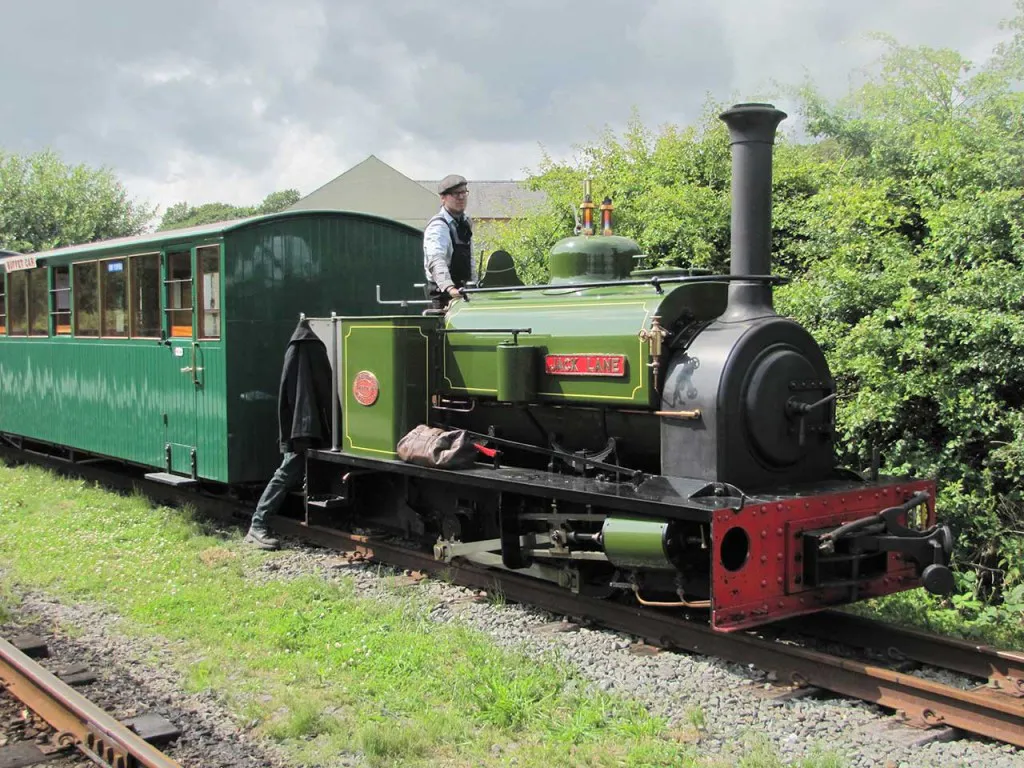
The Welsh Highland Heritage Railway – Photo © Mike Chapman
Map showing all The Great Little Trains of Wales
Castell y Bere
Distinctive remains of a native Welsh castle, probably begun by Prince Llywelyn ab Iorwerth (‘the Great’) around 1221.
Castell y Bere was a remote outpost on Llywelyn’s southern frontier, but it was vital to his security. It guarded his cattle range, protected the homeland of Gwynedd and dominated the neighbouring lordship of Meirionydd.
Llywelyn ab Iorwerth was Prince; but cattle were king! In medieval Wales cattle were as good as currency. This location was so important that Llywelyn was prepared to take it from his own son Gruffudd in 1221, so that he could begin building a castle.
After Llywelyn died his successors continued to use it. It was taken by English king Edward I, in 1283. He made alterations to the castle and hoped an English frontier town would grow here. It never happened. The English abandoned the site during an uprising against their rule in 1294.
Today Castell y Bere is as wild and remote as it was when Llywelyn first arrived. It stretches along the summit of a rocky outcrop on the eastern side of the Dysynni valley. The picturesque and remote location makes it difficult to appreciate that this sprawling stronghold once controlled an important routeway running up from the coast at Tywyn northwards through the mountains towards Dolgellau and protected the southern border of Gwynedd. Distinctive features at Castell y Bere include the characteristic Welsh apsidal – or elongated D-shaped plan of the south tower. In scale, it may be compared to examples of similar design at Welsh castles of Ewloe and Carndochan, where they served as keeps.
Another distinctively unusual feature for a Welsh castle of the 1220s is to be found in the highly elaborate defended entrance with its ditches and two gate-towers, each with its own drawbridge and probably portcullis. Such a sophisticated entrance cannot be matched in any other Welsh castle. Indeed, even by the standards of English fortification, it would have been technologically advanced for the early 1220s.
We welcome assistance dogs at our sites. Dogs on leads will also be welcome at some of our sites.
More Details on the CADW Website & CASTLES.WALES
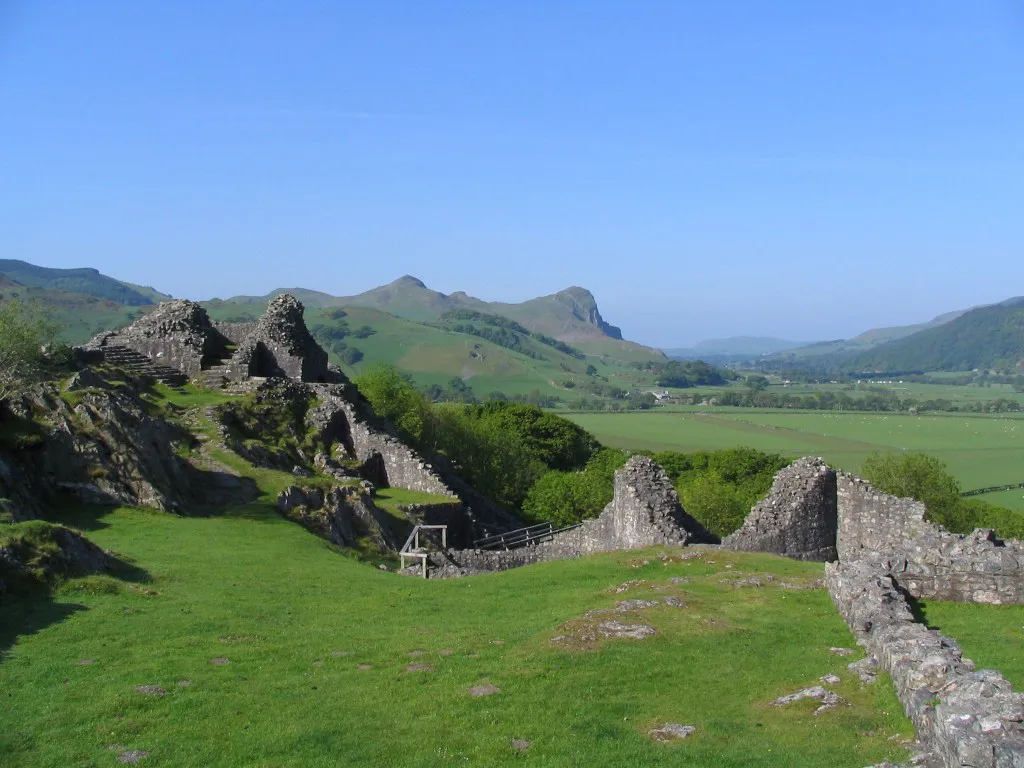
Castell y Bere Towards Craig yr Aderyn
Bae Abermaw
Bae Abermaw, Barmouth
Bae Abermaw is a boutique, coastal hotel offering free parking and a spectacular location in Barmouth. There is a large restaurant, a garden and striking views.
View on the Booking.com Website
Dolwyddelan Castle
A visit to this solitary sentinel is worth it for the views alone.
Castles and mountains. Dolwyddelan and Snowdonia. Made for each other. Improving on nature’s handiwork is easier said than done but this beauty blends beautifully with its craggy home. A blot it is not. Thank the Prince of Gwynedd in north Wales and de facto ruler of most of Wales, Llywelyn Fawr (Llywelyn the Great).
Llywelyn (1173 – 1240), knew his square mile like nobody else. Dolwyddelan, along with nearby Dolbadarn and Prysor, formed a collection of strategically important mountain fortresses for the Welsh ruler. After his day, his grandson Llywelyn ap Gruffudd took over the castle. He kept Edward’s forces at bay for a while.
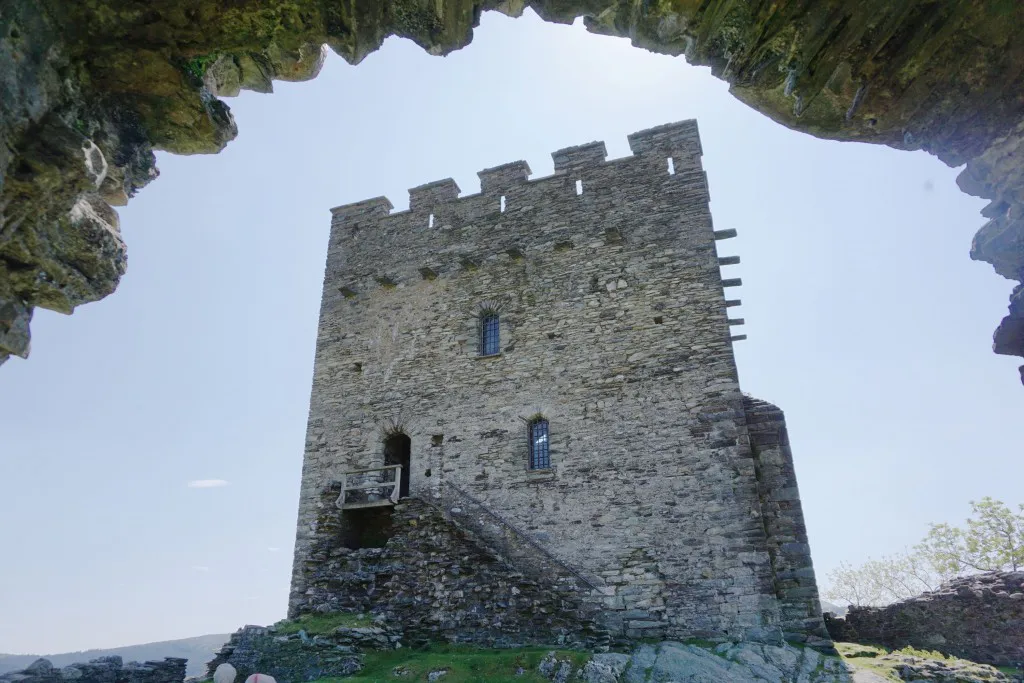
Dolwyddelan Castle
The magnificent keep was later supplemented by Llywelyn with a stone curtain wall enclosing the courtyard. The English went on to refortify the castle and add another rectangular tower. It didn’t fare as well as the original. Maybe there is justice after all as it now lies in ruins.
With a little restorative help from the Victorians, this 13th-century fortress is now a masterpiece.
More Details on the CADW Website & CASTLES.WALES
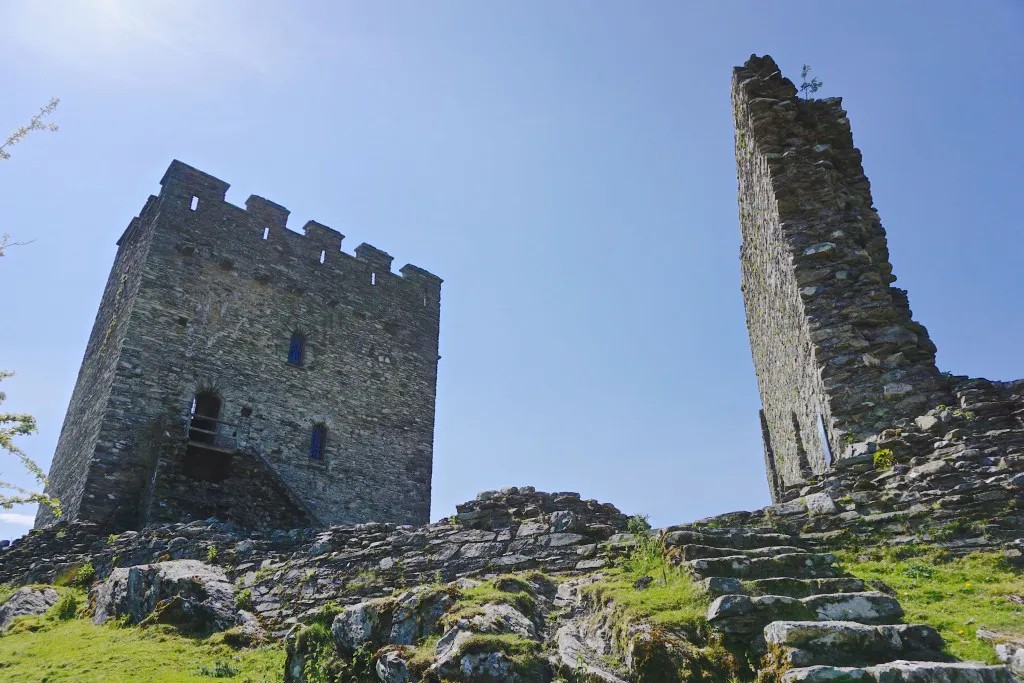
Dolwyddelan Castle
Wavecrest
Wavecrest
Wavecrest is an elegant 4-star rated guest house just two minutes walk from Barmouth Beach with its spectacular mountain views.
View on the Booking.com Website
Bwlch y Fedwen
Bwlch-y-Fedwen
Set in a 17th-century building, Bwlch y Fedwen B&B is located two miles from Porthmadog in the small village of Penmorfa. If offers a sun terrace and free parking.
View on the Booking.com Website
Portmeirion Hotel & Castell Deudraeth
Portmeirion Hotel
Built by a visionary architect in 1925, The Portmeirion Hotel & Castell Deudraeth overlooks the beautiful Dywryd Estuary. Located on a private peninsula, the hotel offers a spa and wellness centre, an on-site mini market, a bar and a restaurant.
View on the Booking.com Website
Tyr Graig Castle
Tyr Graig Castle
Tyr Graig Castle is an impressive Victorian building in a splendid cliff-top location. Most rooms at this 4-star guest accommodation enjoy stunning views of Cardigan Bay, whilst all have a private bathroom.