The Wales Coast Path
The Wales Coast Path is an 870 mile (1,400 km) walking route that opened in 2012 and runs the whole length of the Welsh coastline from Chepstow in the south to Queensferry in the north. It has the honour of being the world’s first coastal path to cover an entire country.
It passes through nearby Barmouth.
Carved Stones in the Parc
Dolgellau Parc
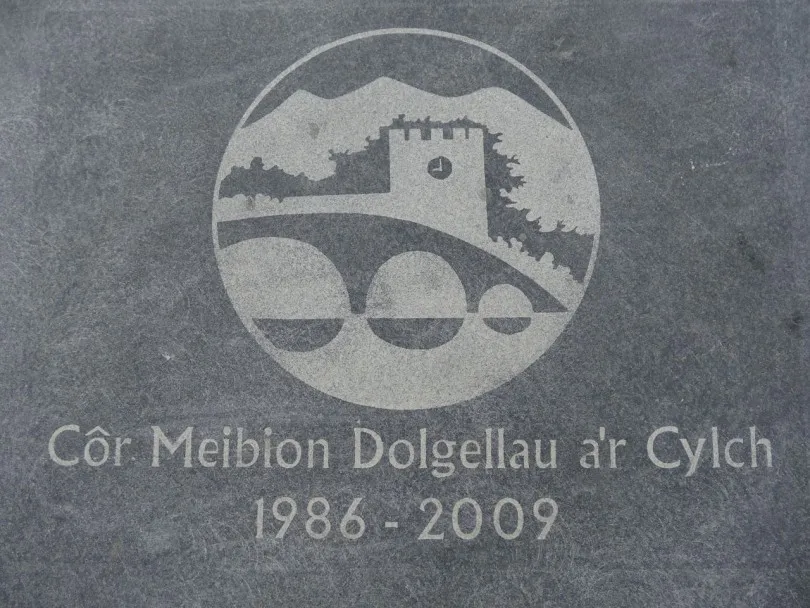
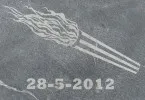
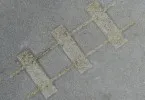
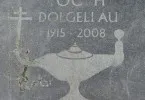
The Dolgellau Parc Committee (part of the Dolgellau Partnership) have been involved for some time in renovating the Parc and this is one of the last additions to the “Echoes of History” area. Following on from the symbols on the granite blocks around the memorial, this space has been designed to mark some of the industries of the town, including wool, cattle, railways and slate.
Colin White (chairman) had an ambition to provide Dolgellau with a definitive Artwork and contacted Alan Mantle who is a world renown sculptor, originally from Arthog, but now living in France.
Alan said he would be pleased to do something for his home area and has produced… “Roots”. The sweet chestnut tree is ideal for wet weather and should survive a long time, having fallen naturally near Bird Rock.
We hope everyone will enjoy it.
Janet Baker (Secretary of the Parc Committee)
The Poles & Finials
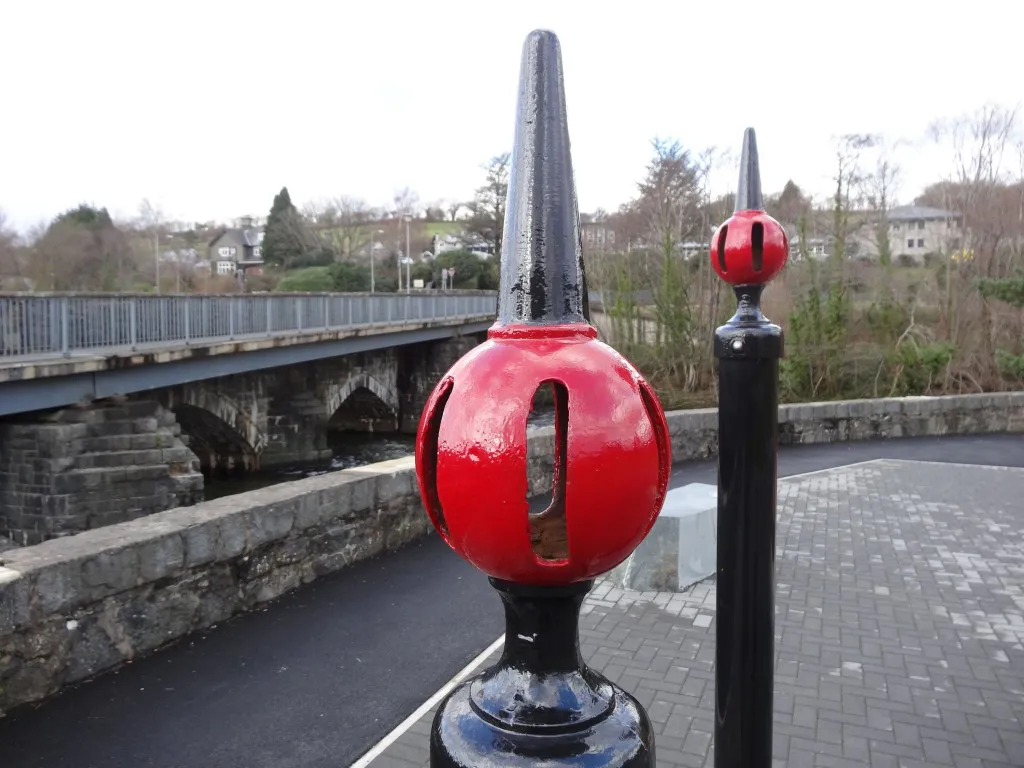
The poles showcase four original Railway ‘Finials’. These topped the signals beside the old railway line, which is now The Mawddach Trail.
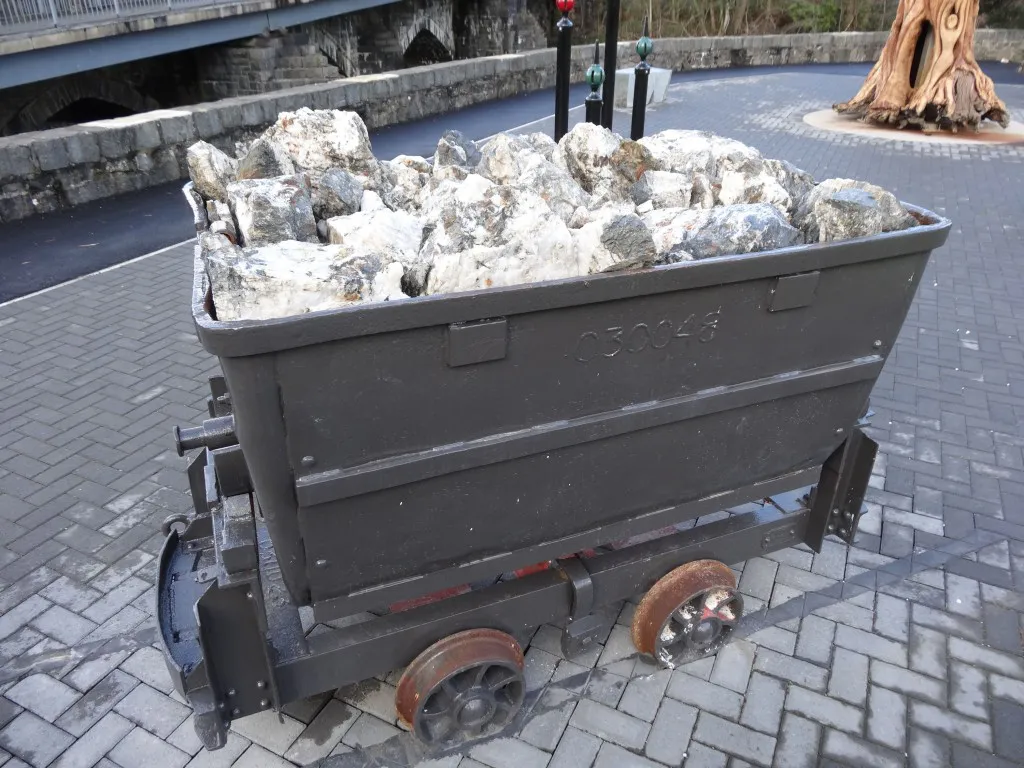
The Wagon & Real Gold Ore
The Wagon contains real Gold Ore (as well as Copper & Lead) from Clogau Gold Mine near Bontddu.
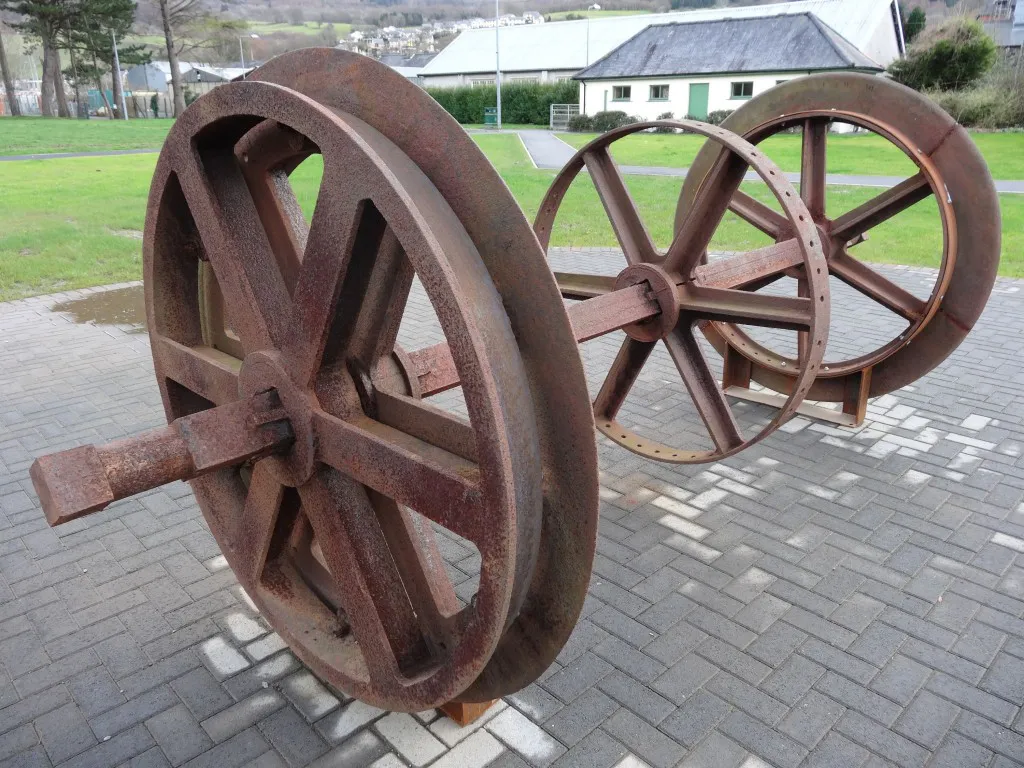
The Wheel from a Winding Drum
The cast iron wheel dates from 1871 and is the internal part of a winding drum from Ratgoed Quarry, Cymerau. It’s similar to this one at nearby Aberllefenni (below).
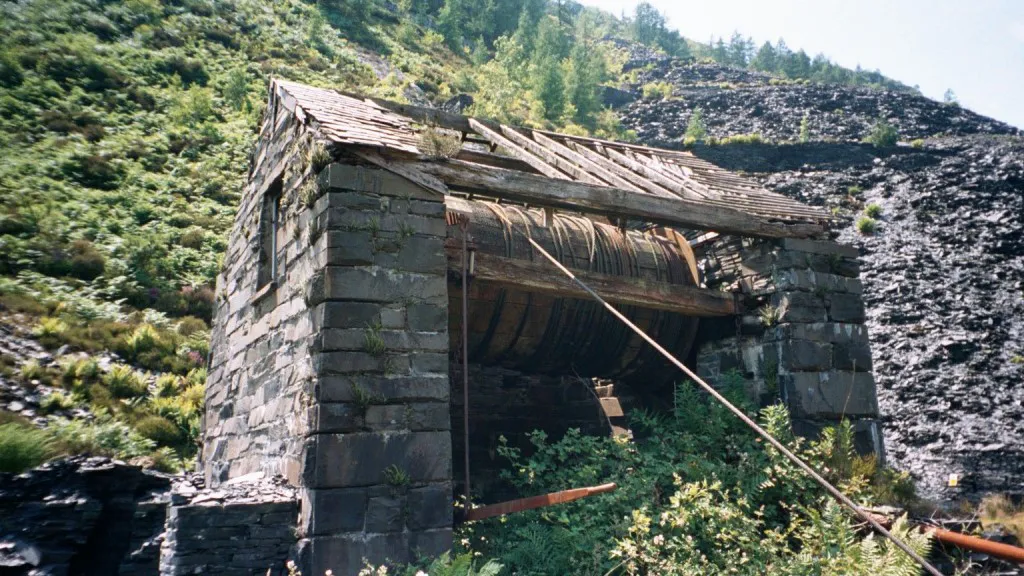
Winding House Building at Aberllefenni
The World War One War Memorial
Dolgellau And The Great War by D.T. Sheppard – Published in July 2014
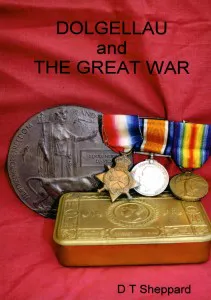
The Great War by Dai Sheppard
“Of the millions who lost their lives in the First World War, 107 of them are commemorated on the war memorial in Dolgellau. These people Weren’t statistics but individuals with their own unique stories.
This book is an attempt to tell their stories so that they are not forgotten. There is the story of the man who trekked 500 miles across North America to enlist, one who had represented Wales at football, two brothers who had been killed on the same day and a father of five children who drowned on his way to war.”
The book is available in English and Welsh versions and can be purchased direct from the author and publisher Dai Sheppard:
Email: [email protected].
Telephone (01341) 423 390
Dolgellau & Cader Idris Webcam
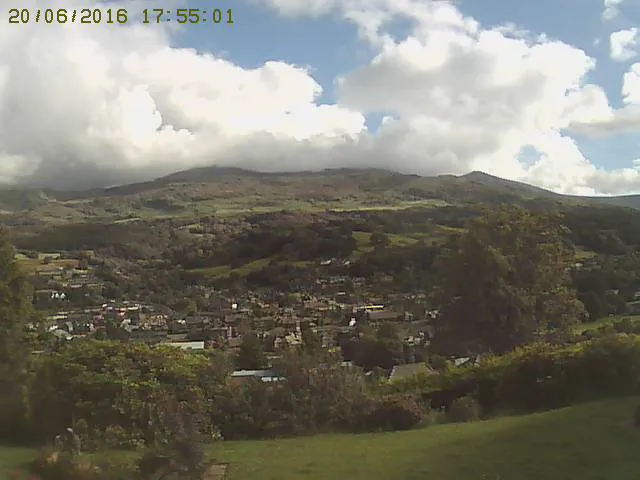
Dolgellau and Cader Idris Webcam
Dolgellau & Cader Idris Webcam. Updated every five minutes (daylight hours).
Antur Stiniog
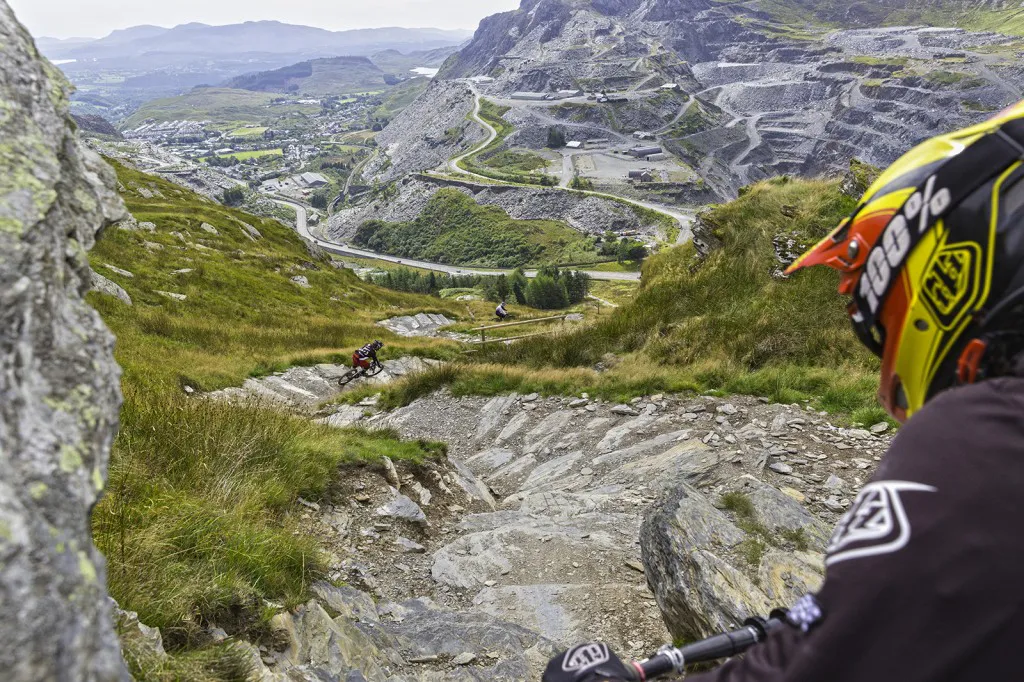
Biker at the top of a trail at Antur Stiniog – © Crown copyright (2011) Visit Wales
Mountain Biking centre near Blaenau Ffestiniog, Wales. “Come on, pull your lazy nose from the screen of your phone, computer or iPad (other tablets are available), come and enjoy a totally different and real experience in this amazing area. We can offer an unforgettably bonkers experience in activities such as walking, kayaking, history, nature, fishing, downhill mountain biking, wild camping and culture, encompassing all the uniqueness that Bro Ffestiniog has to offer! Get in touch and tell us what you want to do, and we’ll do our best to organise any activities that suit you!”
Antur Stiniog
Biker at top of trail at
Antur Stiniog,
Blaenau Ffestiniog – © Crown copyright (2011) Visit Wales
Ffestiniog Railway
The Ffestiniog Railway runs for 13.5 miles from Porthmadog to the historic slate town of Blaenau Ffestiniog.
The track was built between 1833 and 1836 (with a final section and the Moelwyn Tunnel near Tanygrisiau being completed in 1842). The track climbs and bends its way to a maximum height of 700 feet after starting at sea-level. The whole line was built with a 1 in 80 gradient, so the slate-loaded wagons could travel unpowered all the way from Blaenau Ffestiniog to the port at Porthmadog where it was loaded onto ships and transported all over the world. The empty wagons were then pulled back up using horses (who travelled down in their own special wagons). Passengers were carried from the early 1850s and three original locos are still in operation after 150+ years, with original carriages.
The railway closed to passengers at the end of 1936, but after much effort, restoration started in 1954 with the first passenger train running the short distance from Porthmadog across The Cob to Boston Lodge in 1955. The line was gradually extended from Porthmadog over the next few years, extending to Minffordd in 1956, Penrhyn in 1957 and Tan-y-Bwlch in 1958. Seven miles of track were reopened in these four years.
Due to the building of the hydro-electric power station and its reservoir (Llyn Ystradau) at Tanygrisiau, the line had to be diverted 2.5 miles, which meant building a new 930 feet tunnel near Tanygrisiau (built between 1975 and 1977) and a spiral near Dduallt to gain the 35 feet (11 meters) needed to bypass the old Moelwyn Tunnel which had been flooded when the reservoir was built. The diversion took from 1965 to 1978, although Dduallt was opened in 1968.
The final part of the track to Blaenau Ffestiniog took four years, with completion in 1982. This included the demolition and rebuilding of four old footbridges.
Visit their Ffestiniog & WHR website at festrail.co.uk
Map showing all The Great Little Trains of Wales
The Roots Sculpture
The sculpture is by ex-resident Alan Mantle (originally from Arthog) and contains forty-one figures. It’s the first bespoke public artwork ever to be installed in Dolgellau. It is carved from a fallen Sweet Chestnut tree from near Craig yr Aderyn (Bird Rock).
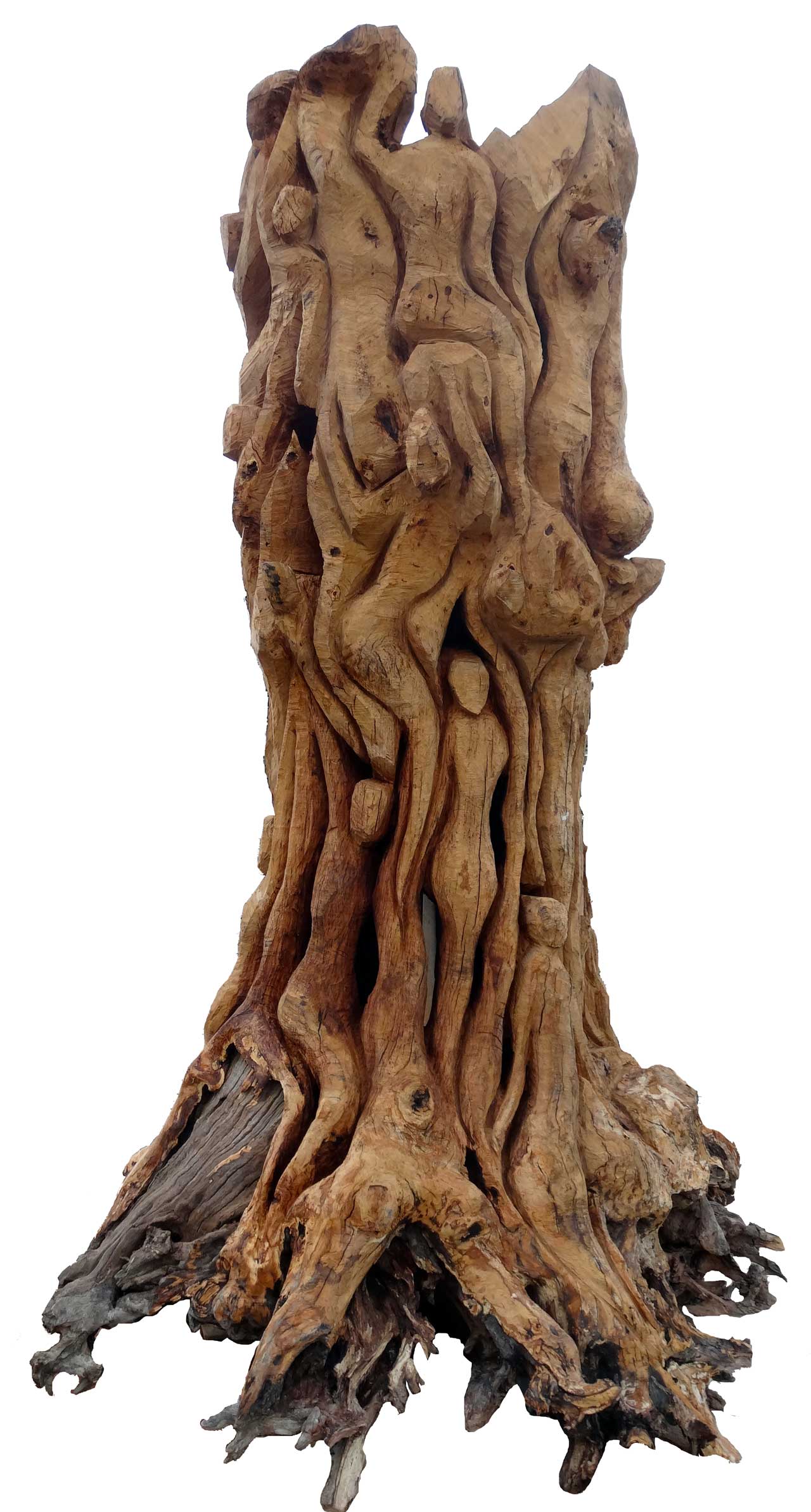
The Roots Sculpture by Alan Mantle
Criccieth Castle
It is a landmark site, a true testament to the varying fortunes of war.
What a picture, what a view! Perched on a headland with the sea as its constant bedfellow. Its twin-towered gatehouse intimidates prospective attackers. So badly did the native Welsh princes and English monarchs want it, that it changed hands more often than a relay baton.
Built originally by Llywelyn the Great, this very Welsh of princes included a very English style of gatehouse. Edward I’s forces took the castle some 50 years later, undertook their own improvements and remodelled a tower for stone-throwing engines. Not as much fun for those at the bottom as it sounds for those at the top!
Owain Glyndŵr sealed Criccieth’s fate when his troops captured and burnt the castle in the early years of the 15th century. This was to be the last major Welsh rebellion against the English.
Criccieth Castle may also have given the name to the town rather than the other way round. Its suggested origins are ‘crug caeth’ – ‘crug’ (hill in Welsh), ‘caith’ (captives) – the name given to the jail on the hill, a function once held by the castle. Buy an ice-cream, there’s a lot of history to digest.
More Details on the CADW Website & CASTLES.WALES
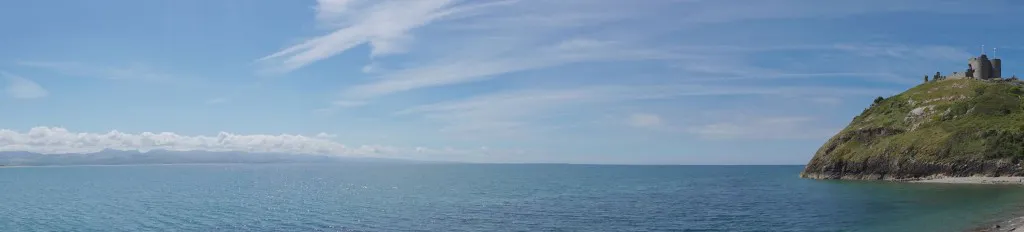
Criccieth Castle