Railway Facts (Ffestiniog & The Welsh Highland Railway)
The Ffestiniog Railway Company operates the two-foot (597mm) gauge Ffestiniog and Welsh Highland Railways, which carry up to 400,000 passengers a year.
The Ffestiniog Railway
The Ffestiniog Railway is recognised by the Guinness Book of World Records as the oldest operational railway company in the World, being founded by Act of Parliament in 1832. 2015 marks the 150th anniversary of the start of passenger services in 1865. In 1863, it became the first narrow-gauge railway in the World to introduce steam engines – two of which are still in use today, with a third undergoing restoration – the oldest locos in the World still operating on their original railway and celebrated their 150th birthday in 2013. It is the only railway in the World to operate double-ended Fairlie steam locomotives.
It runs the oldest railway works in the World, where new steam locomotives and carriages have been built in the 19th, 20th and 21st centuries – Merddin Emrys was built in 1879 and is still in regular use today. In August 2010, the UK’s newest steam loco, Lyd entered service. Since the 1950s, the Ffestiniog Railway has become a leader in railway preservation and is now one of the UK’s top and North Wales’ Number One tourist attraction. The line reopened to Blaenau Ffestiniog in 1982.
The Welsh Highland Railway
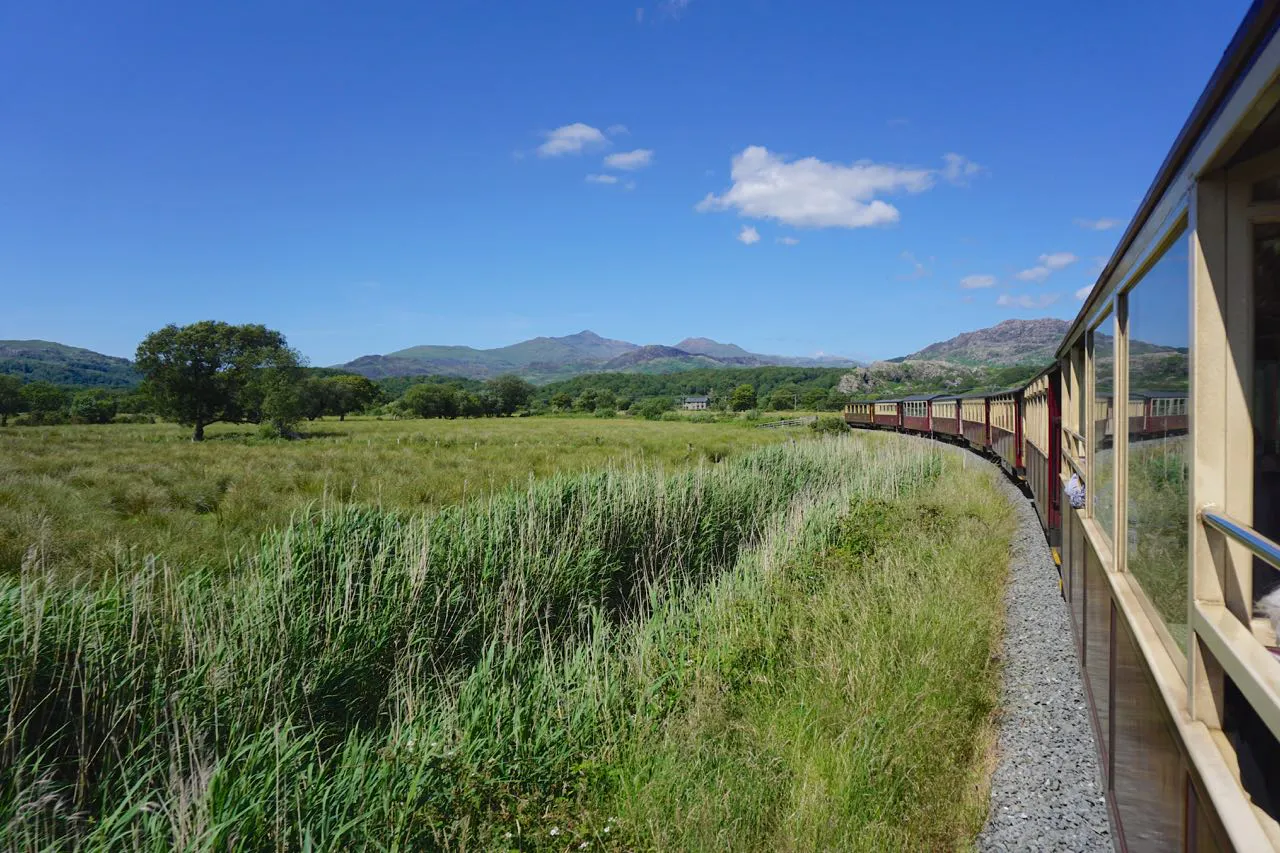
Welsh Highland trains cross the width of the Snowdonia National Park, past the foot of Snowdon and the beautiful village of Beddgelert, before travelling the length of the Aberglaslyn Pass – voted the most beautiful spot in the UK by members of the National Trust. The Welsh Highland operates the most powerful narrow gauge steam engines in the world – Beyer Garratt NG/G16s weighing over 60 tons. These are the only locos capable of hauling long trains on some of the longest and steepest gradients to be found on any railway in the UK.
On April 20, 2011, the Welsh Highland was officially opened throughout from Caernarfon to Porthmadog. At 25 miles, the WHR is the longest heritage railway in the UK. Its connection with the Ffestiniog enables passengers to travel between Blaenau Ffestiniog and Caernarfon – almost 40 miles of narrow gauge steam. Rebuilding the 25 mile Welsh Highland Railway cost £28 million, most of the work being carried out by volunteers. £12.5m of the funding came from the Welsh Assembly Government, the EU and the Millennium Lottery fund, the remainder being raised through donations and fundraising schemes. In 2014, a £1.25 million rebuild of Porthmadog Harbour Station was completed to enhance customers’ experience.
In addition to employing 85 full-time staff, rising to over 100 during the peak season, independent research shows that the Ffestiniog and Welsh Highland Railways generate £25 million for the local economy each year – £250 for every man, woman and child in Gwynedd – and create a further 350 jobs in the area. Two supporting societies have 8,000 members and over 1,000 volunteers regularly work on the railways.
For over three decades, between 70 and 80 young people have worked on the railways each year as part of the Duke of Edinburgh’s Award Scheme. Pupils from local schools carry out work experience on the railways throughout the year and Boston Lodge Works trains young people through its apprenticeship scheme.
For further information or to arrange a visit festrail.co.uk or Facebook: facebook.com/festrail.
Welsh Highland Railway
The Welsh Highland Railway (WHR) or Rheilffordd Eryri, runs 25 miles from Porthmadog to Caernarfon on the north-west coast of Wales, making it the UKs longest heritage railway. It’s also arguably the most scenic railway in Wales, taking in the Aberglaslyn Pass, Beddgelert, the foot of Snowdon, Llyn Cwellyn, before arriving back on the coast in Caernarfon and it’s majestic castle.
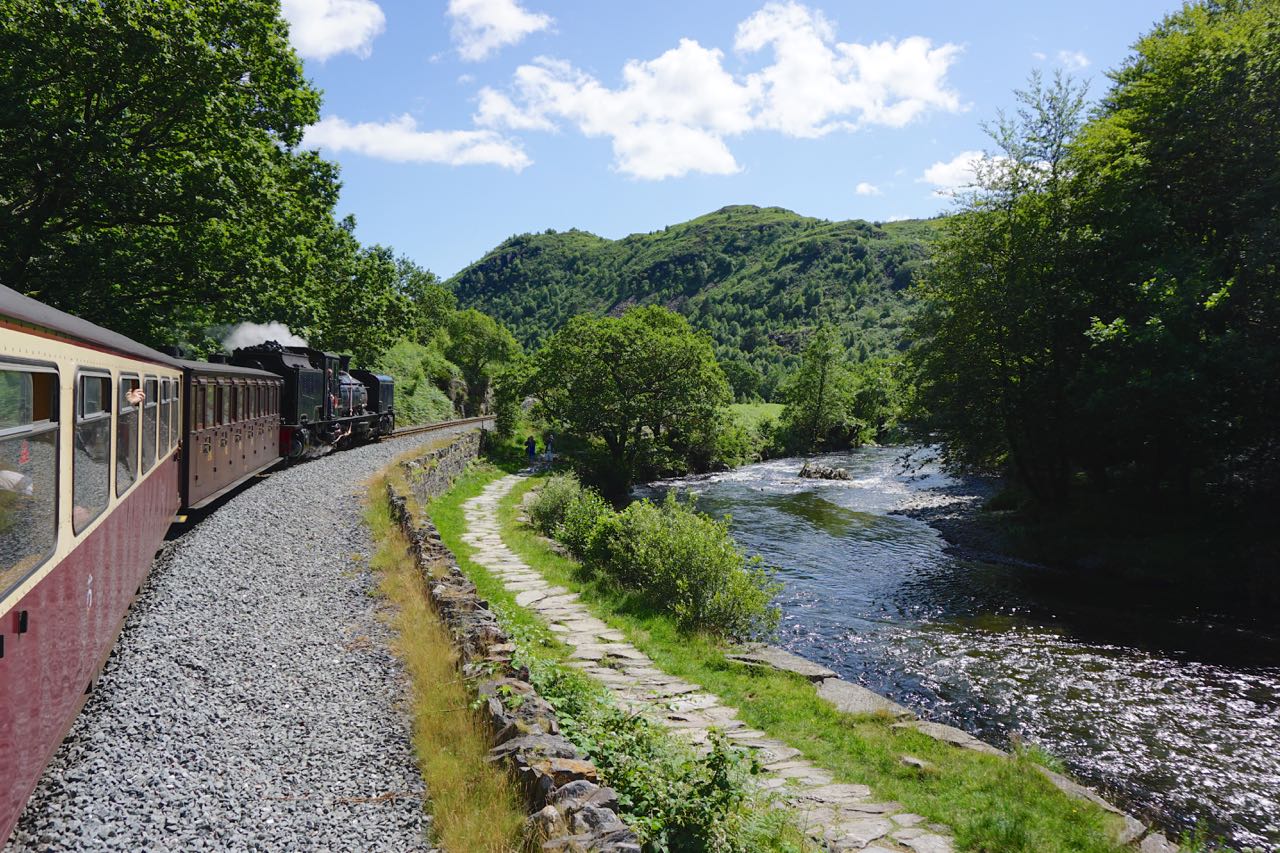
The Welsh Highland Railway at Aberglaslyn
You can travel in comfortable third-class or luxurious Pullman carriages (plus an observation carriage). Each full one-way trip from Porthmadog takes around 2 hours 15 minutes with a stop of around 1 hour 15 minutes in Caernarfon. There are two full return trips per day in peak season and one in off-season (please check their website at festrail.co.uk for a full timetable).
Salem from The Welsh Highland Railway
The line originally ran from Porthmadog to Dinas near Caernarfon, the extension being built on the trackbed of the former standard gauge railway. The trains run on a single track line with passing loops at Pont Croesor (the Glaslyn Osprey viewing centre), Beddgelert, Rhyd Ddu, Waunfawr and Dinas.
Llyn Cwellyn from The Welsh Highland Railway
There are currently five steam locomotives running on the WHR.
Map showing all The Great Little Trains of Wales
The Welsh Highland Heritage Railway
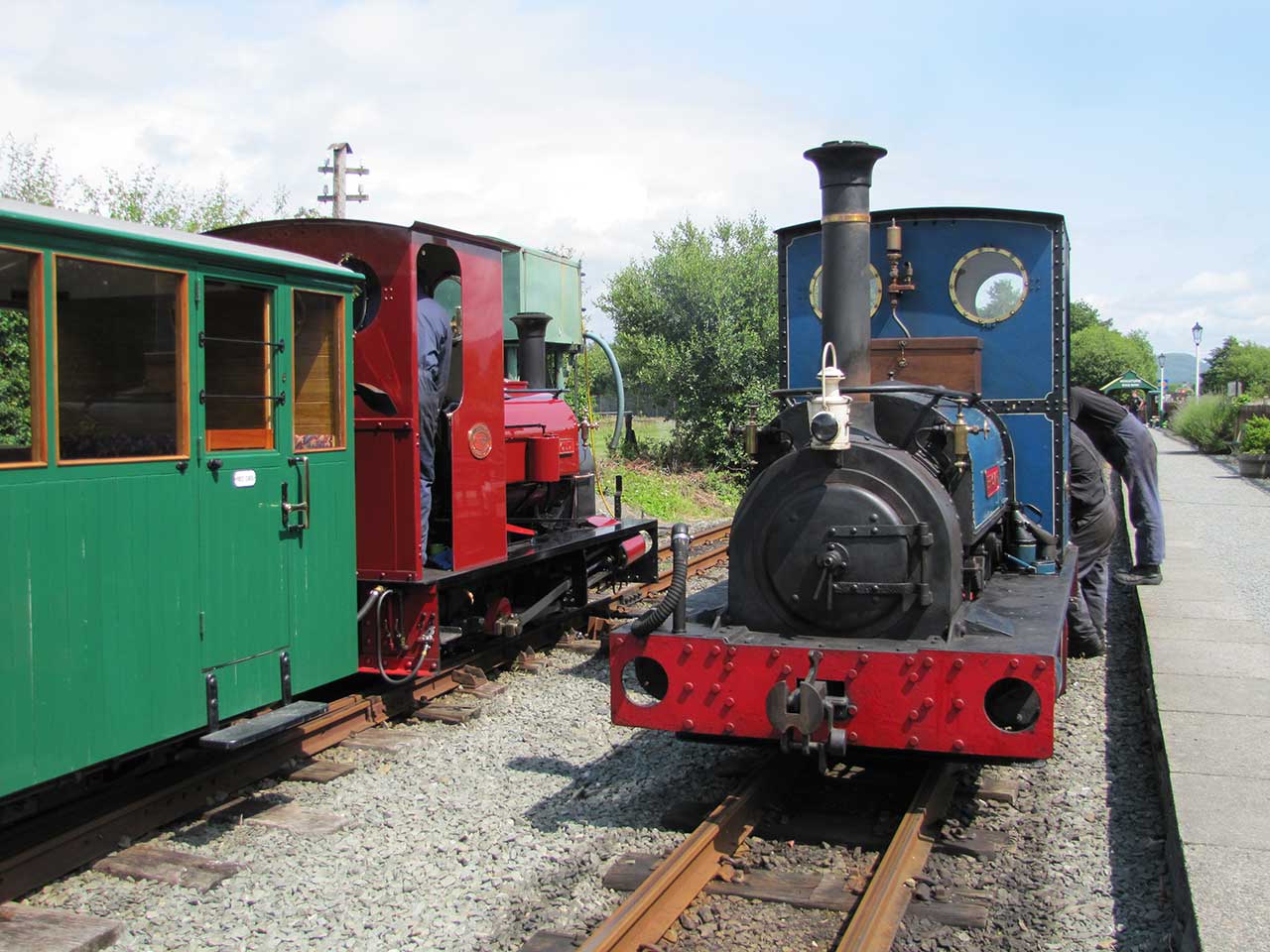
The Welsh Highland Heritage Railway – Photo © Mike Chapman
The Welsh Highland Heritage Railway formed in 1961 and is nearly entirely run by volunteers. It currently runs from March to November from their main station opposite the Network Rail station in Porthmadog (on Tremadog Road).
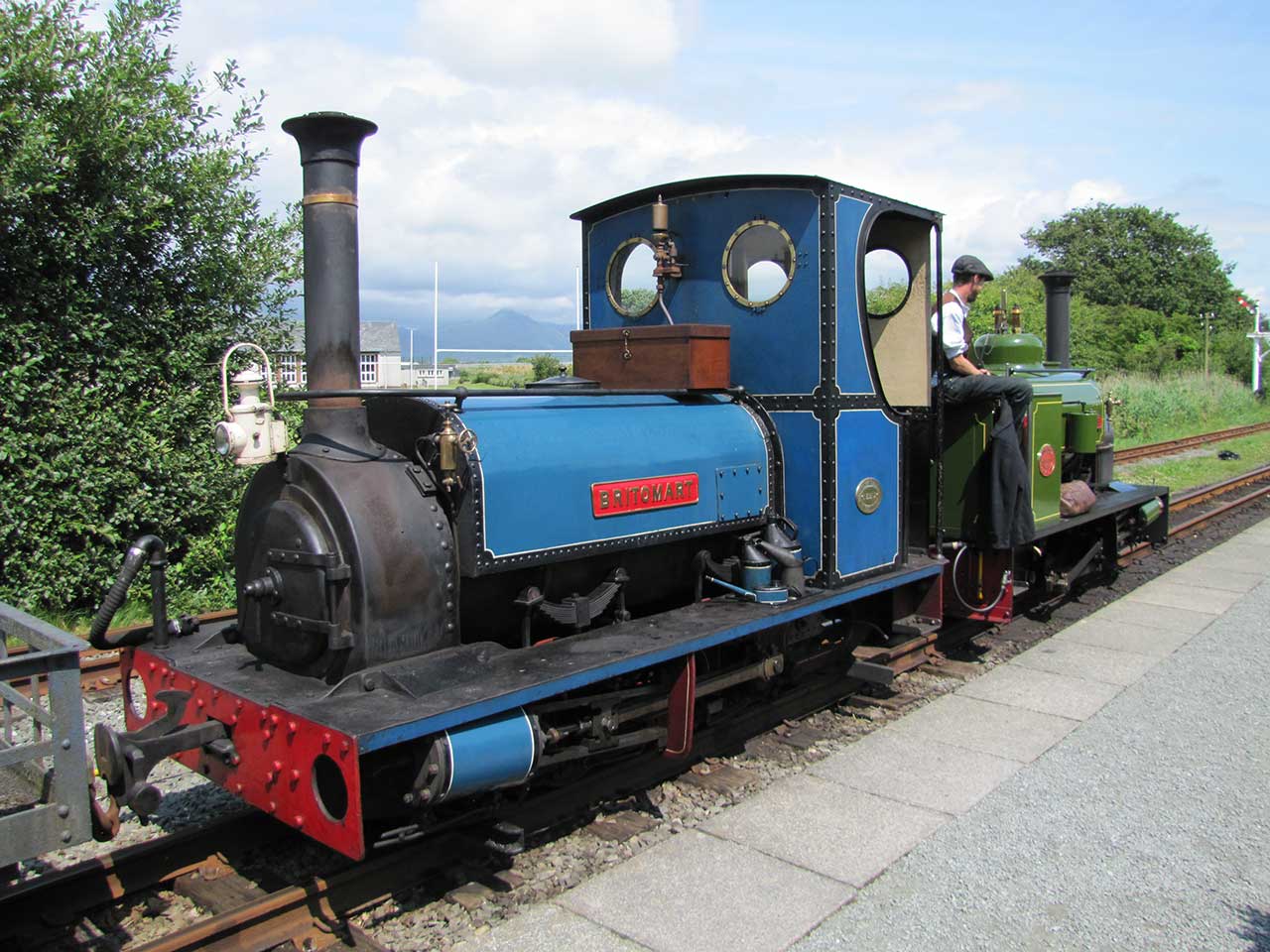
The Welsh Highland Heritage Railway – Photo © Mike Chapman
Trains run for half a mile (0.8 km) to Pen-y-Mount Junction, where the railway connects with the Welsh Highland Railway mainline. The train stops at Gelert’s Farm halt on its return to allow passengers to visit a museum and a miniature-gauge railway.
The return trip lasts an hour, which includes a free guided tour around the museum.
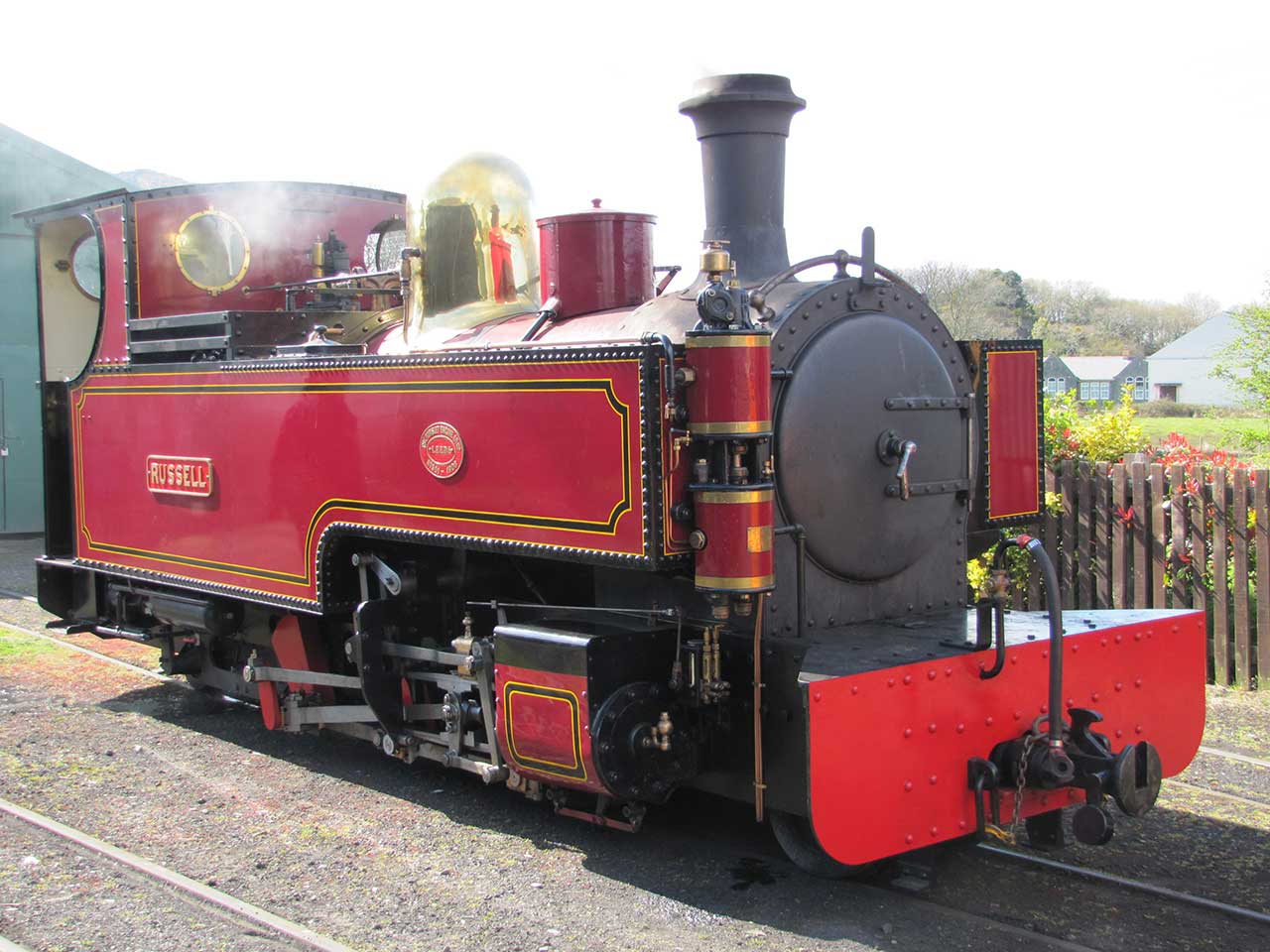
The Welsh Highland Heritage Railway – Photo © Mike Chapman
Visit their website at whr.co.uk for more information.
Map showing all The Great Little Trains of Wales
The Snowdonia National Park
The rocks that built Snowdonia were formed by volcanoes in the Ordovician period and much of the scenery was later carved out by Glaciation. While many come to walk to the summit of Snowdon, there are many other mountains to try, which are less crowded and without a train. These include “Cader Idris” (“Cadair Idris”) and the “Rhinogs” (“Rhinogydd”) to the south. While Cader Idris is 600 feet shorter than Snowdon, its views are no less breathtaking, overlooking Cardigan Bay and towards Ireland. The Rock climbing also varies from novice to experienced. Edmund Hillary prepared for the 1953 ascent of Mount Everest on the cliff faces in Snowdonia.
Snowdonia is one of the best areas in the UK for cycling and mountain biking, with every level covered; There is “The Mawddach Trail” for novices or young families, this follows the nine-mile route of the old railway from Dolgellau to Barmouth. If you are more advanced, then there are the weaving forest tracks of “Coed y Brenin”. There is also a new site at Llechwedd Quarry in Blaenau Ffestiniog and even more planned at Tanygrisiau Lake and Bala.
Bala Lake (Llyn Tegid)
Snowdonia is steeped in history and culture with over 60% of the population speaking Welsh (as well as English of course). There are also many castles to explore in the area, including Harlech, Conwy and Caernarfon. These were originally built by the English to keep out the Welsh, but now the Welsh have them all back.
The Snowdonia National Park (“Parc Cenedlaethol Eryri” in Welsh) covers 823 square miles of North-West Wales. It is the largest and earliest of the three National Parks of Wales, being established in 1951 (the other two being “The Pembrokeshire Coast” and “The Brecon Beacons”, both to the south). The half a million acres of the Park is home to over 26,000 people, spread across picturesque towns and villages including Dolgellau, Betws-y-Coed, Harlech and Beddgelert.
Snowdonia or “Eryri” (“Place of the Eagles” in Welsh) is home to the largest mountain in England and Wales, “Snowdon” (“Yr Wyddfa” in Welsh which means “Tumulus” or “Burial Mound”). The mountain is 1,085 metres (3,560 ft) high, although it isn’t just one peak, but a series of five, separated by passes. There are many paths to the summit as well as the “Snowdon Mountain Railway”, a 4.7-mile rack and pinion railway, opened in 1896, which takes passengers from Llanberis to the top. The summit also boats a new visitor centre, “Hafod Eryri”, built in 2006.
The Japanese Garden at Portmeirion
If you like things a little more ‘steamy’, then how about a visit to one of “The Great Little Trains of Wales”. There are fine examples of Narrow Gauge Railways at “Ffestiniog”, Tal-y-Llyn”, “Llanberis Lake Railway” and the newly completed “Welsh Highland Railway”. Most of these were built for the slate industry in the late nineteenth century and have been modified for people (carriages with seats have been added!).
The Laburnum Arch at Bodnant Garden
If you like to take things slow, then other tourists ‘hotspots’ include “Swallow Falls” at Betws-y-Coed, the Portmeirion Italianate village near Porthmadog and Bodnant Gardens. Snowdonia also has 1,479 miles of public footpaths, 164 miles of public bridleways and 50 miles of other public rights of way. It also has 37 miles of coastline, perfect for boating and fishing.
Plas Brondanw
The Brondanw Estate lies within the Snowdonia National Park, between Snowdon and the sea. Plas Brondanw is the principal house on the estate.
It had been at about my twenty-fifth birthday that my father unexpectedly handed over to me the control of the old (Williams) family property of Plas Brondanw which I would ultimately inherit,” wrote Clough Williams-Ellis. “Gradually but surely the old house and its rehabilitation became my chief absorbing interest outside my profession.
The estate was enlarged when Clough bought two adjoining mountainous properties threatened by mining.
The Brondanw Estate has never been bought or sold and is now owned by a charitable trust for its protection The gardens are open to the public.
Plas Brondanw, Llanfrothen, Penrhyndeudraeth, Porthmadog, Gwynedd. LL48 6SW.
Clough Williams-Ellis at Brondanw in June 1975
Portmeirion
Portmeirion is one of Wales’ premier visitor attractions, welcoming 250,000 visitors every year. With free parking, complimentary guided tours and audiovisual show, six cafes and restaurants, half a dozen shops, gardens and beaches it is the perfect day out for all the family. Surrounding the village are 70 acres of exotic woodlands with easy to follow woodland trails and coastal walks.
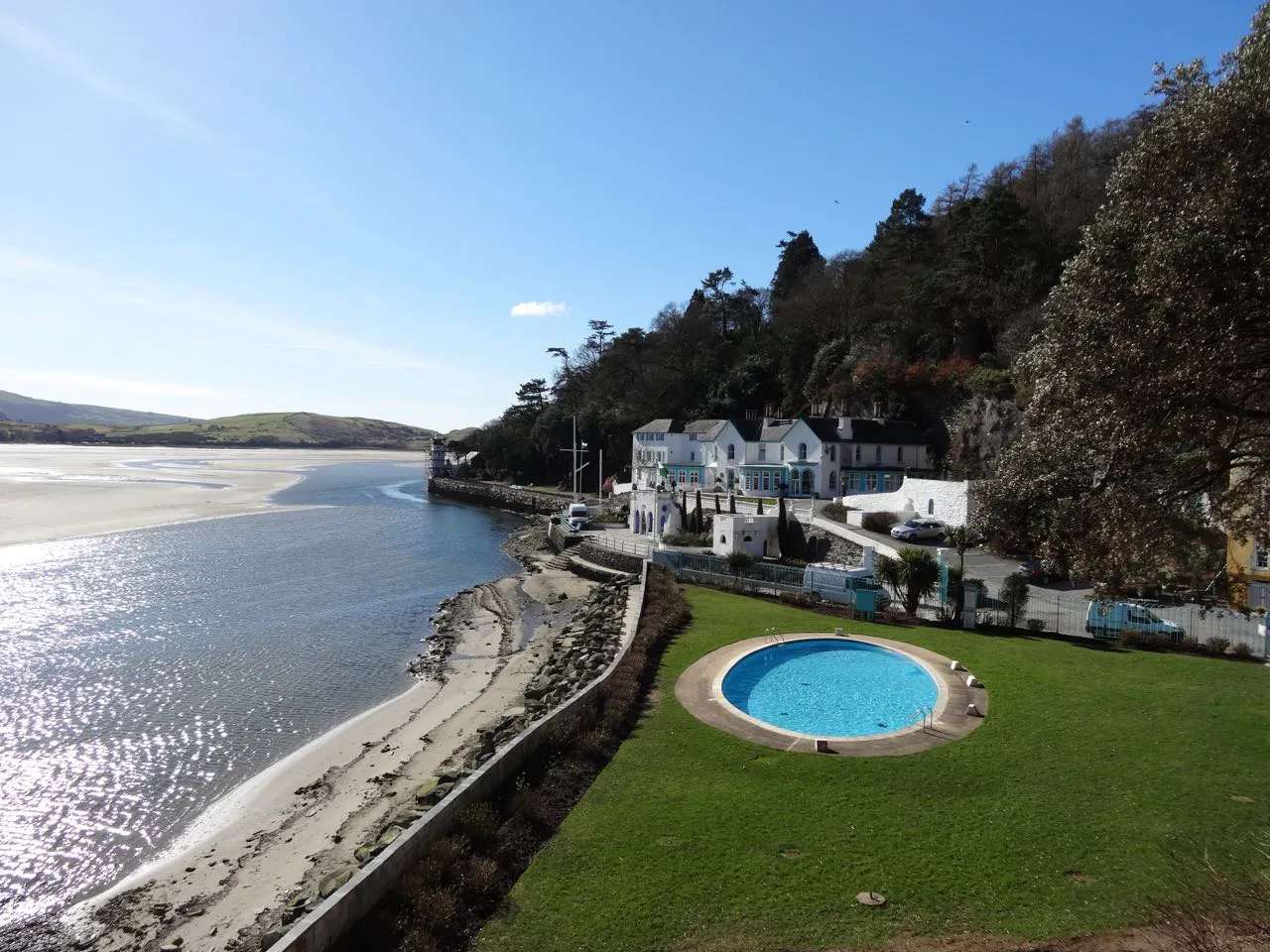
Portmeirion is open every day of the year from 9.30am to 7.30pm.
Read more about Portmeirion at portmeirion-village.com.