Gwrych Castle near Abergele
Gwrych Castle is a Grade I listed country house built between 1819 and 1825 and located just outside the Snowdonia National Park near Abergele in Conwy. The Castle was built by Lloyd Hesketh Bamford-Hesketh, the grandfather of Winifred Cochrane, Countess of Dundonald.
The Lloyd family were the ancestral owners of Gwrych, with a lineage dating back to medieval times. They lived in the previous house for several hundred years before it was demolished to make way for the new building. Parts of the old building can be seen incorporated into the current building.
The 1500ft frontage of the Georgian castle contains 18 battlemented towers inspired by various Welsh castles. The 250-acre estate includes a Roman shrine, iron-age hillforts and medieval battle sites.

Gwrych Castle in 2014
Gwrych Castle was purchased in June 2018 by Gwrych Castle Preservation Trust in order to restore and open the historic buildings and estate to the public.
On 9th August 2020, it was announced that the castle would be the setting for the 2020 series of “I’m a Celebrity – Get Me Out Of Here” (The 20th Anniversary Series). Due to the COVID-19 pandemic, the usual base in Australia would be replaced with a ‘Staycation’. The trials are due to be based on the Medieval period with the winner crowned King or Queen of the Castle. Oh, and the castle is reputed to be Haunted!
Guided tours are available, visit their website for details – gwrychcastle.co.uk
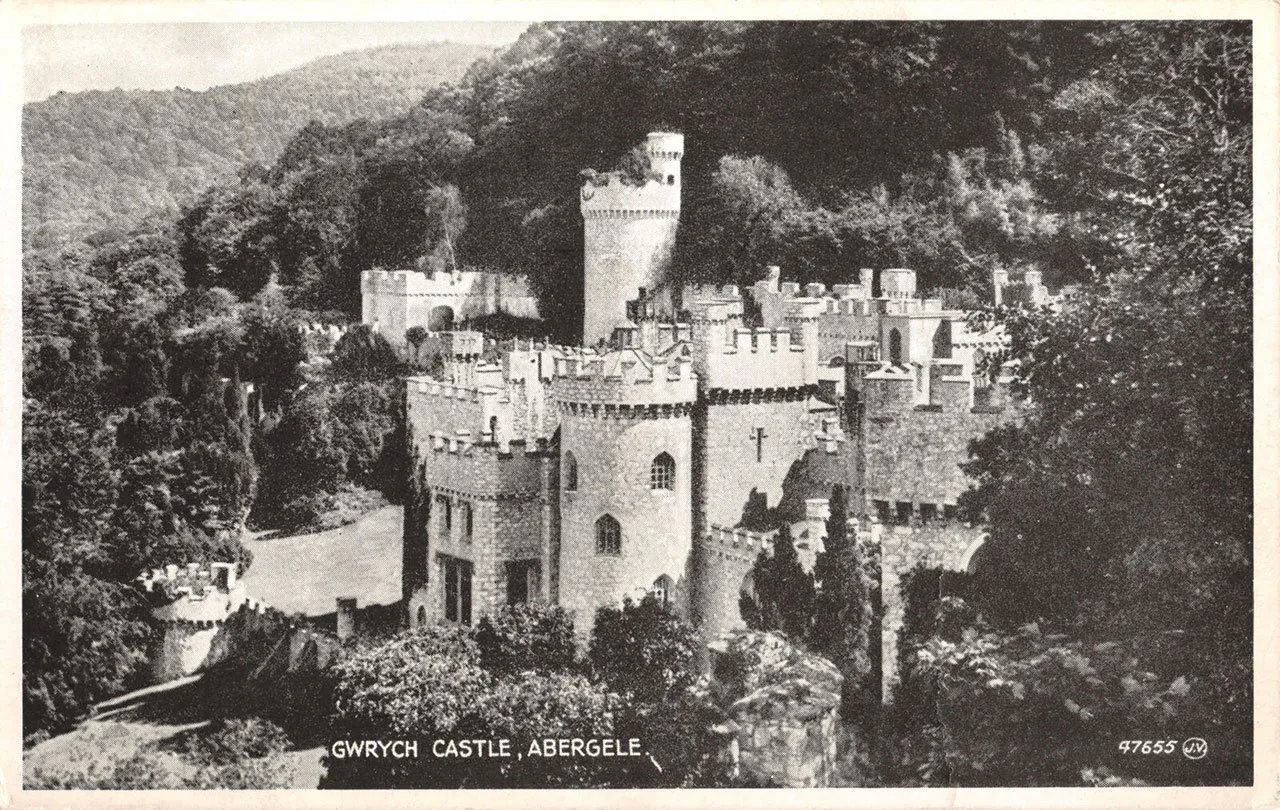
Gwrych Castle Postcard
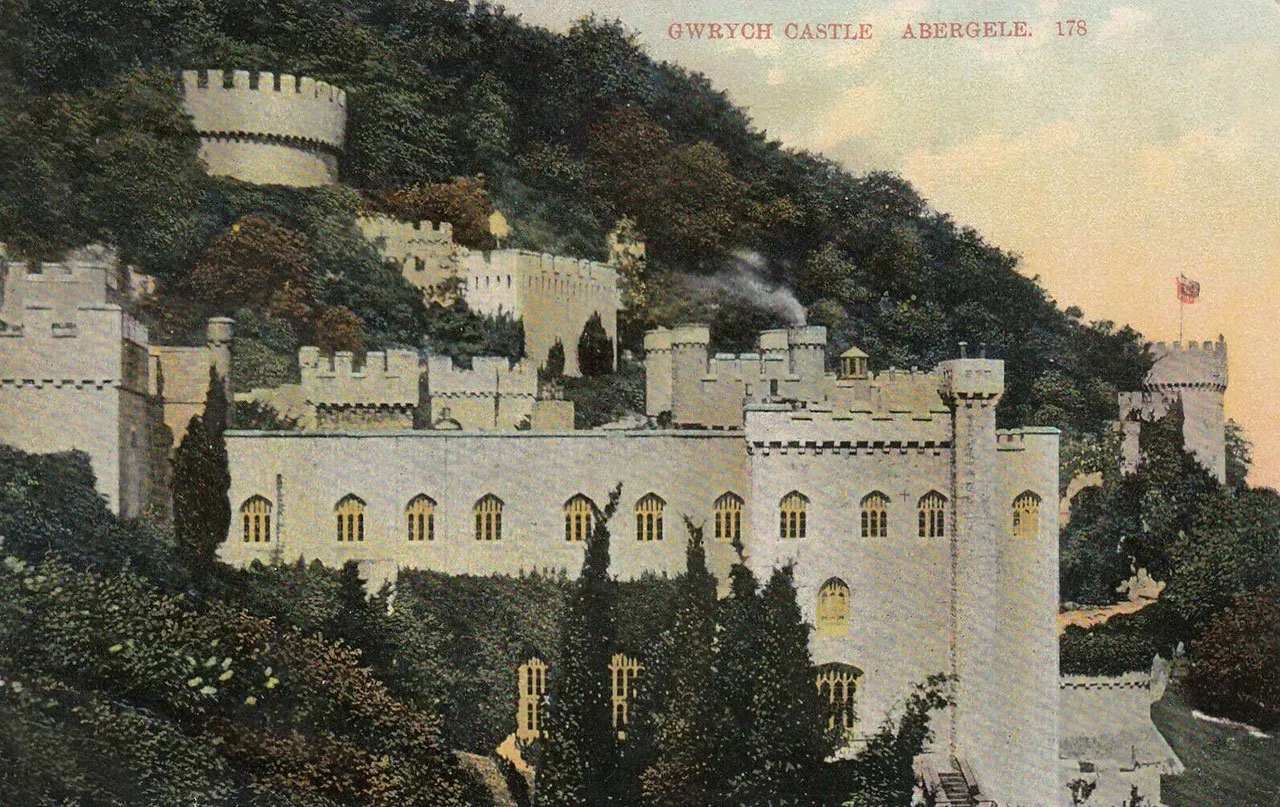
Gwrych Castle Postcard
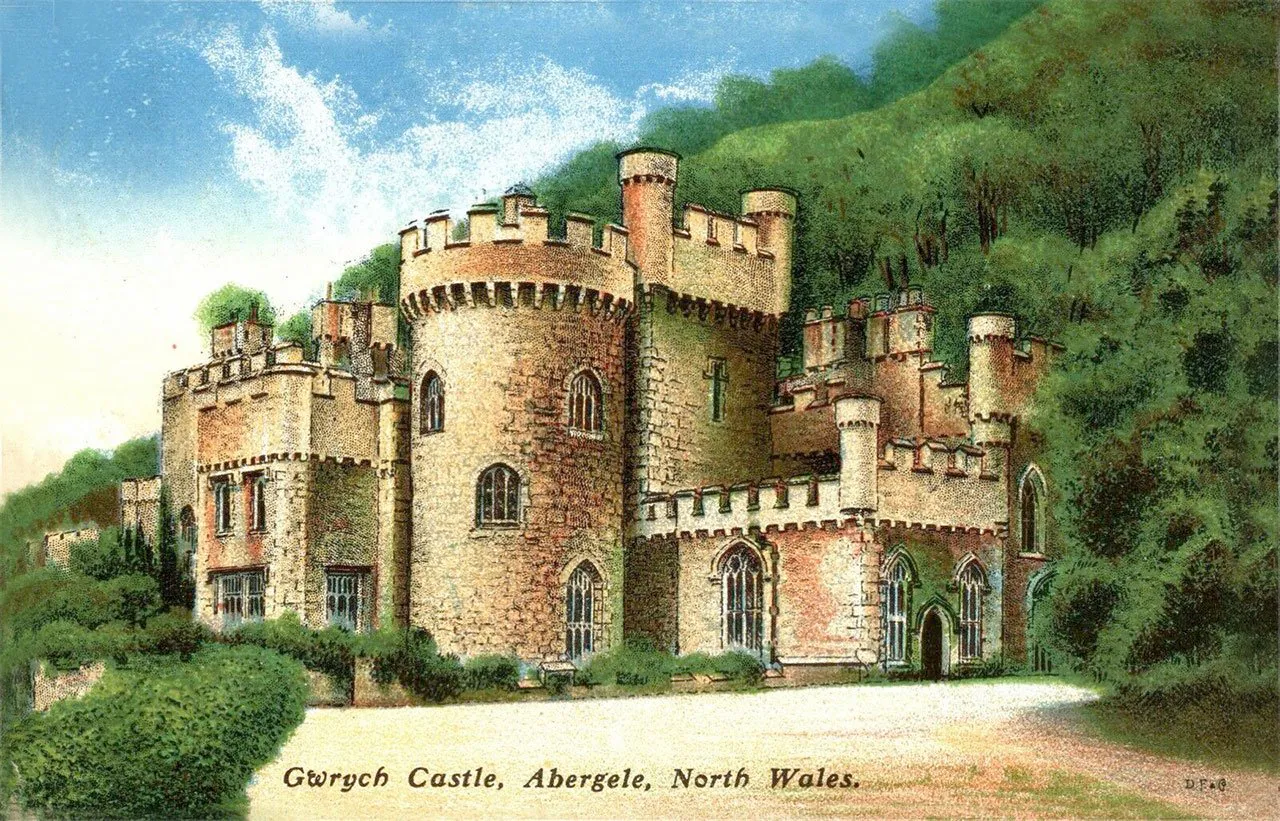
Gwrych Castle Postcard
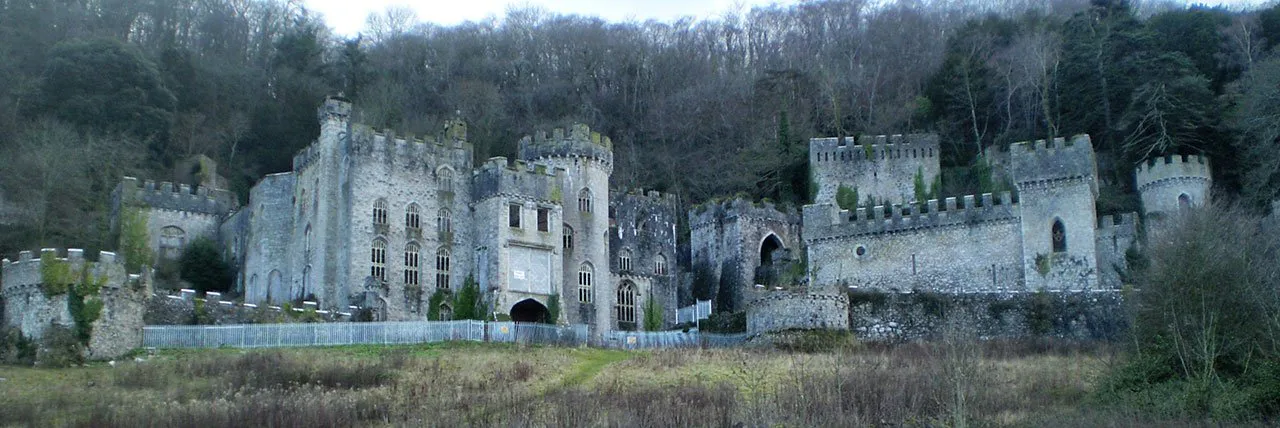
Gwrych Castle in 2014
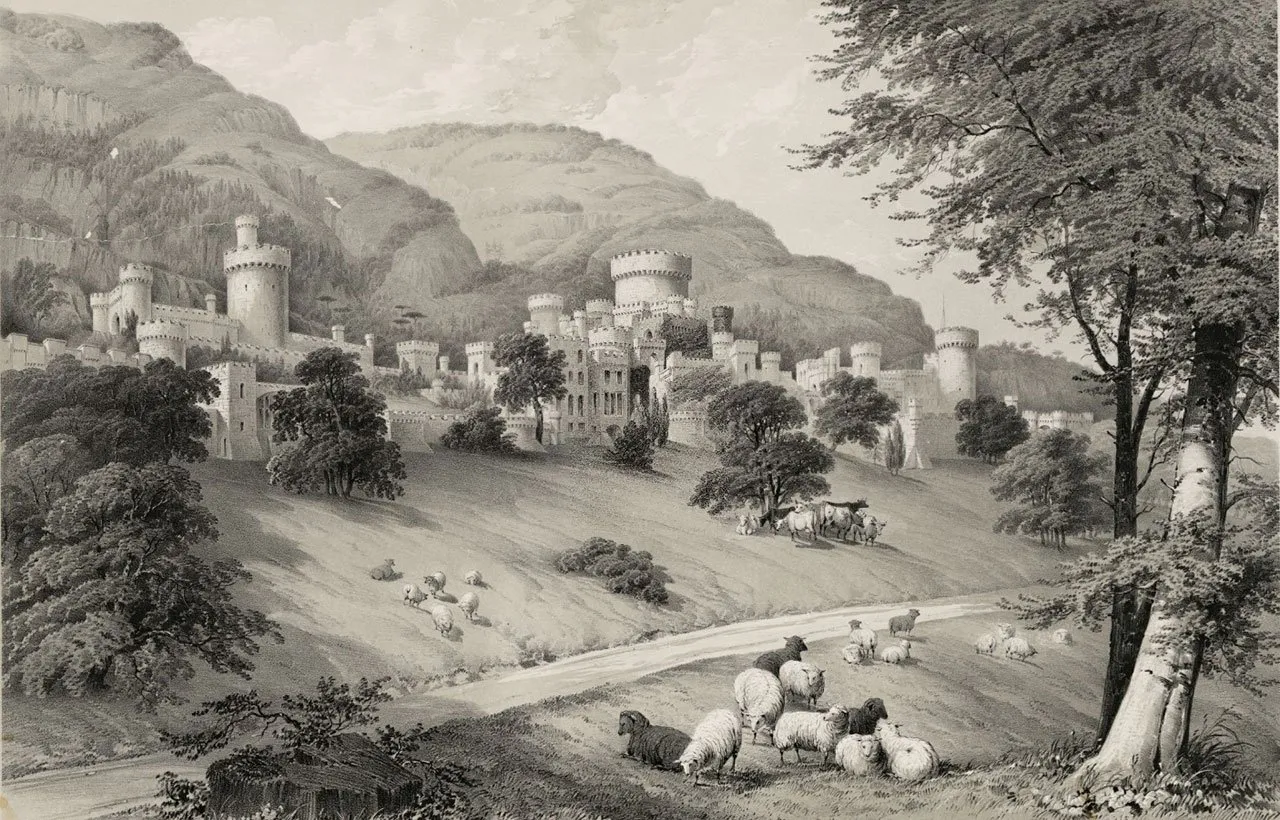
1840 Engraving of Gwrych Castle
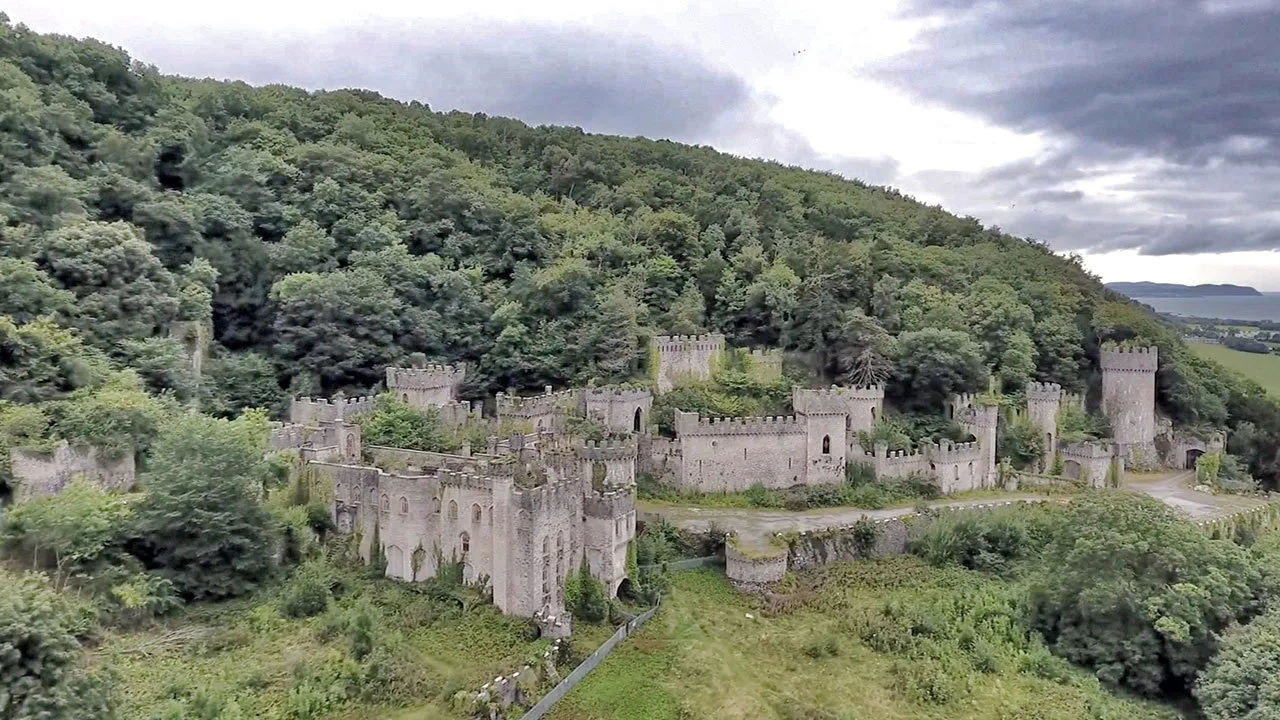
Gwrych Castle in 2017
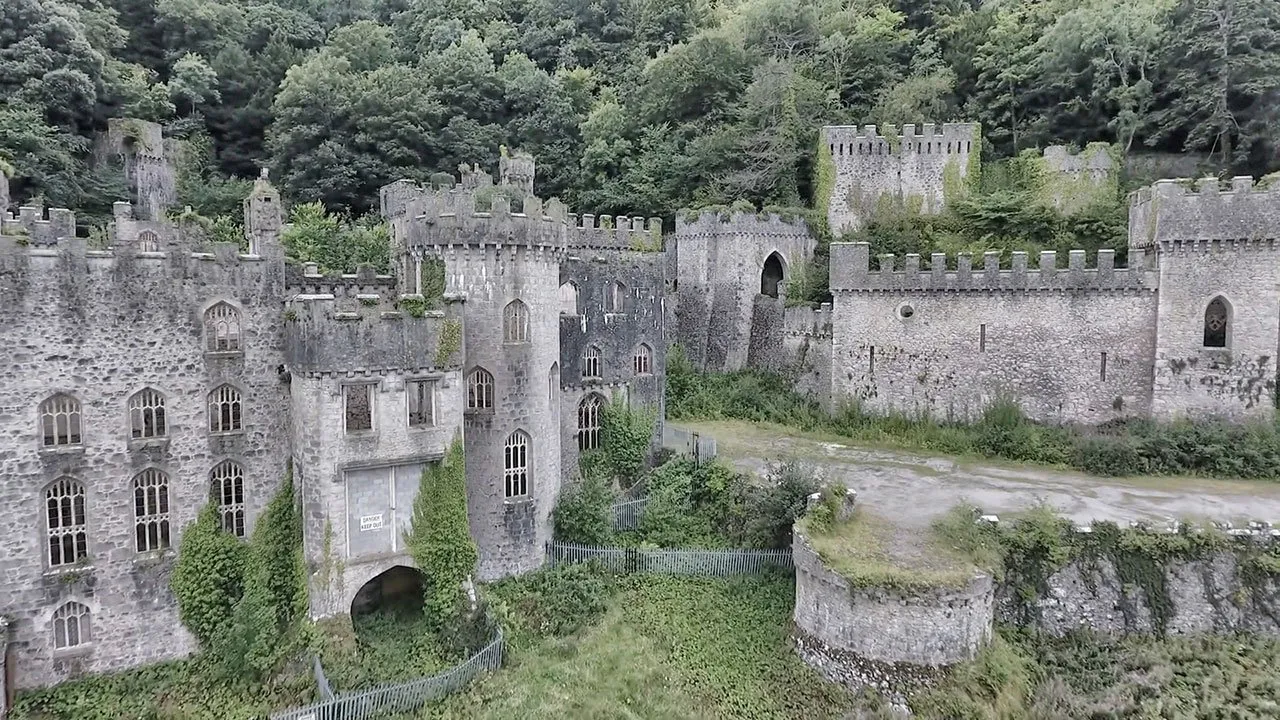
Gwrych Castle in 2017
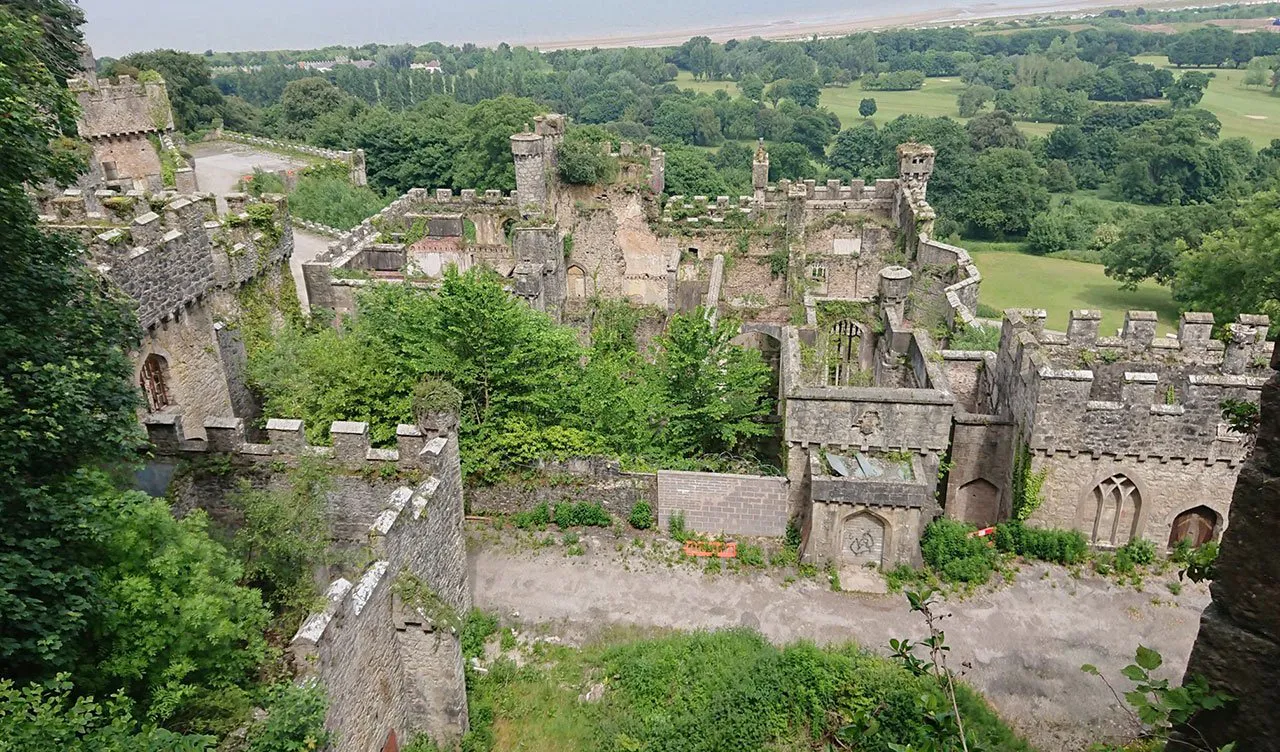
Gwrych Castle
Photo attributions:
Raintheone / CC BY-SA
Raintheone / CC BY-SA

The Talyllyn Railway
The Talyllyn Railway runs seven and a quarter miles along the beautiful Fathew Valley from the seaside town of Tywyn (on the Cardigan Bay coast) to Nant Gwernol. There are some lovely walks en-route, including woodland walks at Dolgoch and Nant Gwernol and should you fancy a longer stroll, you can walk to the ruins of Castell-y-Bere and Bird-Rock “Craig yr Aderyn” from Abergynolwyn.
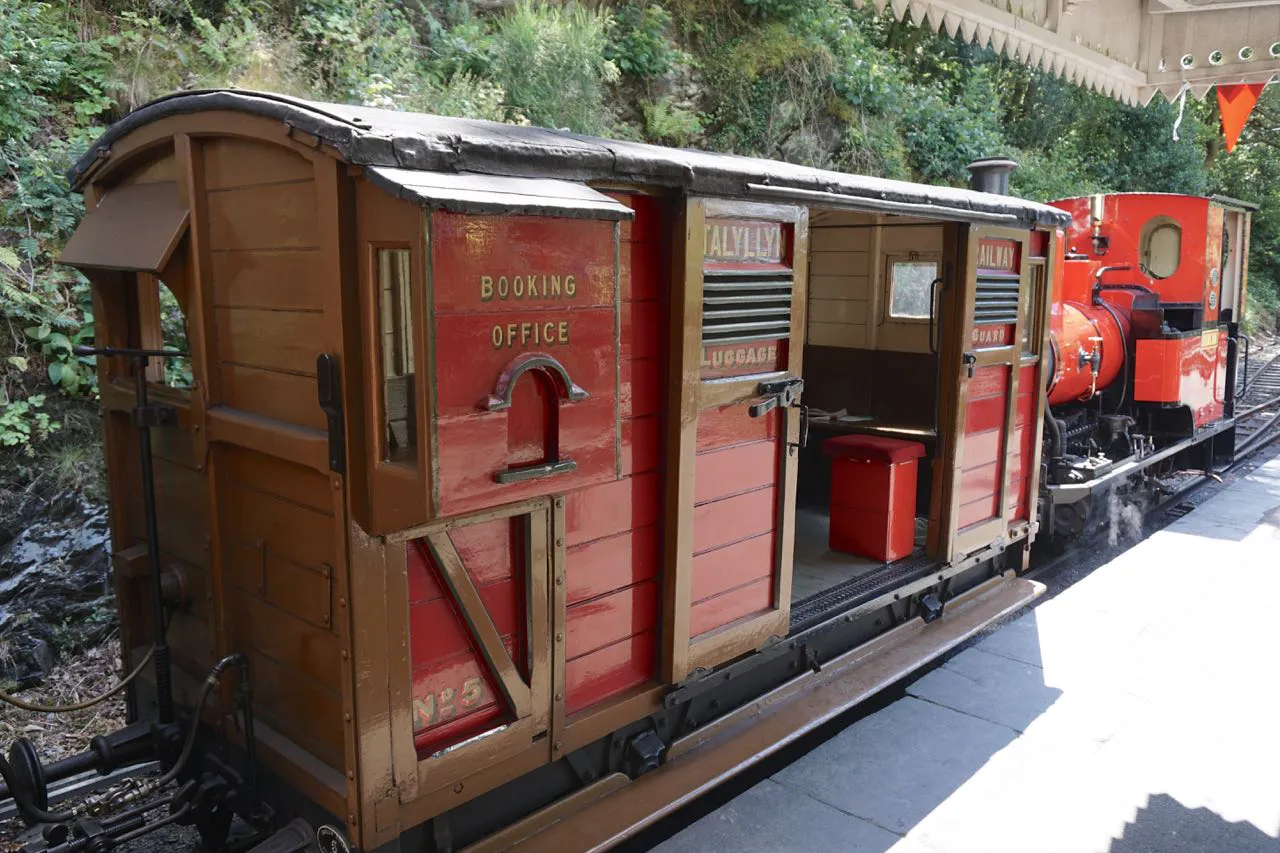
The Talyllyn Railway – Guards Van at Abergynolwyn Station
The railway is a 2 feet 3 inches (686 mm) gauge, built to carry slate from the Bryn Eglwys quarries near Nant Gwernol to Tywyn. The line was opened in 1865 and closed in 1946 due to a major rockfall in the quarry. It was the first narrow-gauge railway in Britain authorised by Act of Parliament to carry passengers using steam engines.
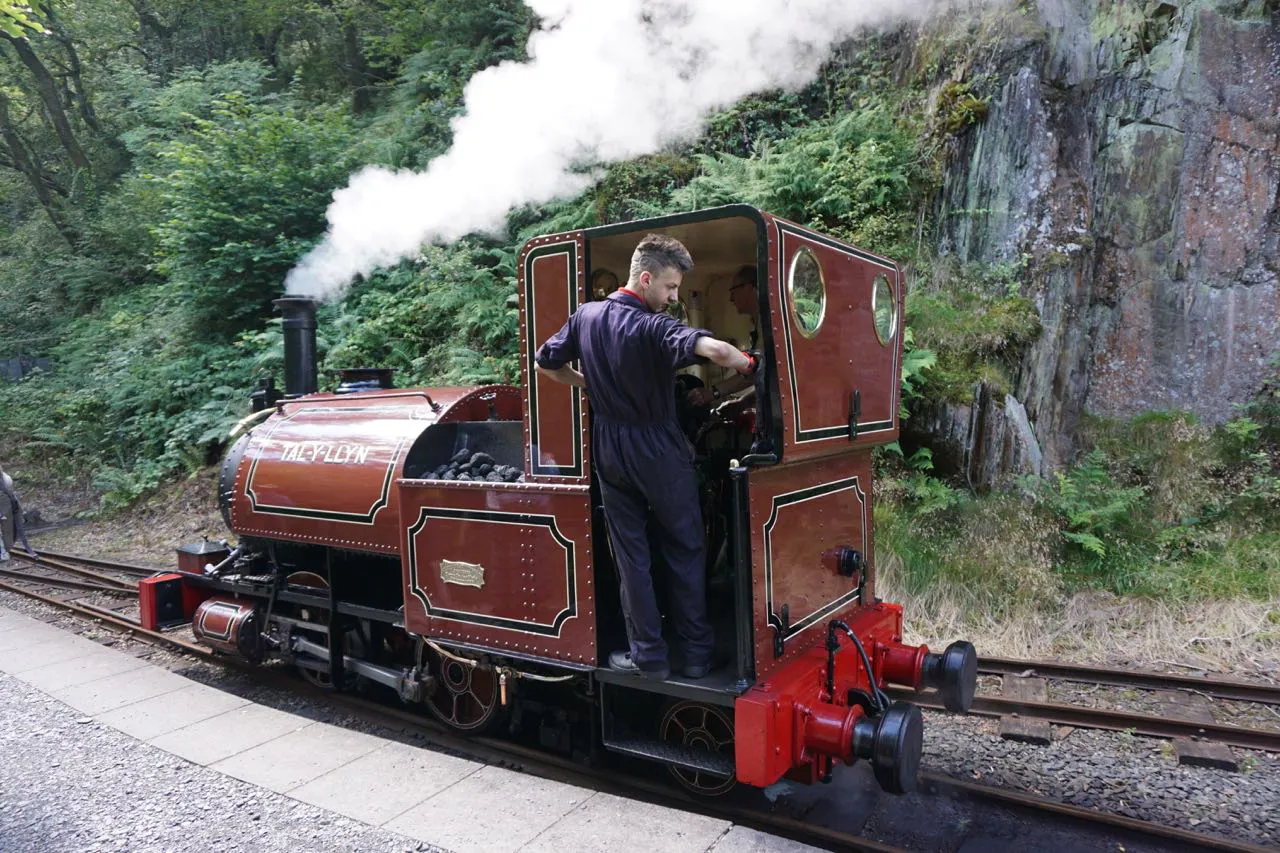
The Talyllyn Railway – Tal-y-Llyn Loco at Nant Gwernol Station
The Talyllyn Railway Preservation Society was formed in the 1951 and has gone from strength to strength. Talyllyn was the world’s first railway to be preserved as a heritage railway by volunteers and was the inspiration of the Ealing Comedy film “The Titfield Thunderbolt”. Work started to extend the route along the old mineral line from Abergynolwyn to Nant Gwernol in 1968 with regular passenger trains running in 1976.
Every August you can also “Race The Train” from Tywyn to Abergynolwyn and back. The aim is to run the fourteen and a half mile cross-country course before the train does (the train takes around one hour forty-five minutes). You can read more about the race at racethetrain.com.
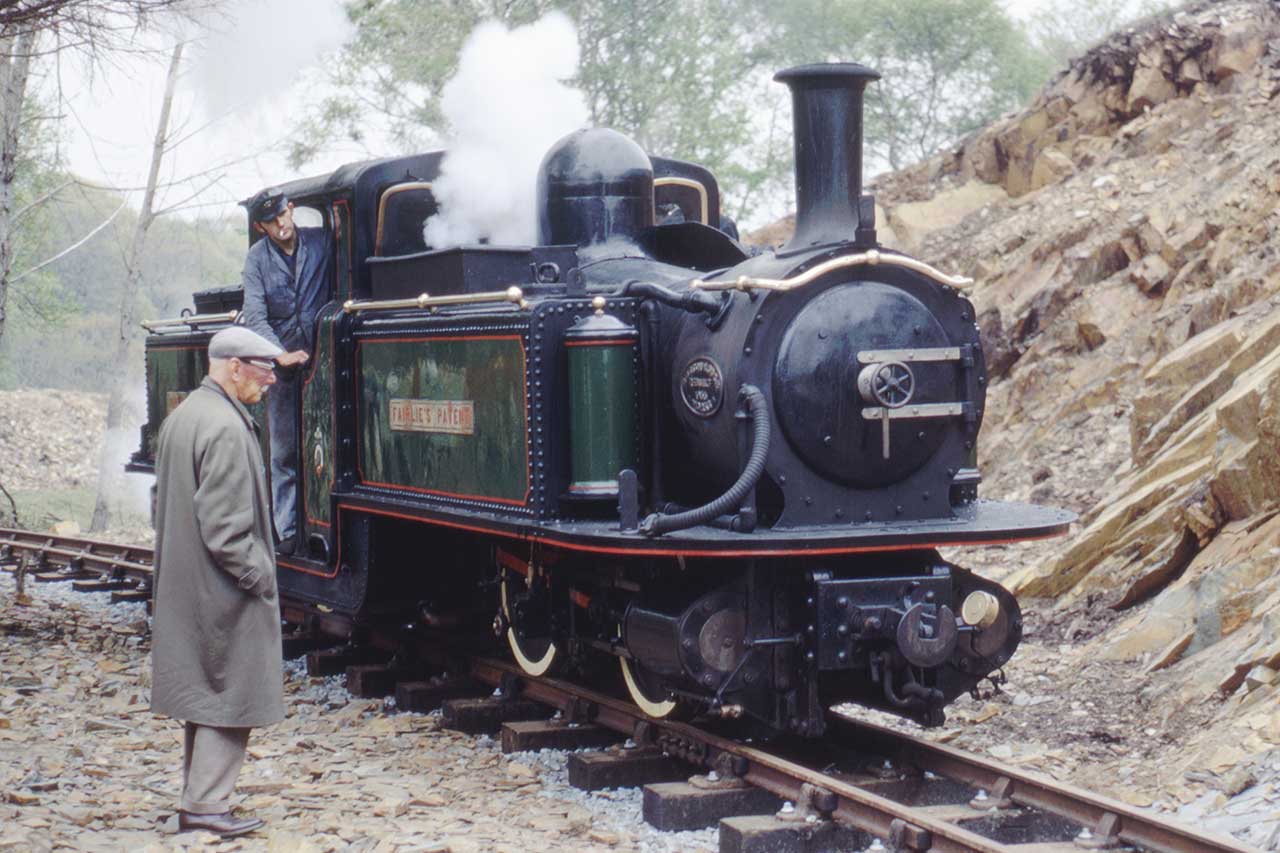
Fairlie Patent Engine in 1968
The line featured in the short film “Railway with a Heart of Gold” by American producer Carson Davidson in 1953 and one of The Rev. W. Awdry’s “Railway Series” of books, “Skarloey Railway” was based on the Talyllyn Railway.
A Sign at Nant Gwernol Station, Reads.
“When the railway was built, all of the buildings were of brick or timber construction because even though the slate quarries were already in operation, no slate came by this route until the line opened. Although Nant Gwernol has always been the limit of locomotive haulage, passenger services only ran as far as Abergynolwyn and there was no station here until 1976.
Slate wagons and supplies for the quarries were brought here and waited in one of three sidings to he hauled up to the quarry tramway, with wagon loads of slate going the other way.
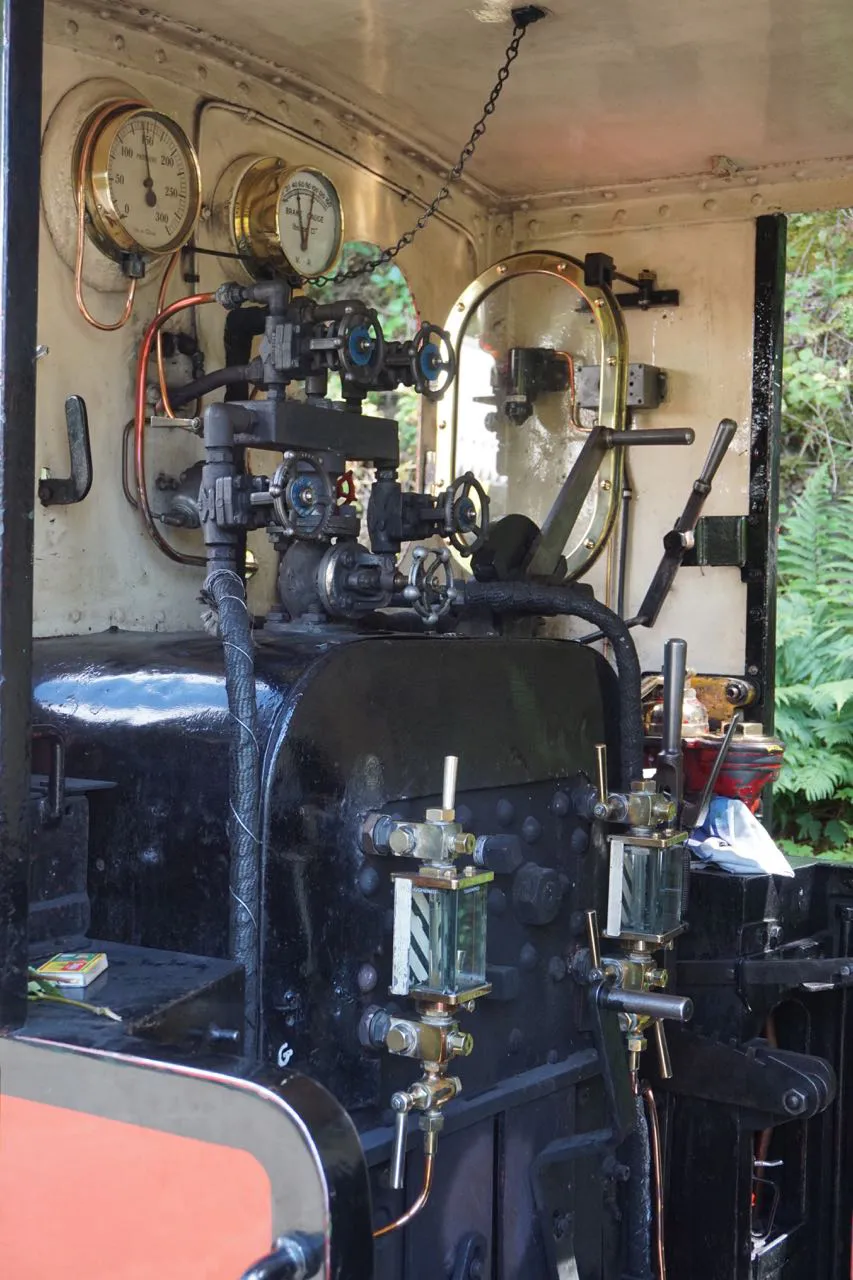
The Talyllyn Railway – Interior of Duncan
With the closure of the quarries in 1947 the line from here to Abergynolwyn lay derelict until upgraded for passenger trains in the early 1970s. The station here is a slightly scaled-down copy of the 1866 wooden buildings at Tywyn Pendre and Abergynolwyn and was built for the opening of the extension in 1976.
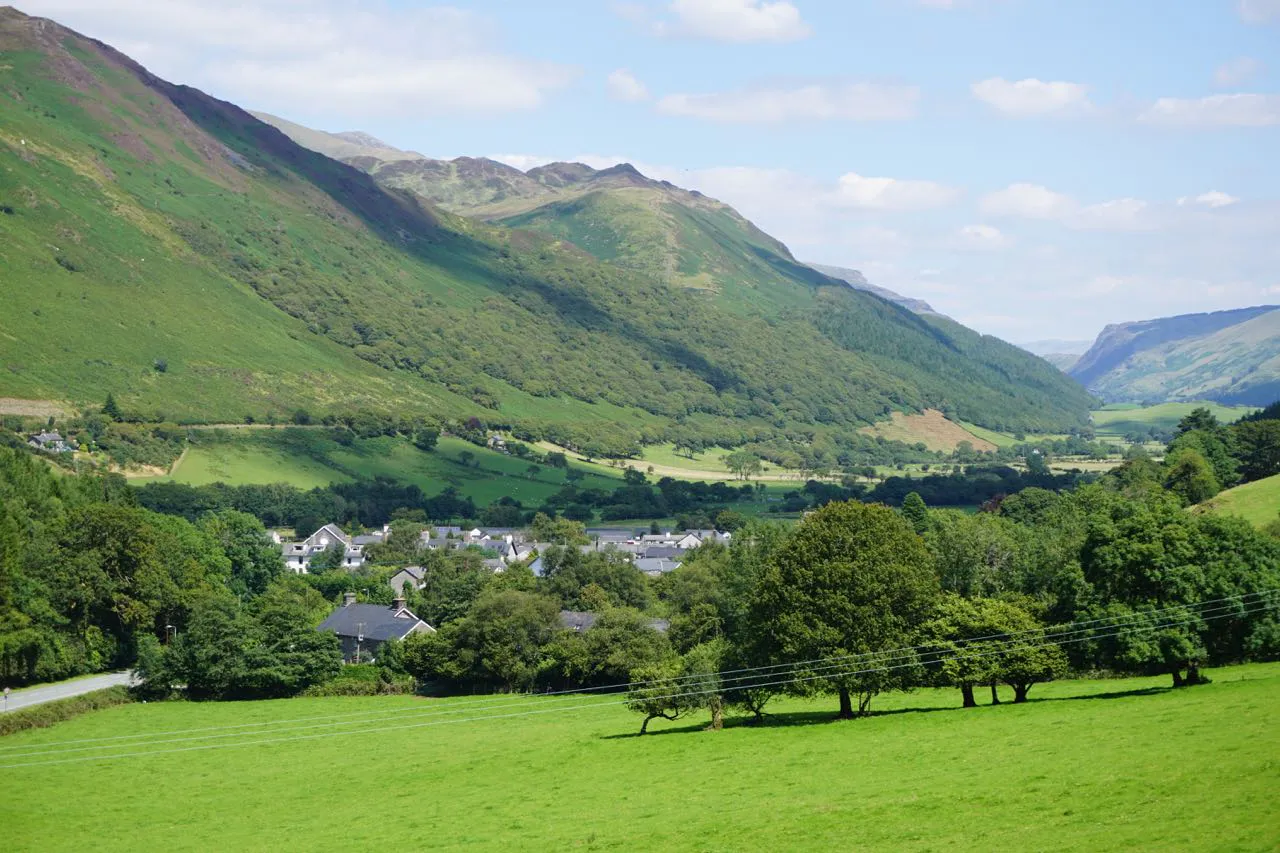
Abergynolwyn
It is possible to imagine the amount of work done, mainly by volunteers, to widen the trackbed sufficiently to take passenger vehicles. Look at the curve off the far end of the platform and you will see a short length of track parallel to main line. This is about where the original line ran; very close to the edge of a 150 drop and just wide enough for the engine to scrape by with its train or small wagons”.






Map showing all The Great Little Trains of Wales
Harlech Castle
Harlech’s battlements spring out of a near-vertical cliff-face.
‘Men of Harlech.’ The nation’s unofficial anthem, loved by rugby fans and regimental bands alike, is said to describe the longest siege in British history (1461-1468) which took place here during the War of the Roses. Edward’s tried and tested ‘walls within walls’ model was put together in super-fast time between 1283 and 1295 by an army of nearly a thousand skilled craftsmen and labourers.
Harlech Castle
Edward liked to use only the best masons from Savoy and England’s finest carpenters and blacksmiths. At the time this was one of the cheapest of Edward’s castles. A snip at a mere £8,190. The structure, overseen by Master of the King’s Works, James of St George, boasts two rings of walls and towers, with an immensely strong east gatehouse. It was impregnable from almost every angle. Its secret weapon was a 200-foot (61m) long stairway which still leads from the castle to the cliff base.
Access via the stairway to the sea and crucial supplies kept the castle’s besieged inhabitants fed and watered. When it was first built, a channel would have connected the castle and the sea. You could have sailed a boat up to the moat. Seven hundred years later, the sea has receded and you could say the castle appears almost stranded, waiting for the tide to turn once more.
Along with Caernarfon Castle, Conwy Castle and Beaumaris Castle, this monument has been part of the Castles and Town Walls of Edward 1 World Heritage Site since 1986.
More Details on the CADW Website & CASTLES.WALES
The Wales Coast Path
The Wales Coast Path is an 870 mile (1,400 km) walking route that opened in 2012 and runs the whole length of the Welsh coastline from Chepstow in the south to Queensferry in the north. It has the honour of being the world’s first coastal path to cover an entire country.