Gwrych Castle near Abergele
Gwrych Castle is a Grade I listed country house built between 1819 and 1825 and located just outside the Snowdonia National Park near Abergele in Conwy. The Castle was built by Lloyd Hesketh Bamford-Hesketh, the grandfather of Winifred Cochrane, Countess of Dundonald.
The Lloyd family were the ancestral owners of Gwrych, with a lineage dating back to medieval times. They lived in the previous house for several hundred years before it was demolished to make way for the new building. Parts of the old building can be seen incorporated into the current building.
The 1500ft frontage of the Georgian castle contains 18 battlemented towers inspired by various Welsh castles. The 250-acre estate includes a Roman shrine, iron-age hillforts and medieval battle sites.

Gwrych Castle in 2014
Gwrych Castle was purchased in June 2018 by Gwrych Castle Preservation Trust in order to restore and open the historic buildings and estate to the public.
On 9th August 2020, it was announced that the castle would be the setting for the 2020 series of “I’m a Celebrity – Get Me Out Of Here” (The 20th Anniversary Series). Due to the COVID-19 pandemic, the usual base in Australia would be replaced with a ‘Staycation’. The trials are due to be based on the Medieval period with the winner crowned King or Queen of the Castle. Oh, and the castle is reputed to be Haunted!
Guided tours are available, visit their website for details – gwrychcastle.co.uk
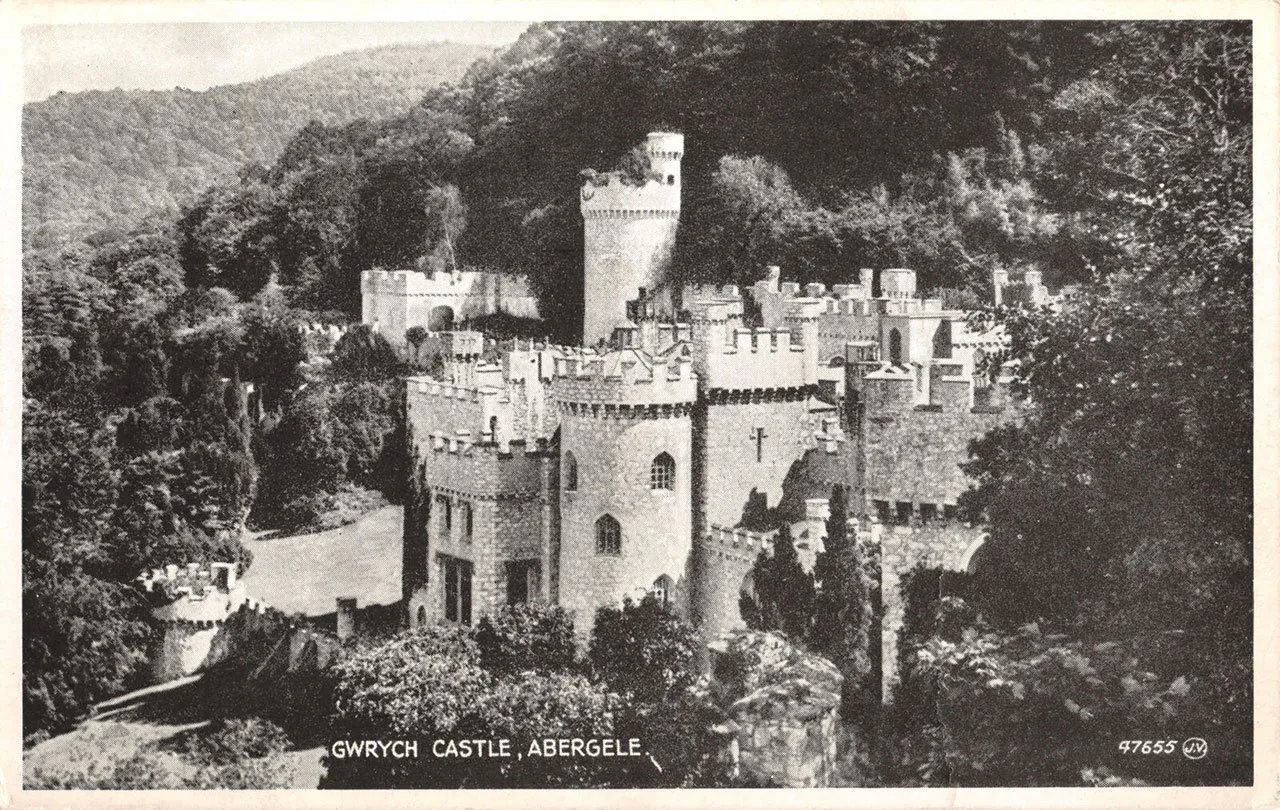
Gwrych Castle Postcard
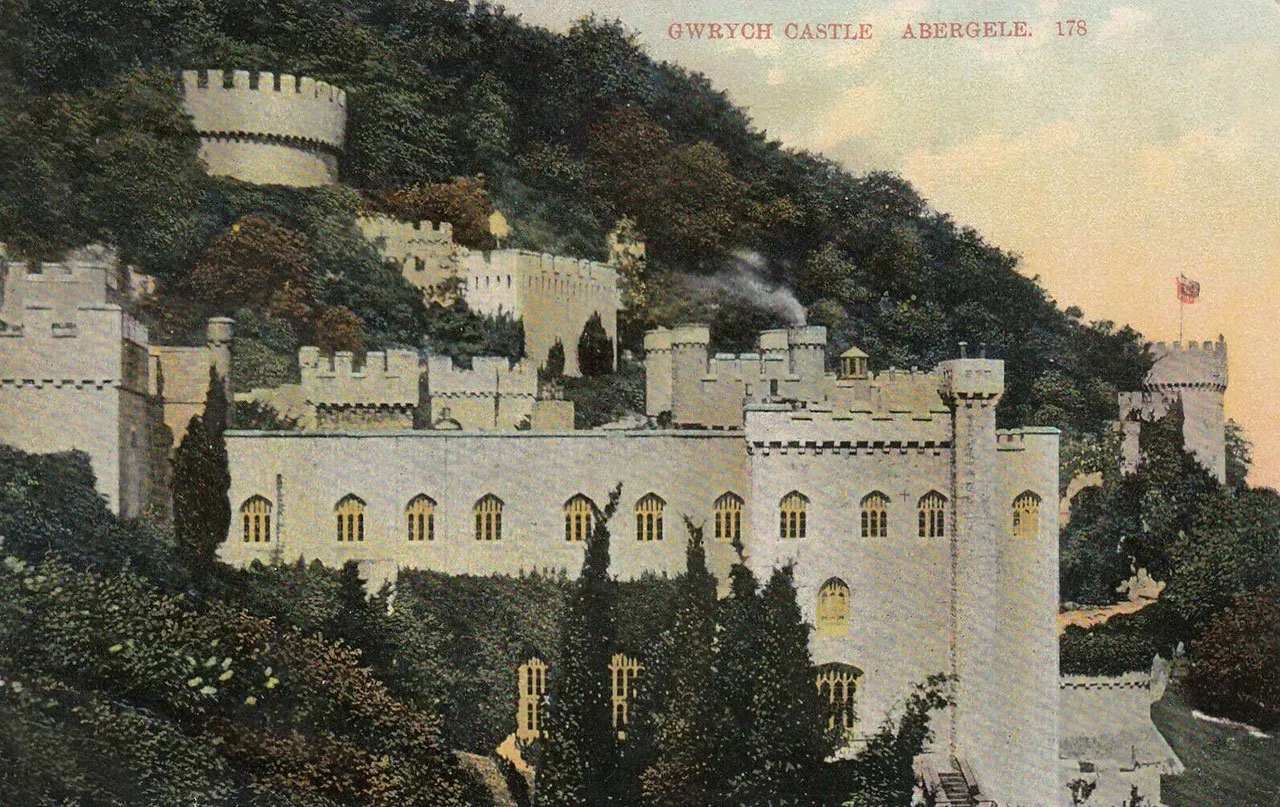
Gwrych Castle Postcard
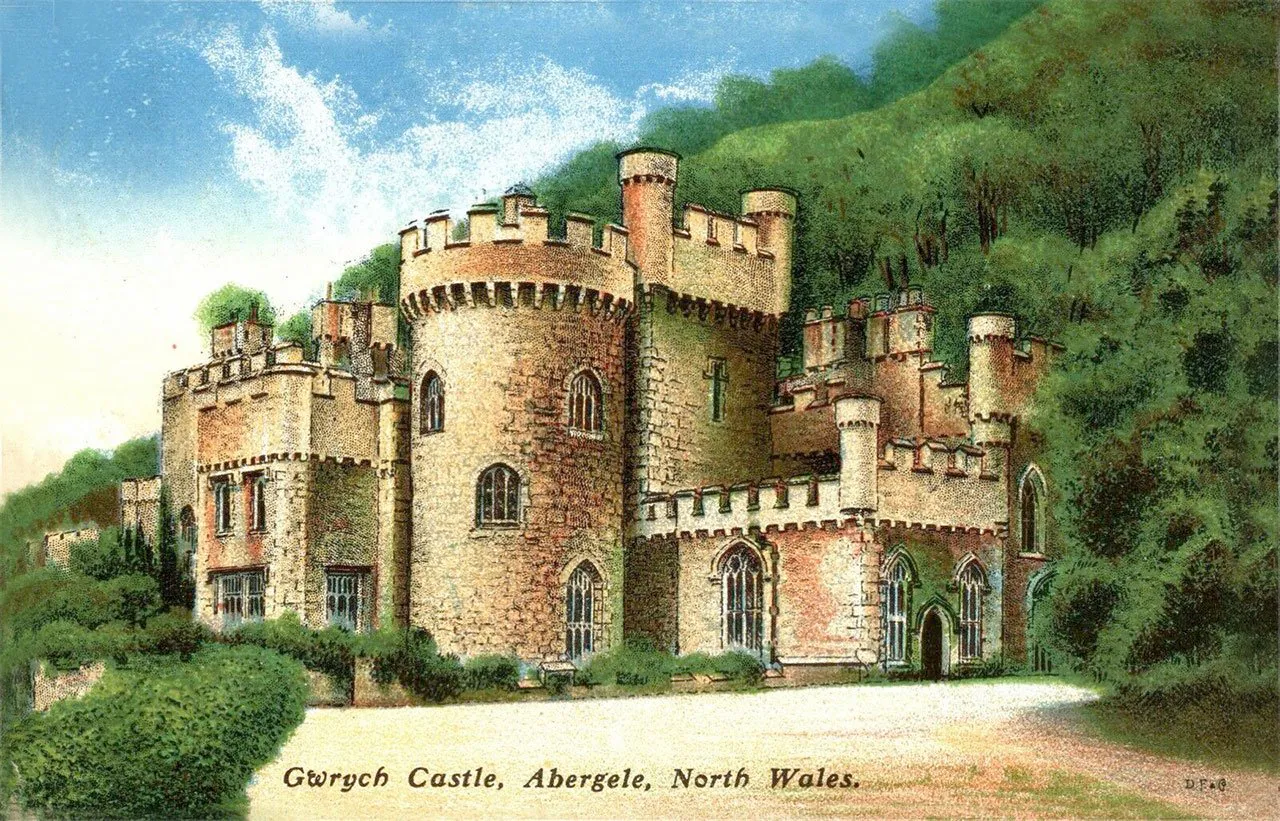
Gwrych Castle Postcard
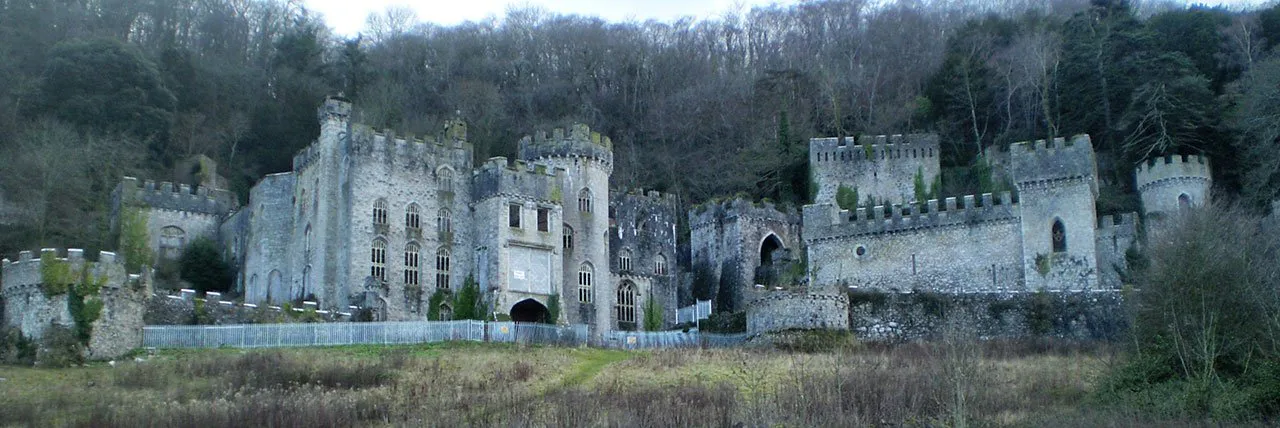
Gwrych Castle in 2014
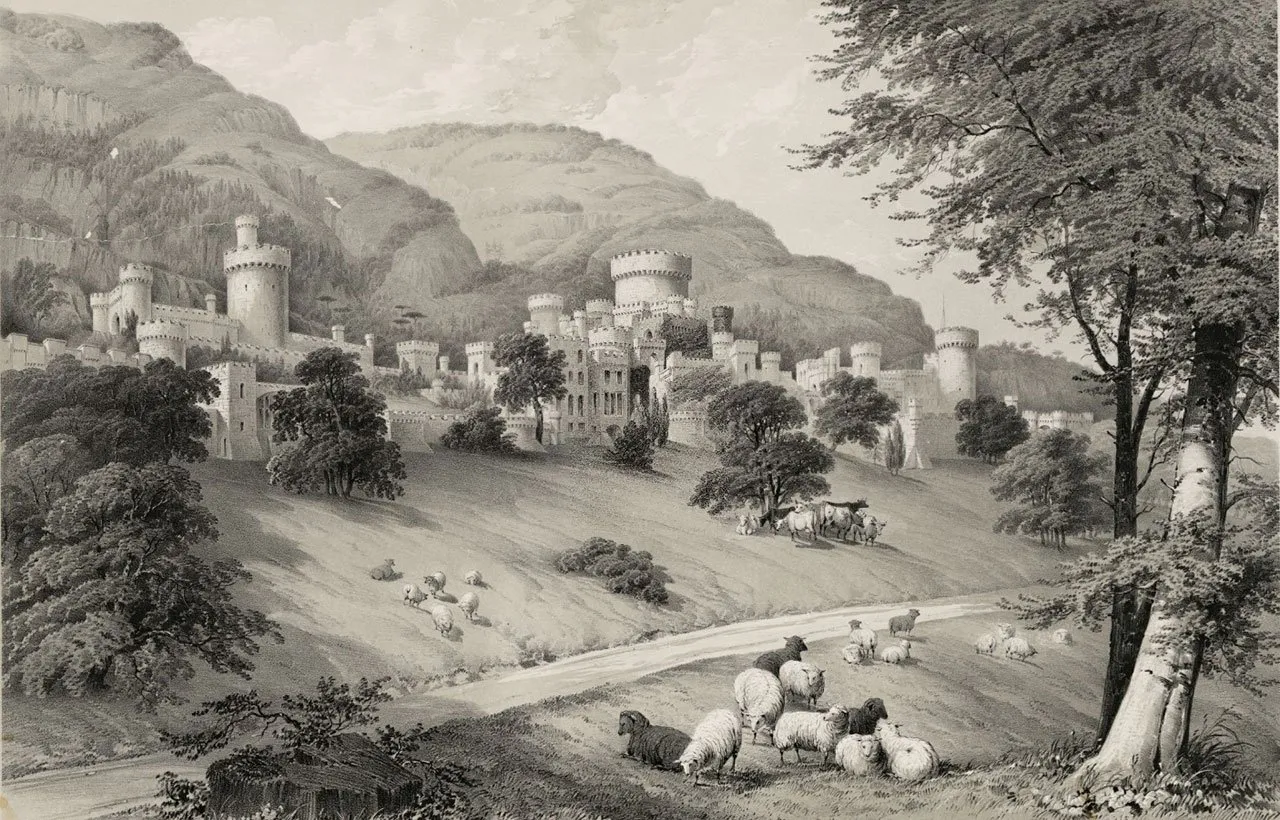
1840 Engraving of Gwrych Castle
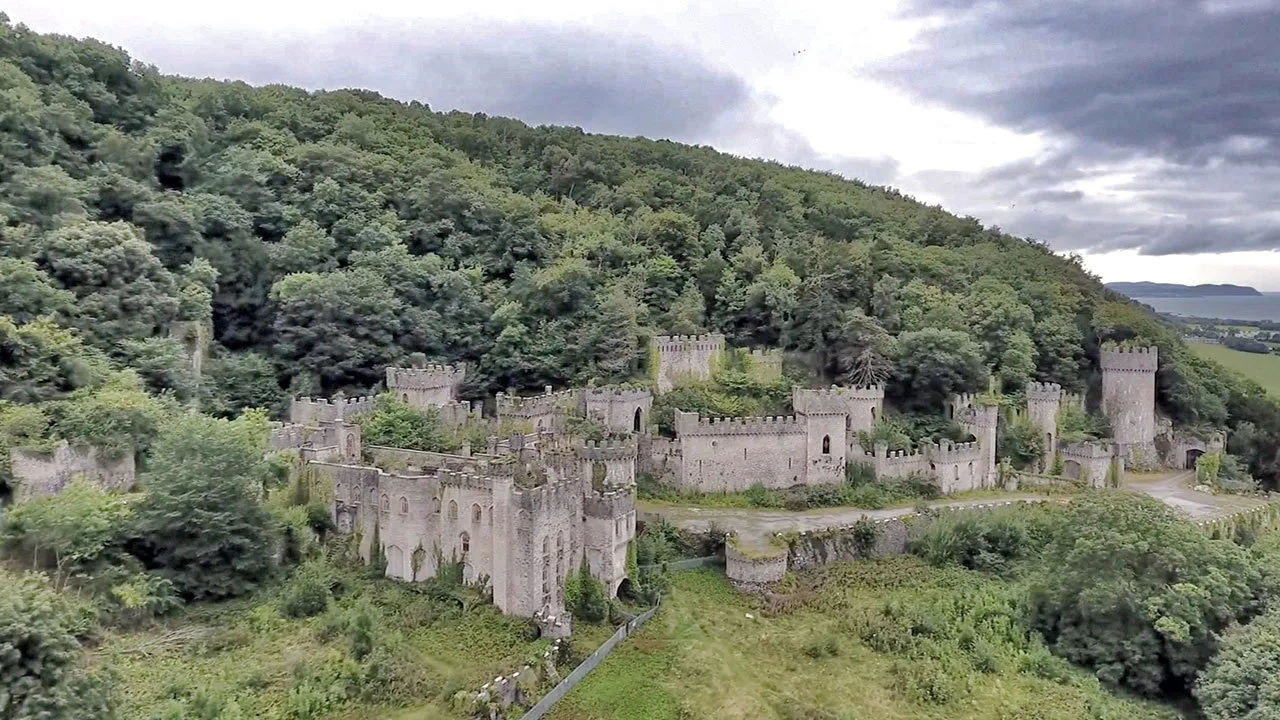
Gwrych Castle in 2017
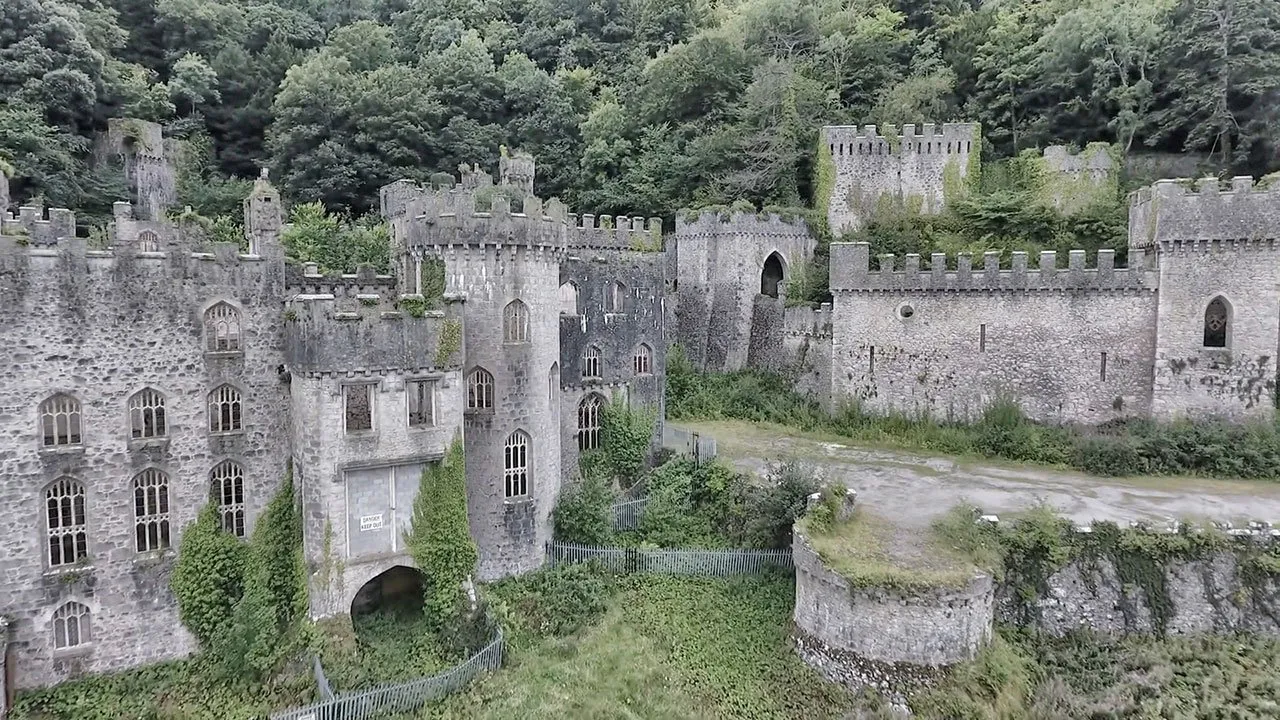
Gwrych Castle in 2017
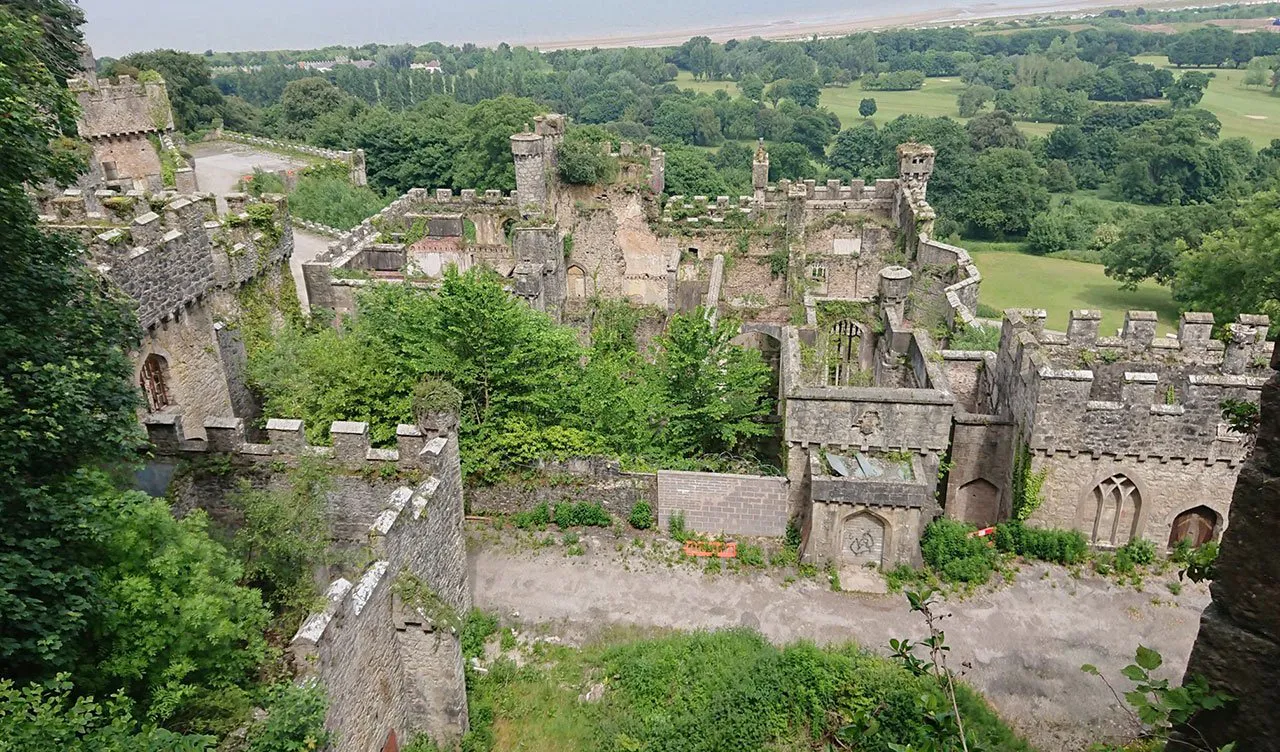
Gwrych Castle
Photo attributions:
Raintheone / CC BY-SA
Raintheone / CC BY-SA

The National Slate Museum
The National Slate Museum offers a day full of enjoyment and education in a dramatically beautiful landscape on the shores of Llyn Padarn. Dinorwig Quarry closed in 1969. Today, rather than fashioning wagons and forging rails, the workshops tell a very special story… the story of the Welsh slate industry. The Museum is sited in the Victorian workshops built in the shadow of Elidir mountain, site of the vast Dinorwig quarry. Here you can travel into the past of an industry and a way of life that has chiselled itself into the very being of this country.
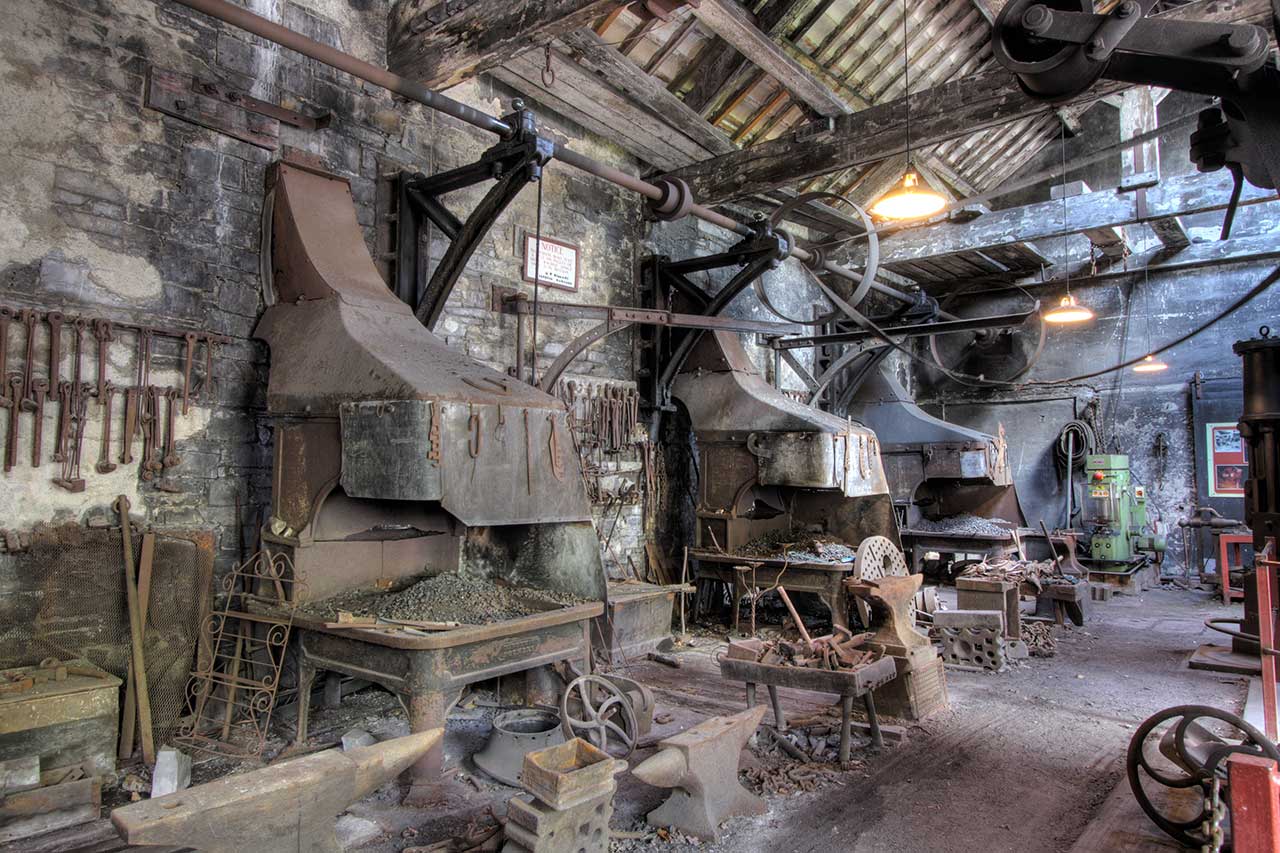
The National Slate Museum at Llanberis
The Workshops and Buildings are designed as though quarrymen and engineers have just put down their tools and left the courtyard for home, while an array of Talks and Demonstrations including slate-splitting give you a real insight into quarry life.
You’ll hear the gripping Story of Slate, encompassing such great events as industrial unrest on the one hand, and the small details of everyday life on the other. Fron Haul recaptures significant periods from the slate industry with a row of quarrymen’ houses on the museum site. Strikes and suffering, craftsmanship and community: all the drama of real people’s lives.
Llyn Padarn at Llanberis
A day full of enjoyment and education awaits in a dramatically beautiful landscape on the shores of Llyn Padarn, and at the terminus of the Llanberis Lake Railway, one of the ‘Great Little Trains of Wales’, which runs along the lake’s shoreline.
The Museum originally opened to the public in 1972. Many of the sites former quarrymen and engineers were employed to present their craft, while equipment was collected from other Welsh quarries. In 2005, the National Slate Museum scooped the Wales Tourist Board’s prestigious ‘Sense of Place Award’.
Penrhyn Castle, Bangor. LL57 4HN
Surf Snowdonia
An introduction to Surf Snowdonia
Picture this. A perfect lozenge-shaped lagoon roughly the size of six football pitches, set in the lush green Conwy Valley in North Wales, in the lee of the mountains of Snowdonia. Breathe it in. It’s clean, it’s fresh, it’s wild and it’s beautiful.
Now add something a little bit special and entirely unexpected. A two-metre-high barrelling wave that starts at the centre of the lagoon, peels perfectly for more than 150 metres, and then dissipates softly as it hits the shore.
Surf Snowdonia is a genuinely revolutionary outdoor adventure destination which produces the longest man-made surfable waves on the planet. It’s a showcase for the first ever publicly accessible Wavegarden® surfing lagoon, and is almost certainly the world’s most hotly anticipated outdoor adventure destination for 2015.
It is a game-changing facility. Surf Snowdonia will use unique wave-generating engineering and technology to produce powerful and consistent surfing waves of varying heights up to 2 metres, in a 300m long lagoon. Simultaneously. And all at the push of a button.
A Bit About the Technology
The unique concept behind Surf Snowdonia has been developed over the last ten years by Wavegarden: a group of hydrological, civil and mechanical engineers who also happen to be passionate surfers. Based in northern Spain, Wavegarden is the global leader in the design and manufacture of wave generation systems. Theirs is a completely revolutionary technology.
At the push of a button the facility generates perfectly formed barrelling waves which will interact with contours on the bed of the lagoon to provide different wave profiles at different points in the lagoon. The waves are variously 2m, 1.2m and 70cm high, and will peel for up to 150 metres. They are generated at a rate of one every minute.
From the expert central area of the lagoon, two identical waves break simultaneously left and right with barrelling point-break type rides up to 20 seconds long. Once the waves reach the beginners’ area at each end of the lagoon, the left and right hand waves transform into smaller more playful whitewater waves, the perfect size for all ages to learn and improve their skills. The Surf Snowdonia Wavegarden has room for up to 36 surfers at a time.
Surf Snowdonia is set in the village of Dolgarrog on a former industrial site – an aluminium rolling and casting works once owned by global aluminium giant Alcoa. The factory opened in 1907 and went into liquidation a hundred years later in 2007. Surf Snowdonia is just 7 miles from the main A55 North Wales arterial route, Liverpool and Manchester city centres are only 1.5 hours’ drive away.
Website: surfsnowdonia.co.uk
Facebook: facebook.com/SurfSnowdonia
Twitter: twitter.com/SurfSnowdonia
Canyoning in Snowdonia
Have you ever experienced Canyoning in Wales? If this doesn’t make you jump out of your Welsh Holiday Cottage in search of pure tummy tickling adventure in Snowdonia then nothing will! This fun-filled sport will take you down some of the most tranquil and beautiful canyons in North Wales. Unique to Wales, these canyons boast crystal clear waters and restricted access, so you don’t have to share it with many others.
The Welsh Highland Heritage Railway
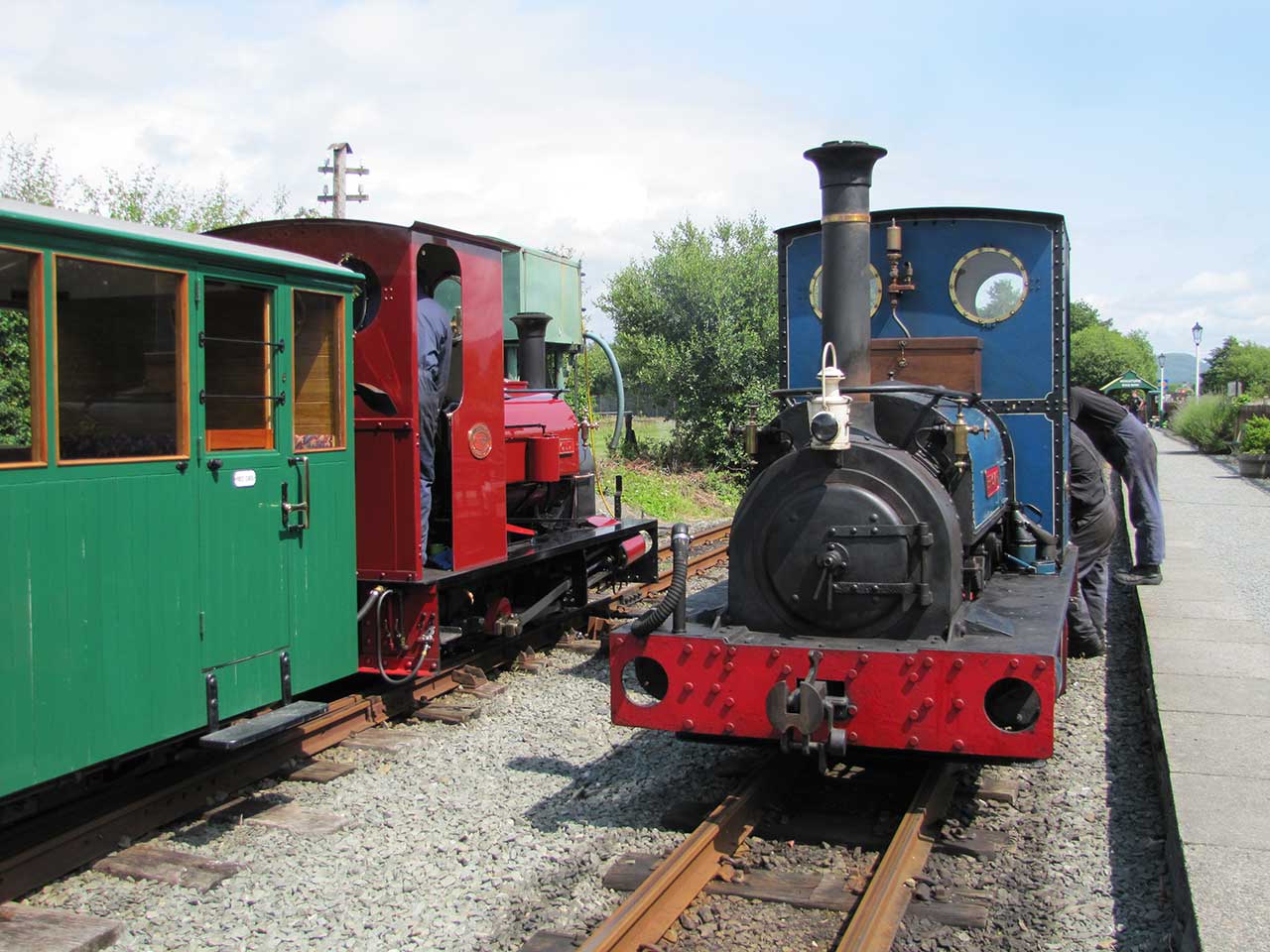
The Welsh Highland Heritage Railway – Photo © Mike Chapman
The Welsh Highland Heritage Railway formed in 1961 and is nearly entirely run by volunteers. It currently runs from March to November from their main station opposite the Network Rail station in Porthmadog (on Tremadog Road).
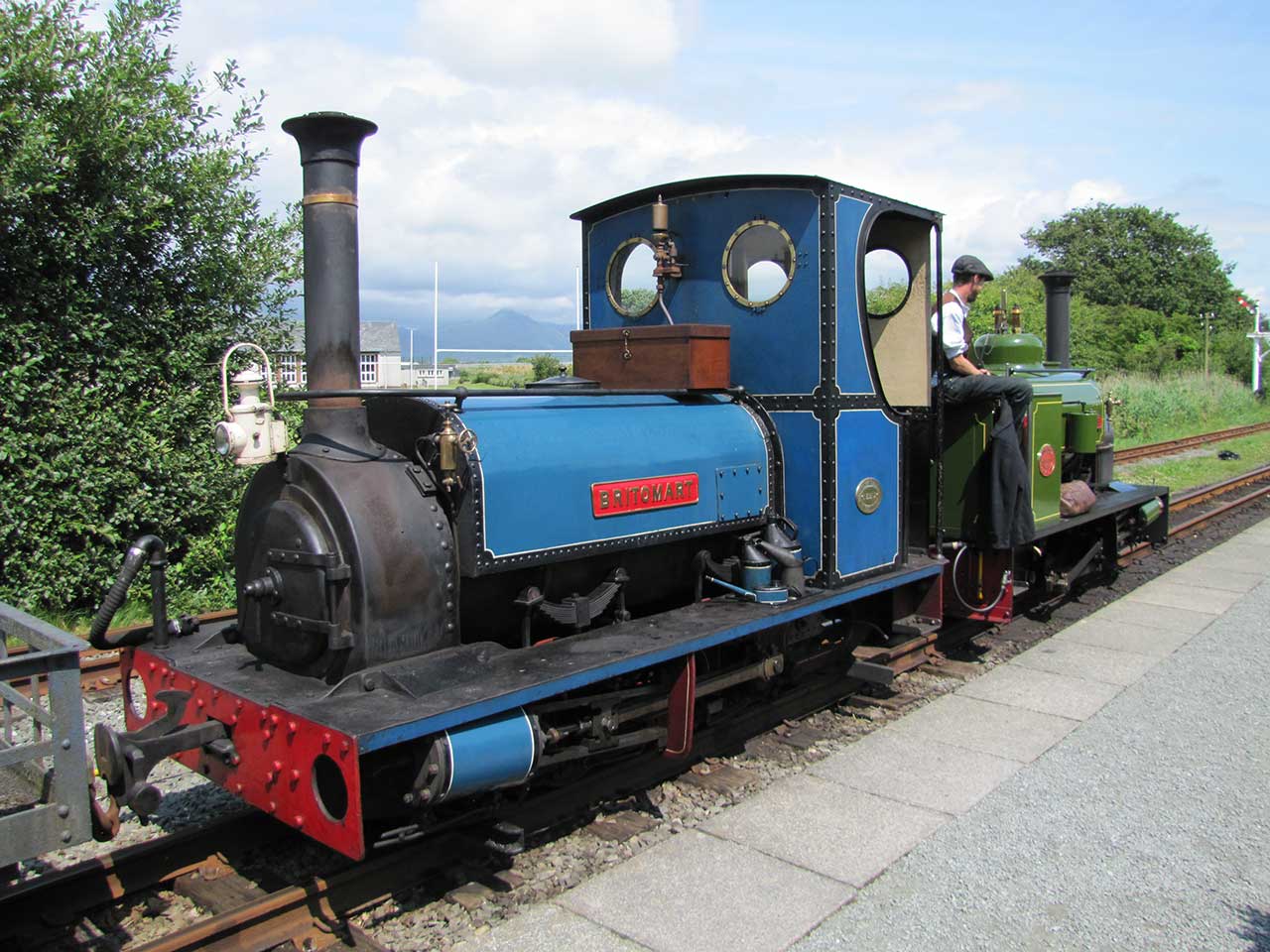
The Welsh Highland Heritage Railway – Photo © Mike Chapman
Trains run for half a mile (0.8 km) to Pen-y-Mount Junction, where the railway connects with the Welsh Highland Railway mainline. The train stops at Gelert’s Farm halt on its return to allow passengers to visit a museum and a miniature-gauge railway.
The return trip lasts an hour, which includes a free guided tour around the museum.
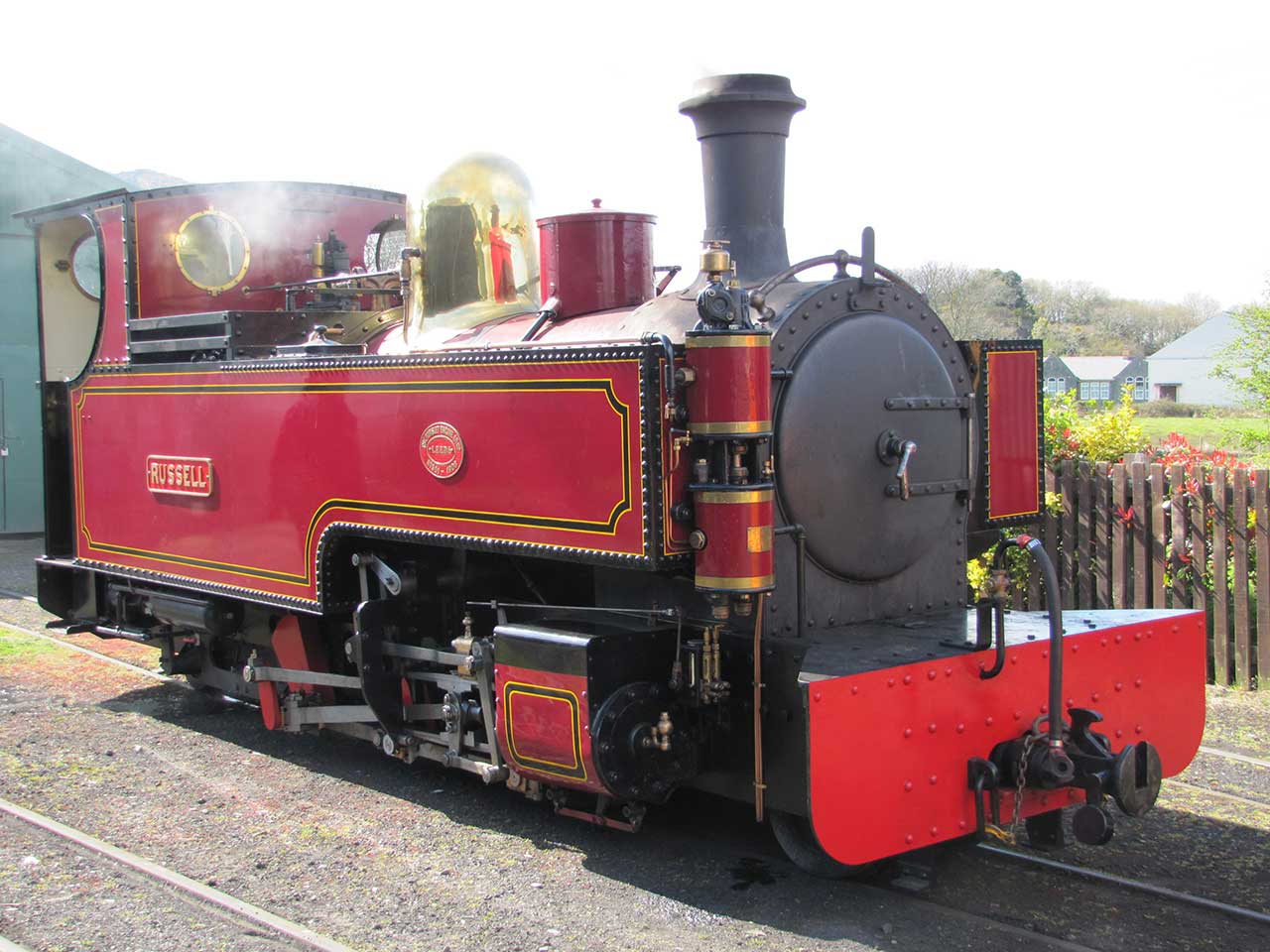
The Welsh Highland Heritage Railway – Photo © Mike Chapman
Visit their website at whr.co.uk for more information.
Map showing all The Great Little Trains of Wales
The Talyllyn Railway
The Talyllyn Railway runs seven and a quarter miles along the beautiful Fathew Valley from the seaside town of Tywyn (on the Cardigan Bay coast) to Nant Gwernol. There are some lovely walks en-route, including woodland walks at Dolgoch and Nant Gwernol and should you fancy a longer stroll, you can walk to the ruins of Castell-y-Bere and Bird-Rock “Craig yr Aderyn” from Abergynolwyn.
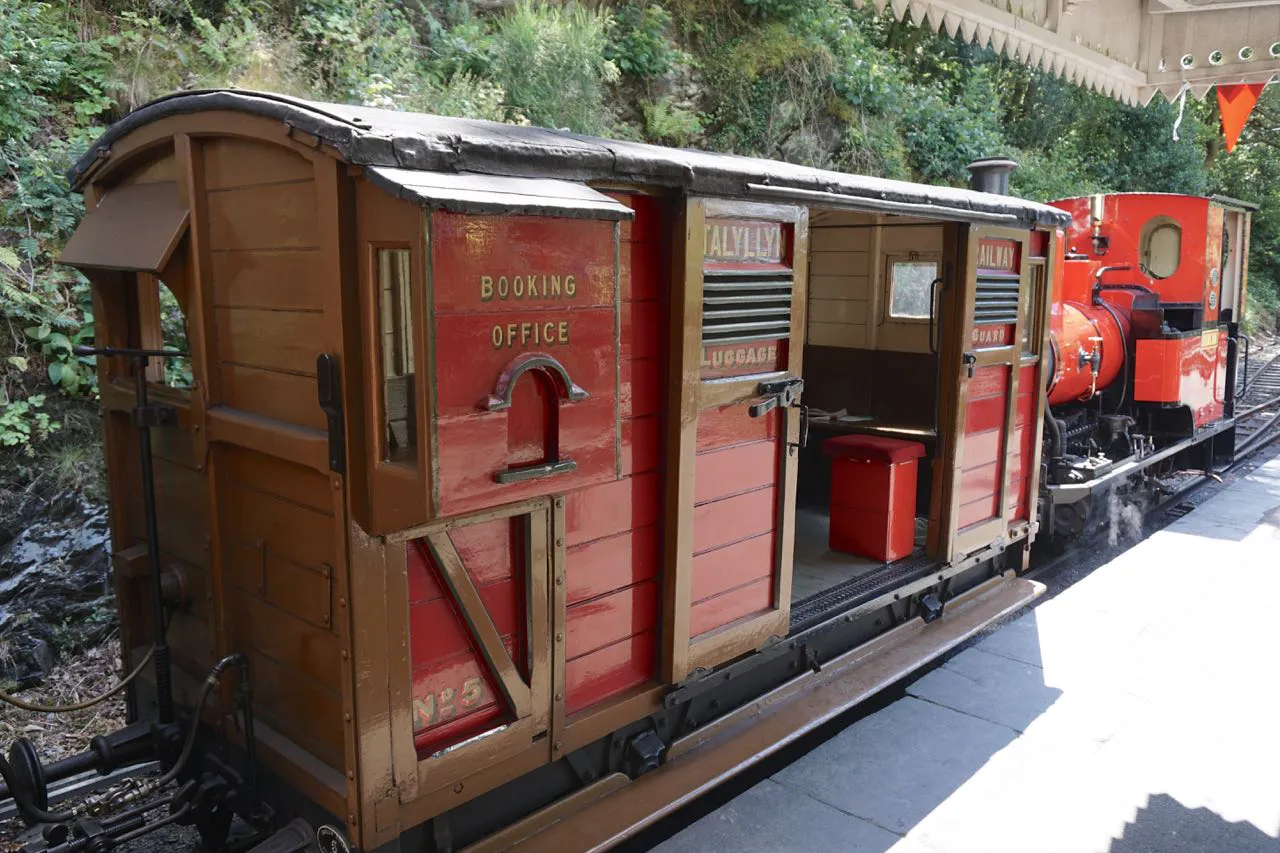
The Talyllyn Railway – Guards Van at Abergynolwyn Station
The railway is a 2 feet 3 inches (686 mm) gauge, built to carry slate from the Bryn Eglwys quarries near Nant Gwernol to Tywyn. The line was opened in 1865 and closed in 1946 due to a major rockfall in the quarry. It was the first narrow-gauge railway in Britain authorised by Act of Parliament to carry passengers using steam engines.
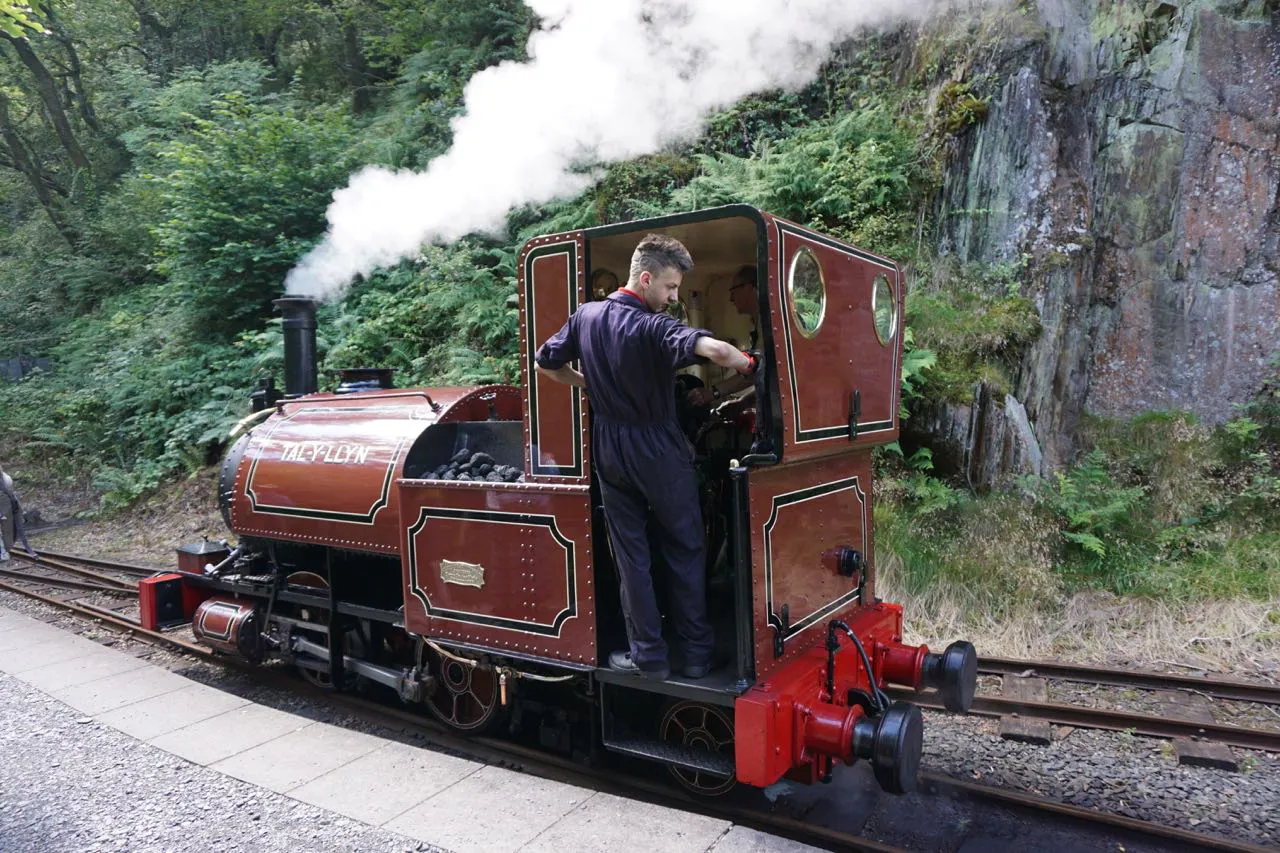
The Talyllyn Railway – Tal-y-Llyn Loco at Nant Gwernol Station
The Talyllyn Railway Preservation Society was formed in the 1951 and has gone from strength to strength. Talyllyn was the world’s first railway to be preserved as a heritage railway by volunteers and was the inspiration of the Ealing Comedy film “The Titfield Thunderbolt”. Work started to extend the route along the old mineral line from Abergynolwyn to Nant Gwernol in 1968 with regular passenger trains running in 1976.
Every August you can also “Race The Train” from Tywyn to Abergynolwyn and back. The aim is to run the fourteen and a half mile cross-country course before the train does (the train takes around one hour forty-five minutes). You can read more about the race at racethetrain.com.
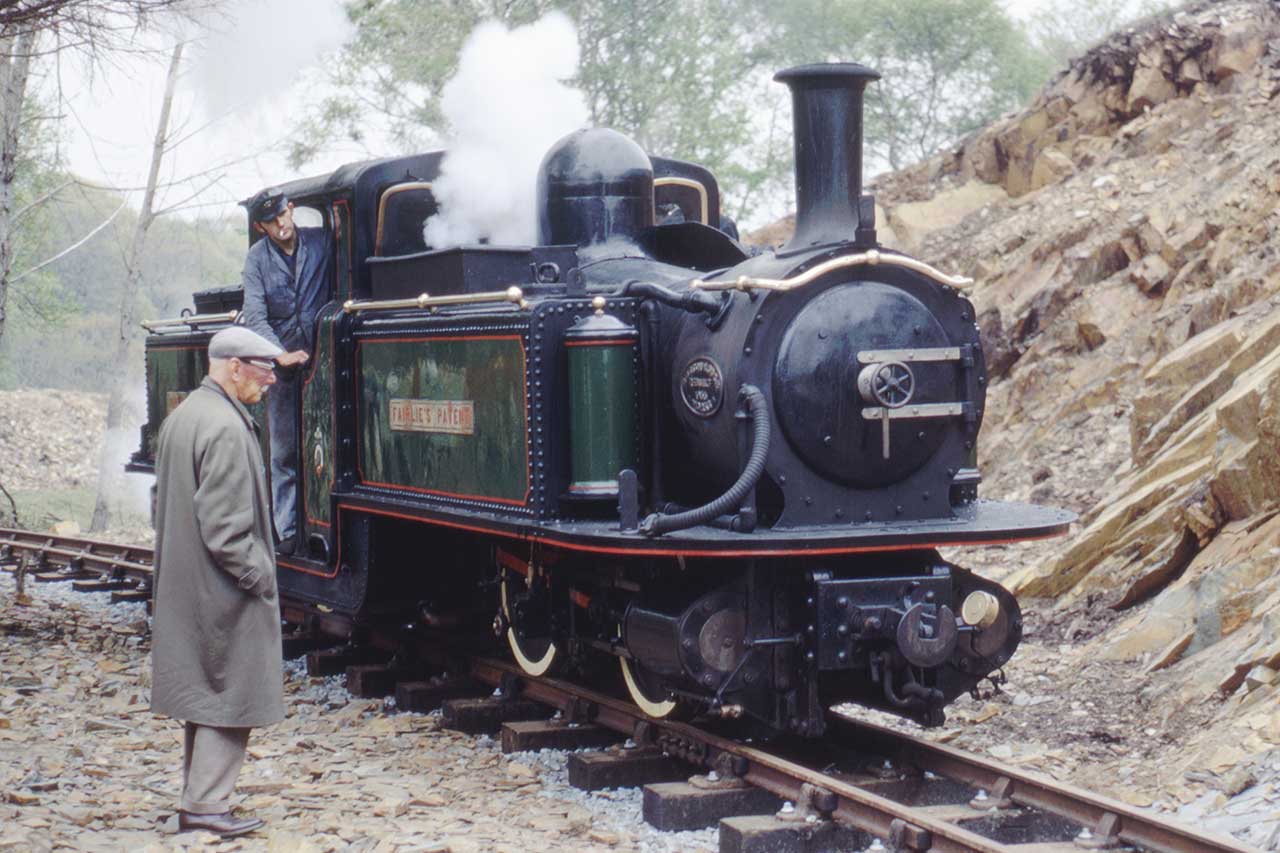
Fairlie Patent Engine in 1968
The line featured in the short film “Railway with a Heart of Gold” by American producer Carson Davidson in 1953 and one of The Rev. W. Awdry’s “Railway Series” of books, “Skarloey Railway” was based on the Talyllyn Railway.
A Sign at Nant Gwernol Station, Reads.
“When the railway was built, all of the buildings were of brick or timber construction because even though the slate quarries were already in operation, no slate came by this route until the line opened. Although Nant Gwernol has always been the limit of locomotive haulage, passenger services only ran as far as Abergynolwyn and there was no station here until 1976.
Slate wagons and supplies for the quarries were brought here and waited in one of three sidings to he hauled up to the quarry tramway, with wagon loads of slate going the other way.
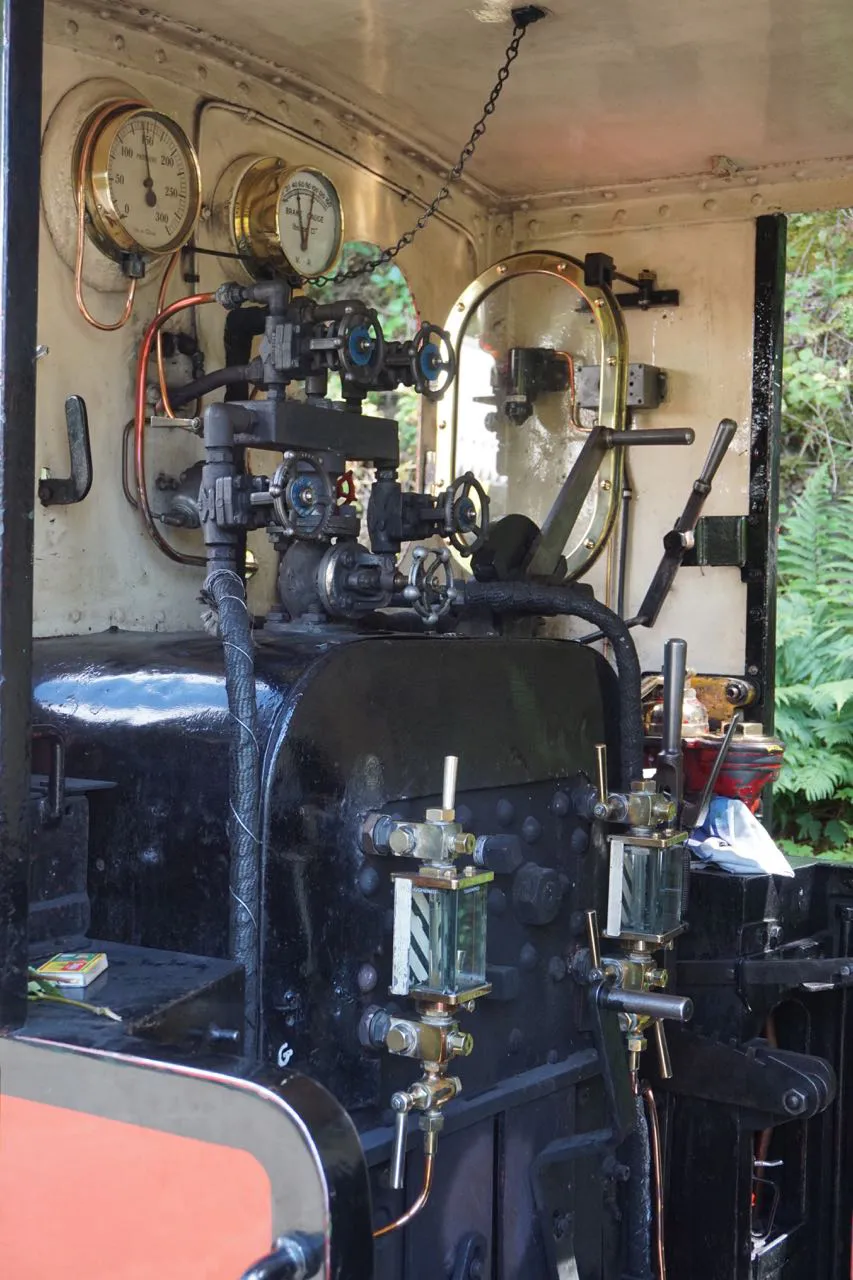
The Talyllyn Railway – Interior of Duncan
With the closure of the quarries in 1947 the line from here to Abergynolwyn lay derelict until upgraded for passenger trains in the early 1970s. The station here is a slightly scaled-down copy of the 1866 wooden buildings at Tywyn Pendre and Abergynolwyn and was built for the opening of the extension in 1976.
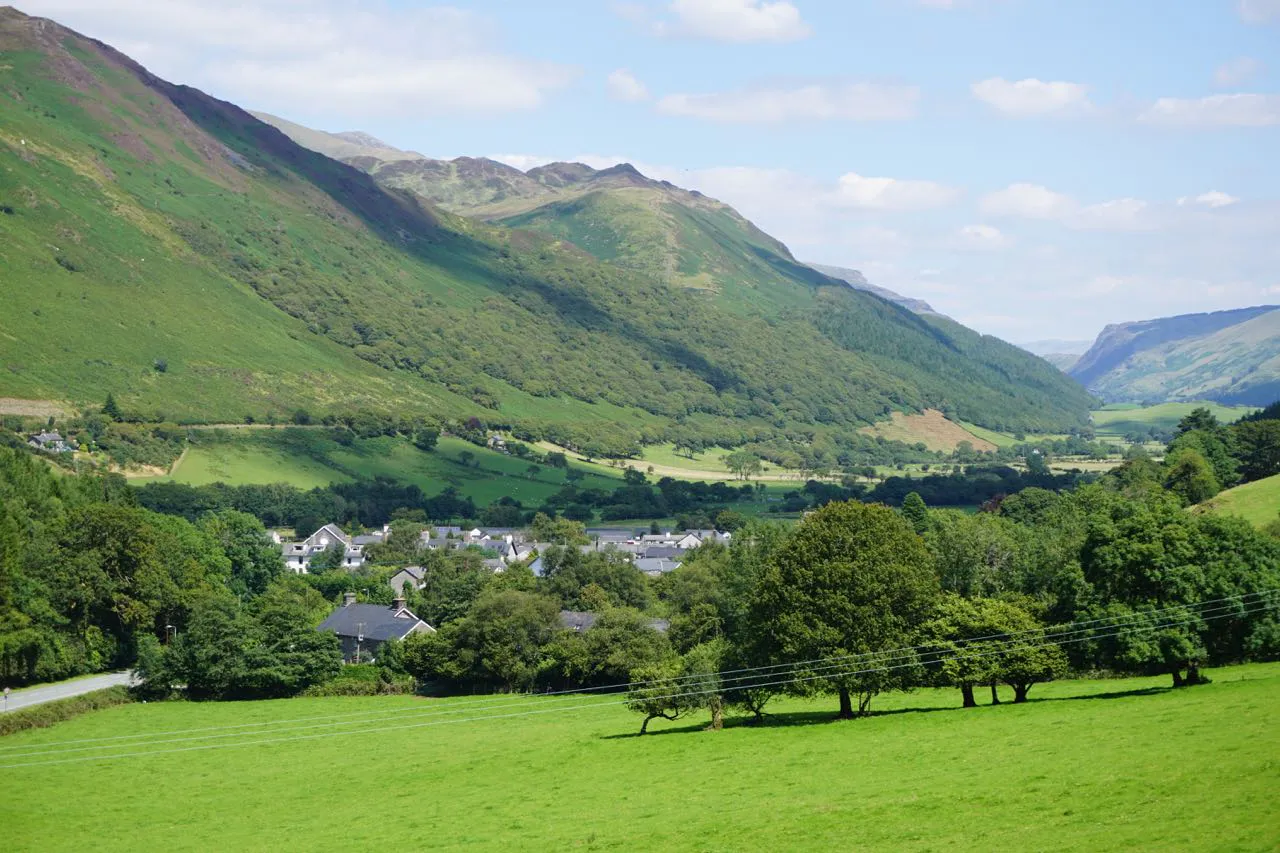
Abergynolwyn
It is possible to imagine the amount of work done, mainly by volunteers, to widen the trackbed sufficiently to take passenger vehicles. Look at the curve off the far end of the platform and you will see a short length of track parallel to main line. This is about where the original line ran; very close to the edge of a 150 drop and just wide enough for the engine to scrape by with its train or small wagons”.






Map showing all The Great Little Trains of Wales
National White Water Centre
Plas Brondanw
The Brondanw Estate lies within the Snowdonia National Park, between Snowdon and the sea. Plas Brondanw is the principal house on the estate.
It had been at about my twenty-fifth birthday that my father unexpectedly handed over to me the control of the old (Williams) family property of Plas Brondanw which I would ultimately inherit,” wrote Clough Williams-Ellis. “Gradually but surely the old house and its rehabilitation became my chief absorbing interest outside my profession.
The estate was enlarged when Clough bought two adjoining mountainous properties threatened by mining.
The Brondanw Estate has never been bought or sold and is now owned by a charitable trust for its protection The gardens are open to the public.
Plas Brondanw, Llanfrothen, Penrhyndeudraeth, Porthmadog, Gwynedd. LL48 6SW.
Clough Williams-Ellis at Brondanw in June 1975
Bodnant Garden
Bodnant Garden is one of the most beautiful gardens in the UK, spanning some 80 acres situated above the River Conwy on ground sloping towards the west and looking across the valley towards the Snowdonia range. The Garden has two parts. The upper garden around Bodnant Hall consists of the terraced gardens and informal lawns shaded by trees. The lower area, known as the “Dell” is formed by the valley of the River Hiraethlyn and contains the Wild garden.
Waterfall at Bodnant Garden
An endeavour has been made at Bodnant Garden to grow a wide range of interesting and beautiful plants from all over the world, particularly China, North America, Europe and Japan that are suited to the Welsh climate and soil. As well as this, care has been taken to place the plants in such a way that they enhance each other and contribute to the general beauty of the Garden throughout the seasons.
Come and lose yourself in the awesome beauty of Bodnant Garden and spend an amazing day in this feast for the senses. Members of the National Trust and the Royal Horticultural Society are admitted free on presentation of a valid membership card.
Bodnant Garden in Autumn
The Garden is managed for the National Trust by Michael McLaren, Q.C.
Bodnant Garden, Tal-y-Cafn, Colwyn Bay, Conwy. LL28 5RE
nationaltrust.org.uk/bodnant-garden/
Bodnant Welsh Food Centre
The Mawddach Trail
Cows and Geese on the Mawddach Estuary
The Mawddach Trail follows the nine miles of the old railway line from Dolgellau to Barmouth which was in operation from 1865 until it fell victim to the Beeching cuts exactly a hundred years later in 1965. It is, without doubt, the most popular walk/cycle path in the area, one of the main reasons being that it is FLAT (a rarity in this area). This makes it suitable for all the family, whether on foot on two wheels (or even a uni-cycle which I saw once). It is also very beautiful with tree-lined sections, river views, mountain views, reed beds, wooden bridges, birds galore, an estuary, sea views and even a pub. The Mawddach Trail (or “Llwybr Mawddach” in Welsh) was featured on Julia Bradbury’s “Railway Walks” series on the BBC a few years ago and is often mentioned as one of the best walks in Wales.
The best starting point is the main Dolgellau town car park (next to the Marian playing fields). You can, of course, walk from Barmouth, but I think walking towards the sea is better than walking away from it. In fact, I’ve never even done it that way.
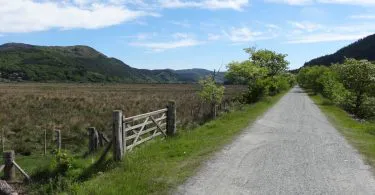
The Mawddach Trail
The first section of the walk is actually beside the old railway line, as that is now the A494. You start by leaving the car park (at the playing field end) and take the signed path beside the river Wnion until you reach the new pedestrian/cycle bridge (built in 2012). Cross this and turn left and carry on until you reach the main Tywyn road. Cross this (carefully) and you’re at the “Bont y Wernddu” car park which is where you start to see signs of the old railway line (which you have now joined). The first sign is the bridge you cross before you reach the gate. If you want a little detour, just before the bridge there is a little path to the right which follows the river for a couple of hundred meters (which is covered in wild garlic in the spring). It’s always worth stopping on this bridge and peering down the river, as I have seen Kingfishers here in the past. From here, it’s a straight tree-lined walk to Penmaenpool, with reed beds either side (some of the largest in Wales and a Site of Special Scientific Interest).
Go through the cycle-gates at the end of this section and you’re at Penmaenpool… home to an old wooden toll bridge which was built in 1879 and worth a short diversion and walk to the other side. There is also a GWR signal box and the aforementioned Pub (The George III).
Once past Penmaenpool you enter a large cutting, before a dead straight section which ends with the first glimpse of your final destination… Barmouth Bridge. Follow the route and you start to see the estuary opening up with herons and oystercatchers and maybe a glimpse of an Osprey which has been known to make the odd visit.
The Mawddach Trail
Carry on and you can make another diversion down to a little pond at Abergwynant, if not, then carry on to your next old ‘station’ at Arthog. This can also be your departure back home if you want, as there are buses which run back to Dolgellau from this little village, just follow the road to your left and turn right until you reach a bus stop. If you want to carry on (and why wouldn’t you) just follow the path straight ahead after you go through the gates and this leads you to Morfa Mawdach station (which is the main Cambrian Coastline and still in operation). Here you turn right and carry on to Barmouth Bridge (which was opened in 1867).
If you want a prettier detour at the end, take the right-hand path four-hundred meters after Arthog and follow it through the tall trees and reeds. Turn left after the gate to reach the estuary (only use this one if you are on foot, not on a bike). Follow this path BEHIND the row of houses (Mawddach Crescent) before rejoining the banks of the estuary. I prefer this route as it bypasses the station and gives you a better view of Barmouth, the estuary and a side view of Barmouth Bridge. Cross the style over the fence to rejoin the trail and cross the half a mile long bridge.