Mary Jones
Mary Jones
In 1800 a fifteen year old girl, Mary Jones, walked the 25 miles from her home in the small village of Llanfihangel-y-Pennant to buy a bible from the Reverend Thomas Charles in Bala. Bibles were scarce and expensive at the time and she had to save for six years to buy one. This determination was a major factor in the foundation of the British and Foreign Bible Society in 1804.
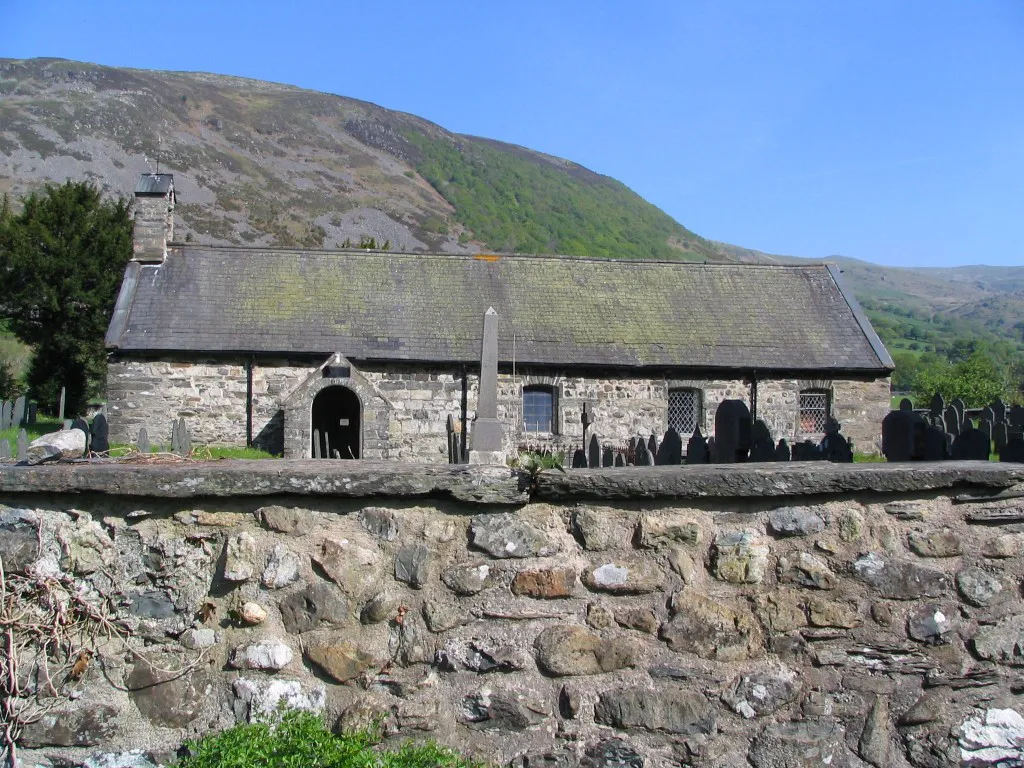
St. Michael’s Church in Llanfihangel-y-Pennant
Learn how one girl’s journey transformed the lives of millions: Interactive displays, videos, exhibits and activities bring her fascinating story to life from 1800 to the present day. This new exhibition is located inside Lanycil Church.
More at bydmaryjonesworld.org.uk
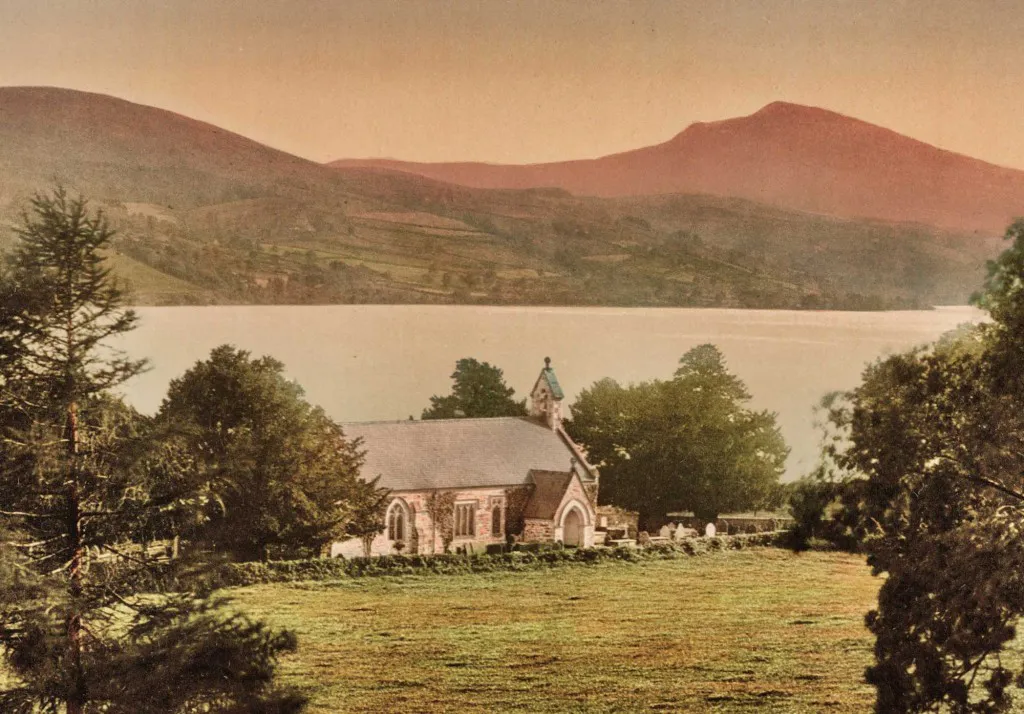
Photochrom of Llanycil Church, Bala
Bala Sailing Club
Bala Sailing Club is set at the north-east end of Bala Lake giving easy access to the largest & possibly the most picturesque sailing water in Wales. The International Moths described Bala as “The Lake Garda of the North”! Predominantly south-westerly winds provide excellent sailing conditions & the well equipped clubhouse, bespoke training and race control facilities make Bala one of the most popular sailing venues in the UK.
See more at balasc.org.uk.
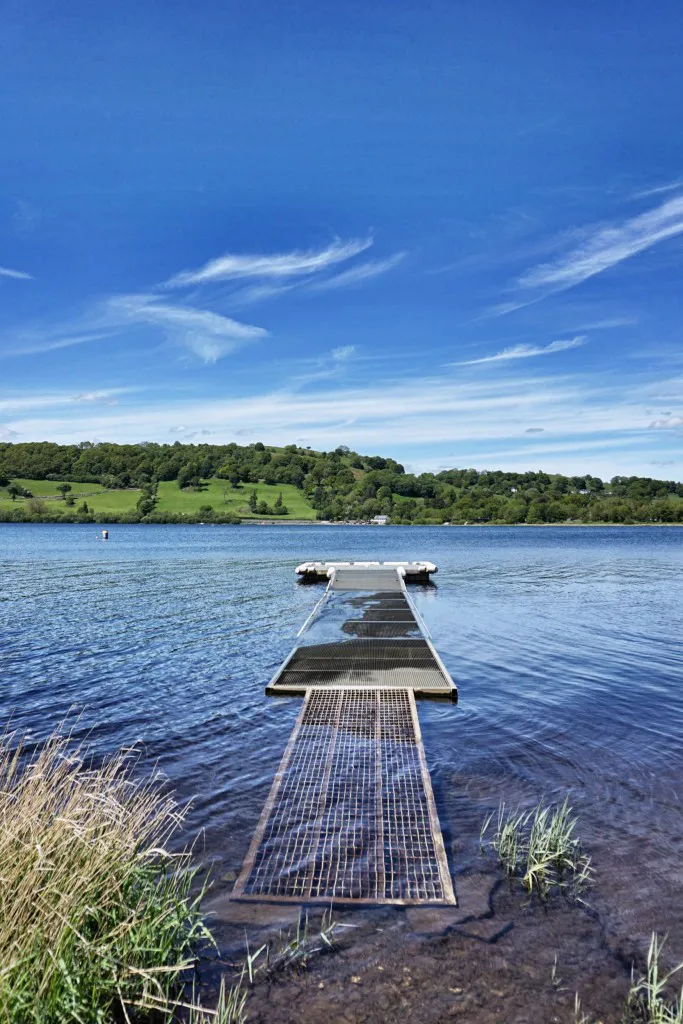
Bala Lake
Bodiwan
Bodiwan, Bala
A Grade II listed building with free WiFi access, a hot tub and free on-site parking, the property is a 16-minute walk from Bala Adventure & Watersports.
View on the Booking.com Website
Frondderw Country House
Frondderw, Bala
A refurbished 17th century house with en-suite rooms. The B&B overlooks the town of Bala, which is just 8 minutes walk away.
View on the Booking.com Website
Rhydydefaid Farm B&B
Rhydydefaid Farm B&B, Bala
Rhydydefaid Farm B&B – A charming rural property set on a farm, 2.5 miles outside Bala and within Snowdonia National Park. This bed and breakfast offers free Wi-Fi, a garden and a lounge.
View on the Booking.com Website
The Railway Cottage
Railway Cottage, Bala
The Railway Cottage – In the beautiful Snowdonia National Park, this four-star bed and breakfast offers a cosily furnished room with its own conservatory and private garden access.
View on the Booking.com Website
White Lion Royal Hotel
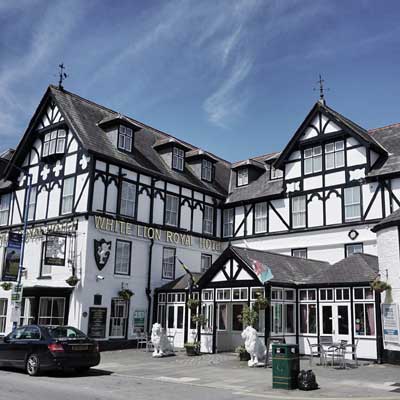
White Lion Royal Hotel, Bala
Located in Bala and surrounded by greenery, White Lion Royal Hotel dates back to the 16th century and offers accommodation with on-site parking free of charge. Only nine miles from the heart of the Gwydyr Forest Park. The hotel boasts an on-site restaurant and a bar.
Rooms at White Lion Royal Hotel feature traditional design and décor, and come with a writing desk, a TV and tea and coffee making facilities. Some rooms come with four-poster beds. All rooms comprise en-suite bathroom facilities with a bathtub or a shower and a hairdryer, and free toiletries are provided as well.
The hotel’s restaurant offers regional cuisine for lunch and dinner, and a selection of wines, ales and spirits is available in the bar throughout the day. Breakfast is served every morning in the common breakfast area and can also be served in the guest rooms upon request.
An array of outdoor activities including fishing, golfing, canoeing, hiking, cycling and horse riding can be enjoyed in the green surroundings of the accommodation. The Snowdonia National Park is a 1-hour drive away. Liverpool is 52.8 miles from the hotel and Chester is 40.4 miles away.
View on the Booking.com Website
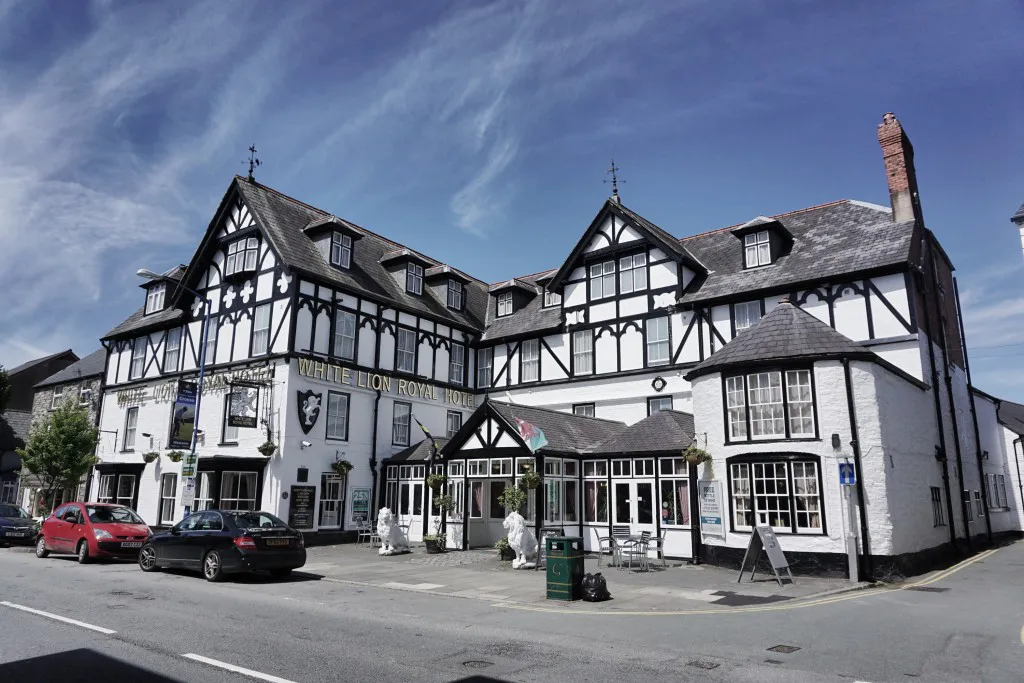
The White Lion Royal Hotel, Bala
Caernarfon Castle
I’ve added Caernarfon to this website, although it’s not just out of the Southern Snowdonia area, it’s also outside of the whole of Snowdonia, being on the north-west coast and twenty miles north of Porthmadog. However, it is the terminus of the “Welsh Highland Railway” which starts at Porthmadog, so it worth a mention.
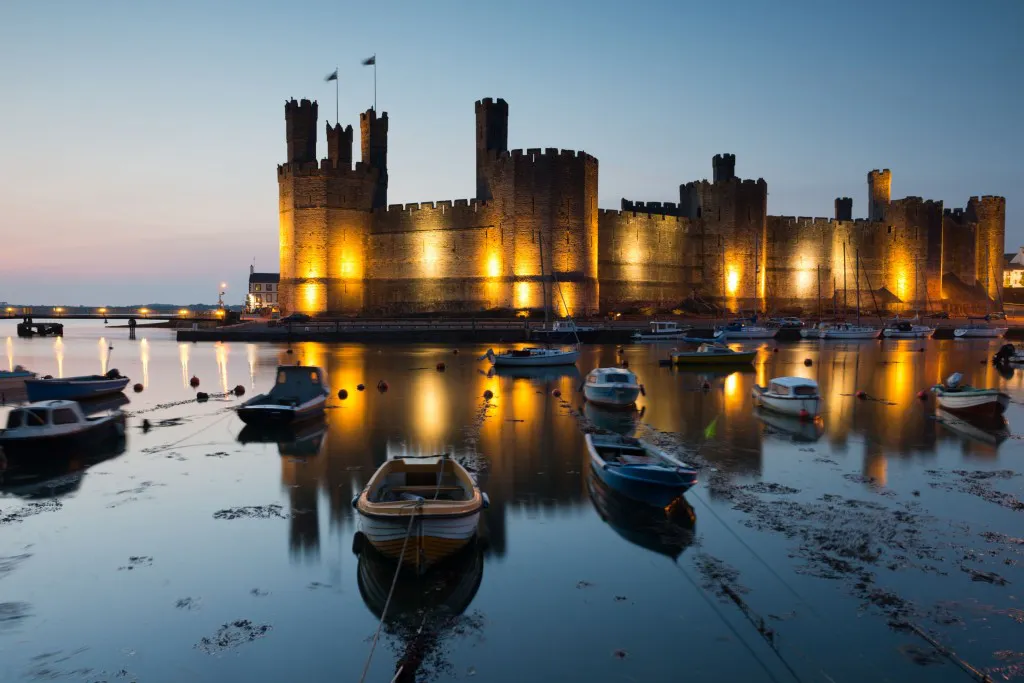
Caernarfon Castle
Caernarfon Castle – After all these years Caernarfon’s immense strength remains undimmed.
A brute of a fortress. Caernarfon Castle’s pumped-up appearance is unashamedly muscle-bound and intimidating. Picking a fight with this massive structure would have been a daunting prospect. By throwing his weight around in stone, King Edward I created what is surely one of the most impressive of Wales’s castles. Worthy of World Heritage status no less.
Most castles are happy with round towers, not Caernarfon! Polygonal towers were the order of the day, with the Eagle Tower being the most impressive of these. You will also note the colour-coded stones carefully arranged in bands.
The site of this great castle wasn’t chosen by accident. It had previously been the location of a Norman motte and bailey castle and before that a Roman fort stood nearby. The lure of water and easy access to the sea made the banks of the River Seiont an ideal spot for Edward’s monster in masonry.
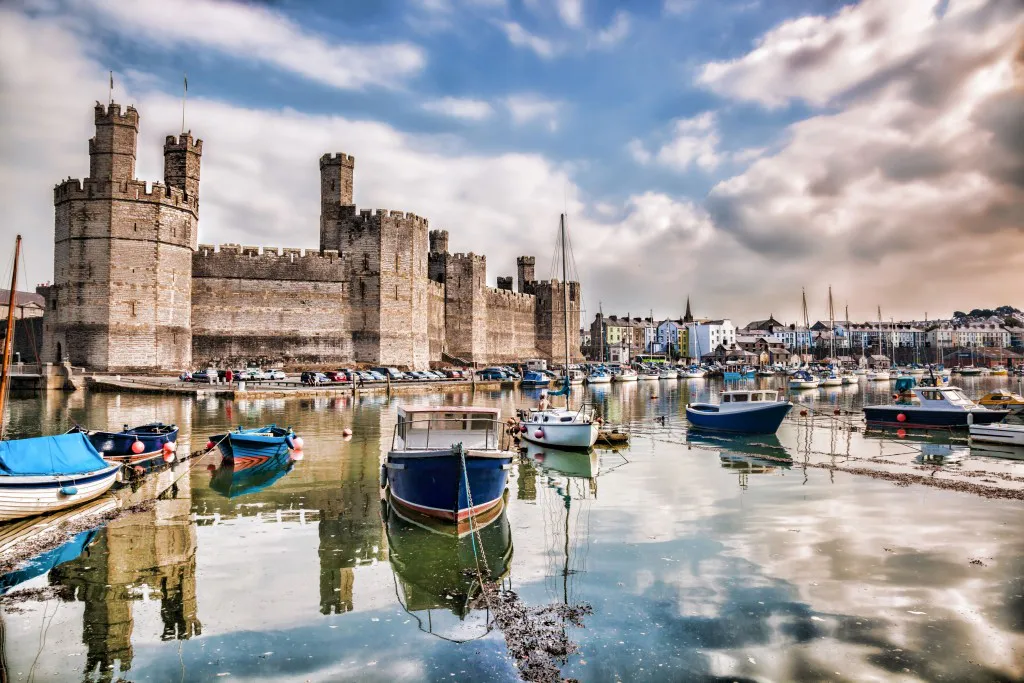
Caernarfon Castle
Edward wasn’t one to miss an opportunity to tighten his grip even further on the native population. The birth of his son, the first English Prince of Wales, in the castle in 1284, was a perfect device to stamp his supremacy. In 1969, the investiture of the current Prince of Wales, HRH Prince Charles took place here.
Whilst you’re visiting this formidable fortress, don’t miss the opportunity to see the Royal Welch Fusiliers Museum, which is housed in two of the castle’s towers.
Along with Harlech Castle, Conwy Castle and Beaumaris Castle, this monument has been part of the Castles and Town Walls of Edward 1 World Heritage Site since 1986.
More Details on the CADW Website & CASTLES.WALES
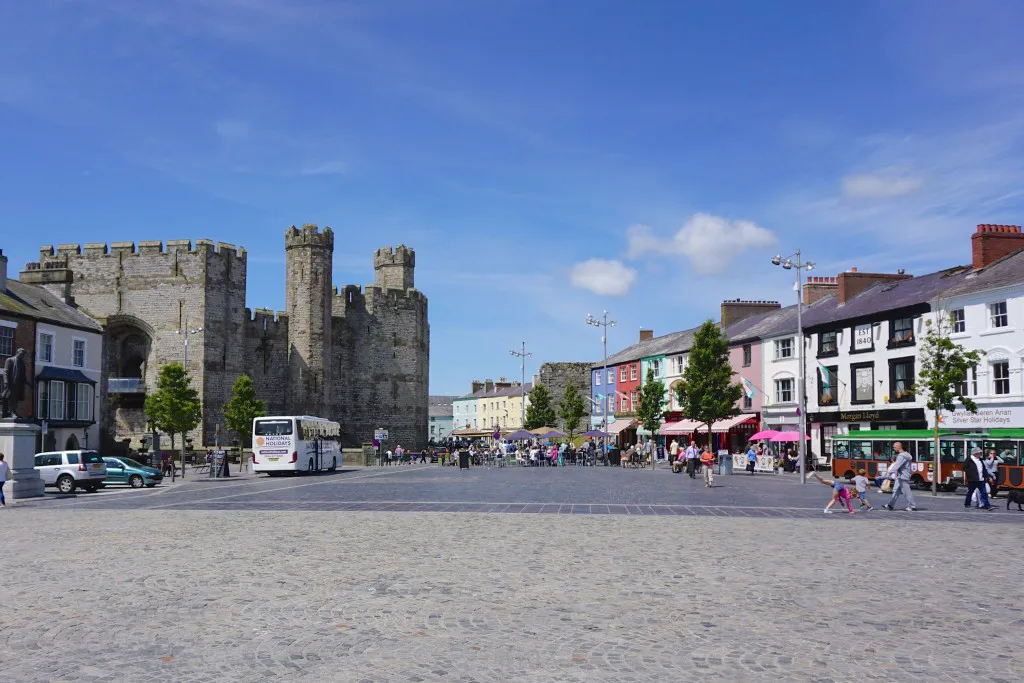
Caernarfon Castle
Railway Facts (Ffestiniog & The Welsh Highland Railway)
The Ffestiniog Railway Company operates the two foot (597mm) gauge Ffestiniog and Welsh Highland Railways, which carry up to 400,000 passengers a year.
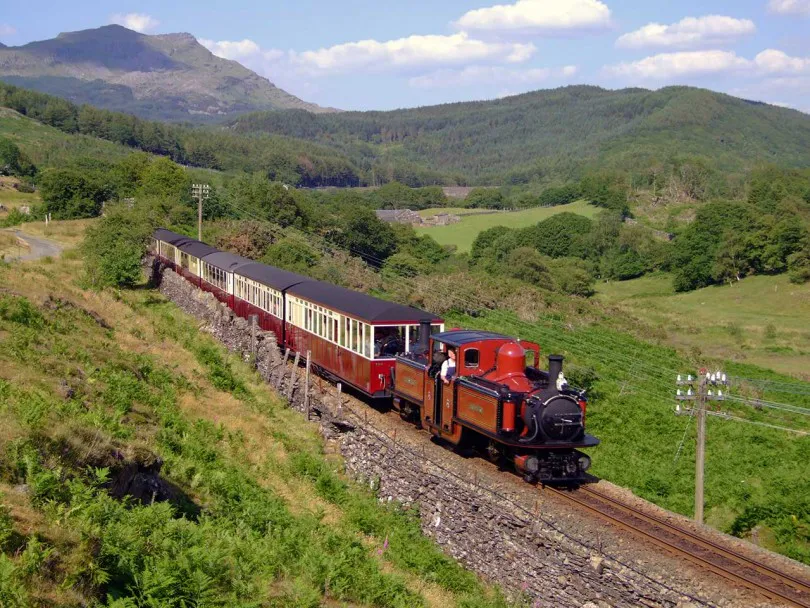

The Ffestiniog Railway is recognised by the Guinness Book of World Records as the oldest operational railway company in the World, being founded by Act of Parliament in 1832. 2015 marks the 150th anniversary of the start of passenger services in 1865.
In 1863, it became the first narrow gauge railway in the World to introduce steam engines – two of which are still in use today, with a third undergoing restoration – the oldest locos in the World still operating on their original railway and celebrated their 150th birthday in 2013. It is the only railway in the World to operate double-ended Fairlie steam locomotives.
It runs the oldest railway works in the World, where new steam locomotives and carriages have been built in the 19th, 20th and 21st centuries – Merddin Emrys was built in 1879 and is still in regular use today. In August 2010, the UK’s newest steam loco, Lyd entered service.
Since the 1950s, the Ffestiniog Railway has become a leader in railway preservation and is now one of the UK’s top and North Wales’ Number One tourist attraction. The line reopened to Blaenau Ffestiniog in 1982.
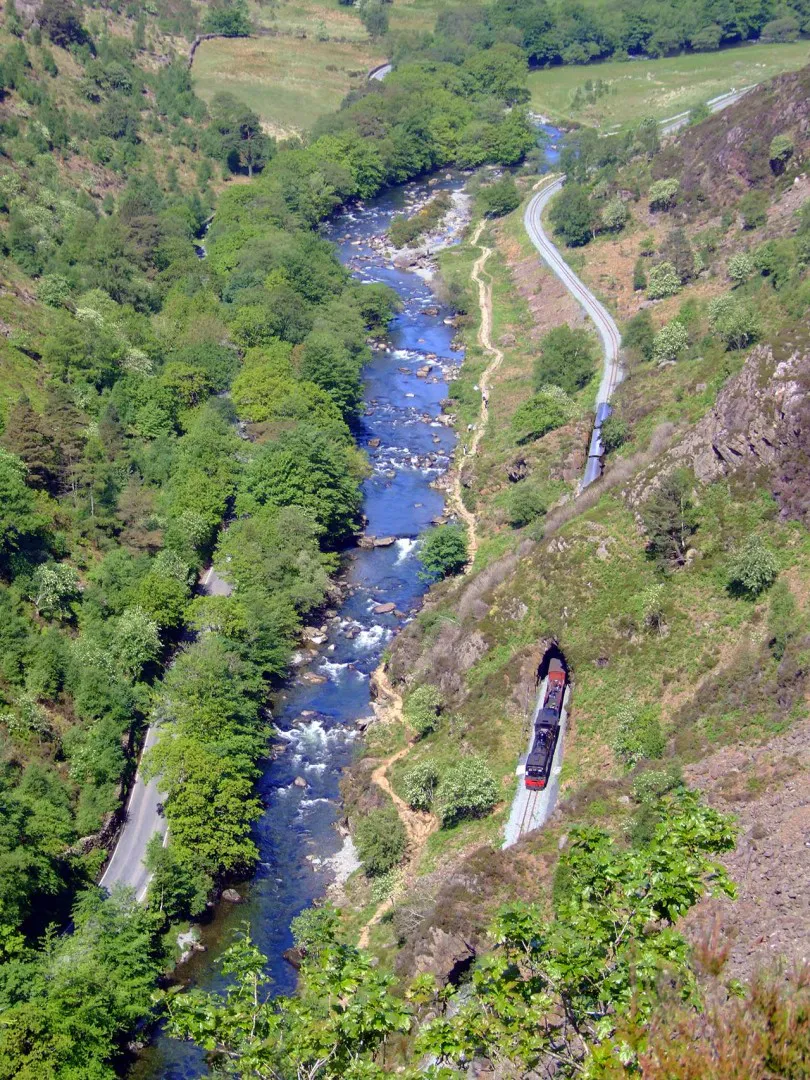
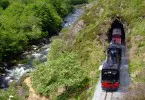
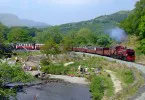
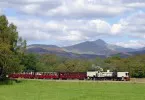
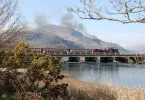
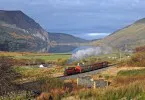
Welsh Highland trains cross the width of the Snowdonia National Park, past the foot of Snowdon and the beautiful village of Beddgelert, before travelling the length of the Aberglaslyn Pass – voted the most beautiful spot in the UK by members of the National Trust.
The Welsh Highland operates the most powerful narrow gauge steam engines in the world – Beyer Garratt NG/G16s weighing over 60 tons. These are the only locos capable of hauling long trains on some of the longest and steepest gradients to be found on any railway in the UK.
On April 20, 2011, the Welsh Highland was officially opened throughout from Caernarfon to Porthmadog. At 25 miles, the WHR is the longest heritage railway in the UK. Its connection with the Ffestiniog enables passengers to travel between Blaenau Ffestiniog and Caernarfon – almost 40 miles of narrow gauge steam.
Rebuilding the 25 mile Welsh Highland Railway cost £28 million, most of the work being carried out by volunteers. £12.5m of the funding came from the Welsh Assembly Government, the EU and the Millennium Lottery fund, the remainder being raised through donations and fund raising schemes. In 2014, a £1.25 million rebuild of Porthmadog Harbour Station was completed to enhance customers’ experience.
In addition to employing 85 full-time staff, rising to over 100 during the peak season, independent research shows that the Ffestiniog and Welsh Highland Railways generate £25 million for the local economy each year – £250 for every man, woman and child in Gwynedd – and create a further 350 jobs in the area. Two supporting societies have 8,000 members and over 1,000 volunteers regularly work on the railways.
For over three decades, between 70 and 80 young people have worked on the railways each year as part of the Duke of Edinburgh’s Award Scheme. Pupils from local schools carry out work experience on the railways throughout the year and Boston Lodge Works trains young people through its apprenticeship scheme.
For further information or to arrange a visit festrail.co.uk or Facebook: facebook.com/festrail.
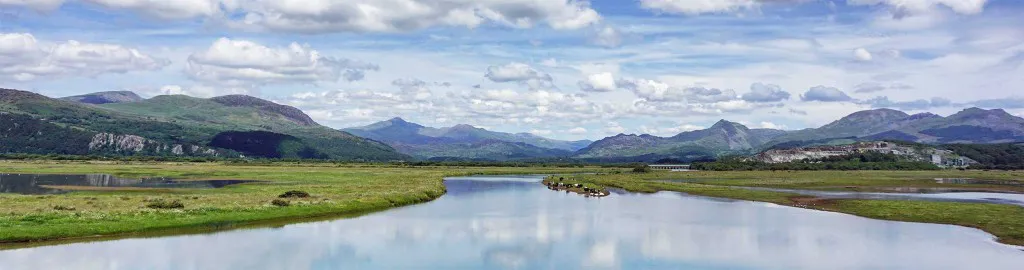
View from The Ffestiniog Railway
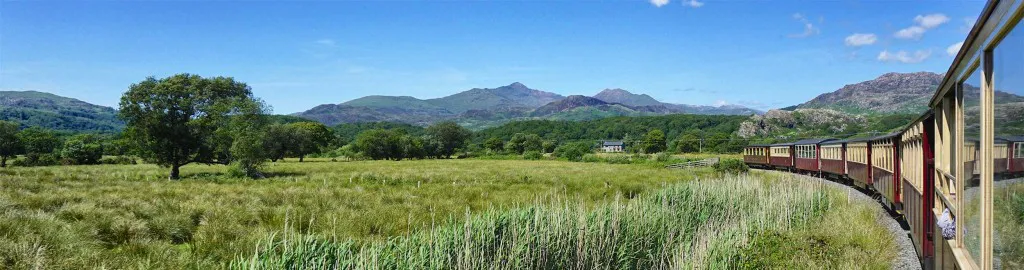
View from The Welsh Highland Railway
Cwmorthin Slate Quarry
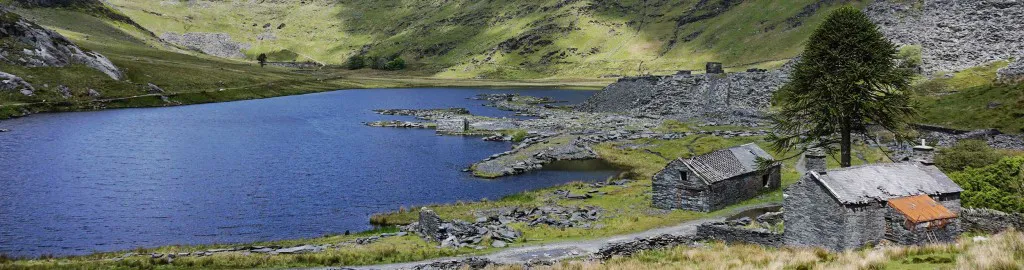
Cwmorthin Slate Quarry
You may think a slate quarry is the last place to spend a peaceful afternoon wandering around, especially with the high-energy goings on at nearby Llechwydd and it’s trampolines, zip-wires and and downhill mountain bike tracks, but Cwmorthin has a tranquil charm with it’s abandoned buildings and beautiful lake all sitting in a slate-lined mountain bowl. It’s the perfect place to bring your camera for those atmospheric shots.
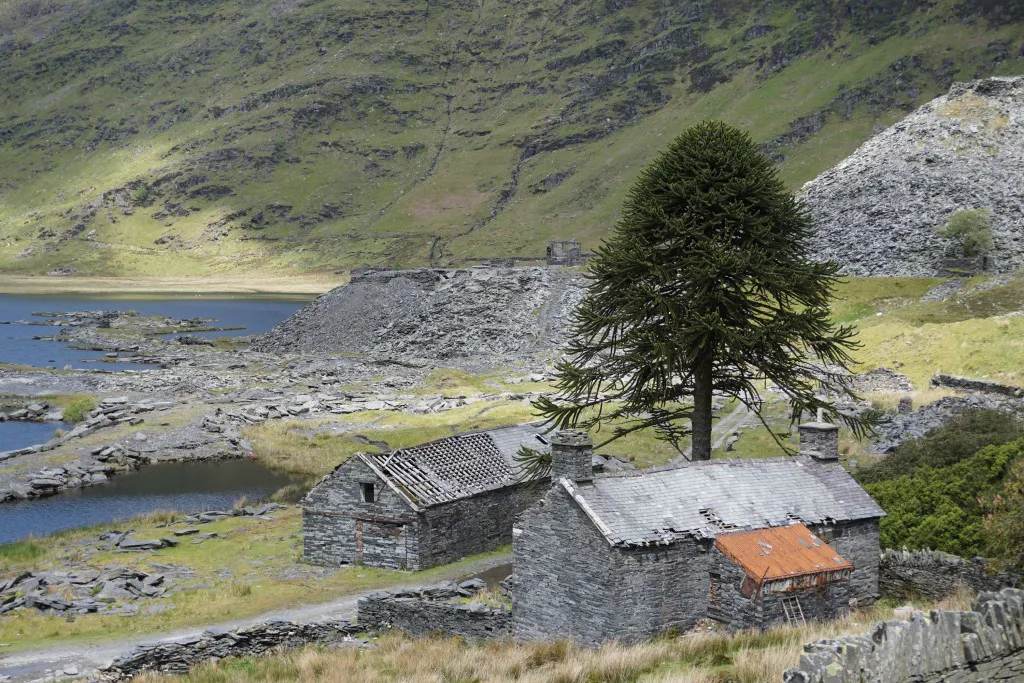
Cwmorthin Slate Quarry
There are several places to park at Tanygrisiau; there is a large car park as you drive towards the station, a small station car park, one by the popular Café and one at the quarry entrance. What’s more, they are all free. Tanygrisiau is also a station on the Ffestiniog Railway, near Blaenau Ffestiniog.
Slate extraction began at Cwmorthin in 1810 with work carrying on right up to 1997, although there were long periods when the site fell silent during it’s latter years with various transfers of ownership. Only around 10% of the slate made it out of the quarry, so the other 90% can be seen all around (and high above). With around 96,000 tons of slate leaving between 1861 and 1876, this makes around a million tonnes of waste in just those fifteen years.
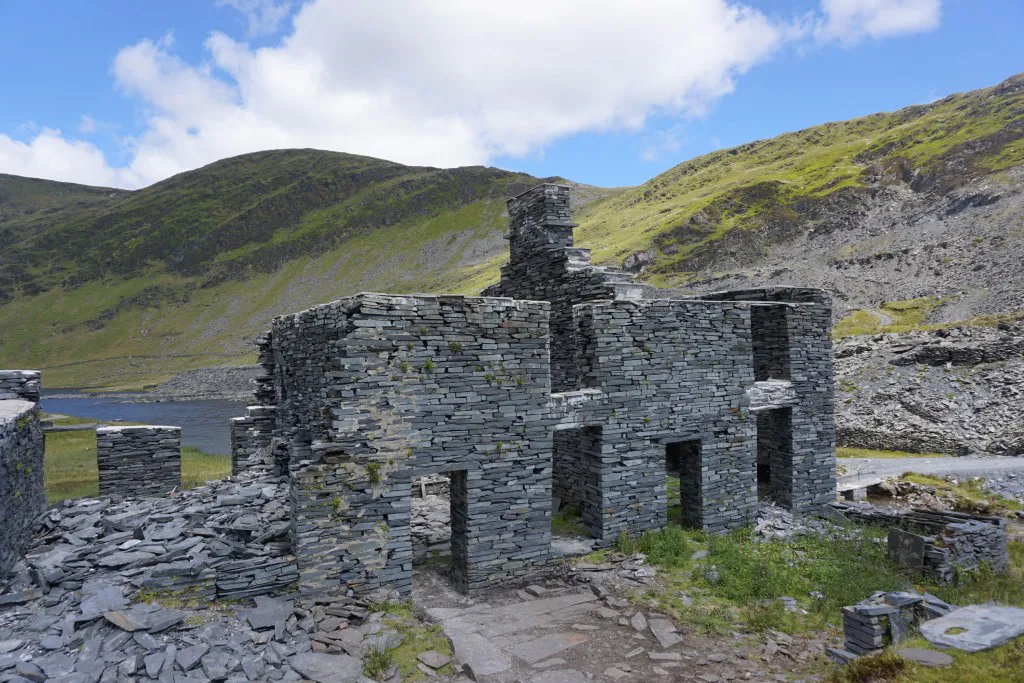
Tai Llyn, Cwmorthin Slate Quarry
It was a dangerous place to work with 21 deaths out of a workforce of 550 between 1875 and 1893 alone. This gave the quarry the nickname of “The Slaughterhouse”.
Read about Cwmorthin at cwmorthin.org.
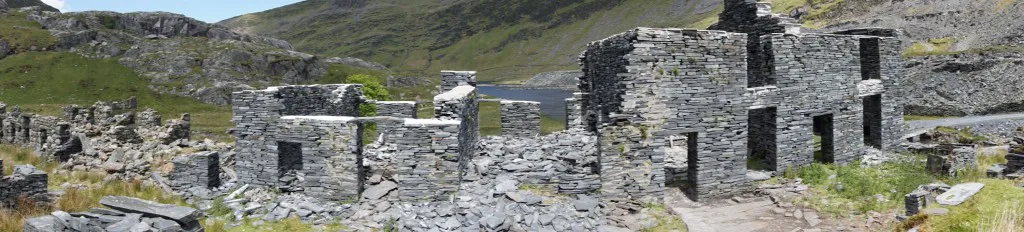
Cwmorthin Quarry, Tanygrisiau