Dolwyddelan Castle
A visit to this solitary sentinel is worth it for the views alone.
Castles and mountains. Dolwyddelan and Snowdonia. Made for each other. Improving on nature’s handiwork is easier said than done but this beauty blends beautifully with its craggy home. A blot it is not. Thank the Prince of Gwynedd in north Wales and de facto ruler of most of Wales, Llywelyn Fawr (Llywelyn the Great).
Llywelyn (1173 – 1240), knew his square mile like nobody else. Dolwyddelan, along with nearby Dolbadarn and Prysor, formed a collection of strategically important mountain fortresses for the Welsh ruler. After his day, his grandson Llywelyn ap Gruffudd took over the castle. He kept Edward’s forces at bay for a while.
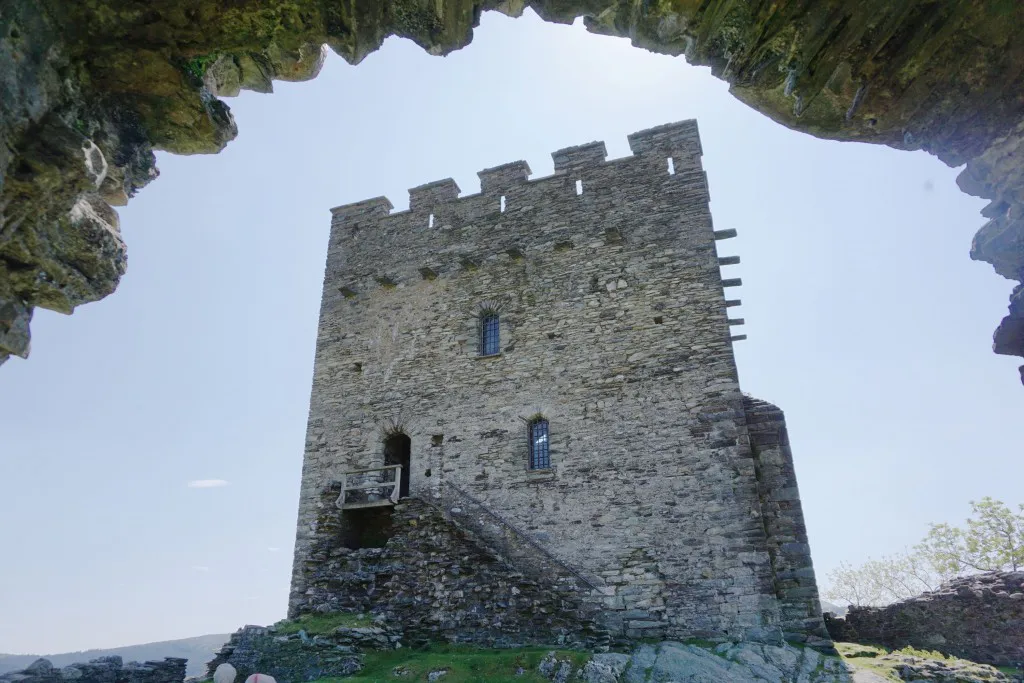
Dolwyddelan Castle
The magnificent keep was later supplemented by Llywelyn with a stone curtain wall enclosing the courtyard. The English went on to refortify the castle and add another rectangular tower. It didn’t fare as well as the original. Maybe there is justice after all as it now lies in ruins.
With a little restorative help from the Victorians, this 13th-century fortress is now a masterpiece.
More Details on the CADW Website & CASTLES.WALES
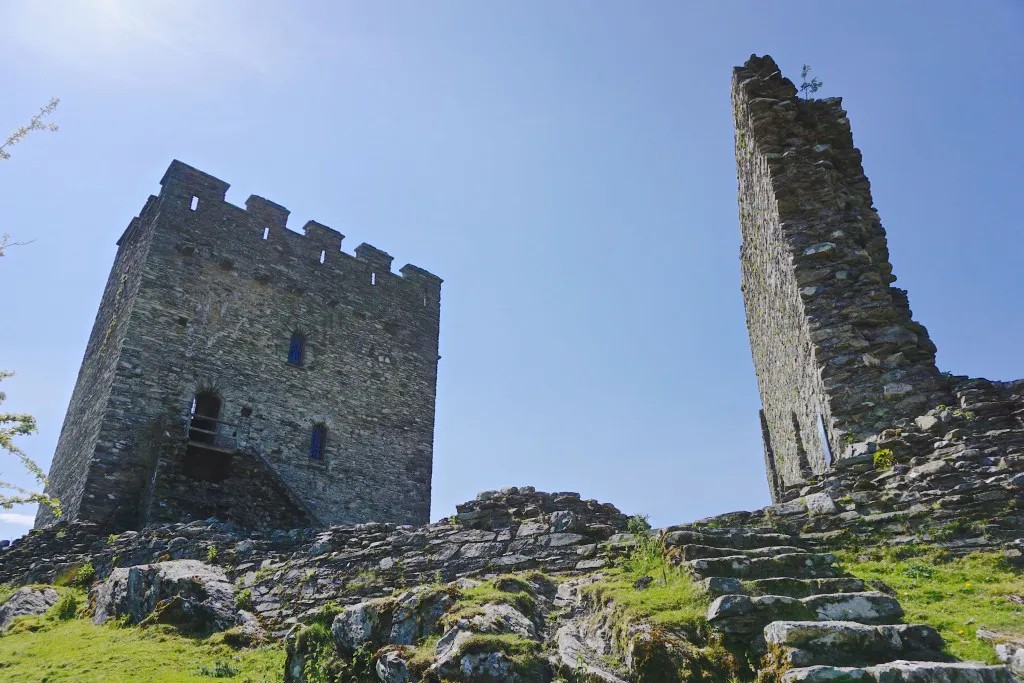
Dolwyddelan Castle
Wavecrest
Wavecrest
Wavecrest is an elegant 4-star rated guest house just two minutes walk from Barmouth Beach with its spectacular mountain views.
View on the Booking.com Website
Bwlch y Fedwen
Bwlch-y-Fedwen
Set in a 17th-century building, Bwlch y Fedwen B&B is located two miles from Porthmadog in the small village of Penmorfa. If offers a sun terrace and free parking.
View on the Booking.com Website
Portmeirion Hotel & Castell Deudraeth
Portmeirion Hotel
Built by a visionary architect in 1925, The Portmeirion Hotel & Castell Deudraeth overlooks the beautiful Dywryd Estuary. Located on a private peninsula, the hotel offers a spa and wellness centre, an on-site mini market, a bar and a restaurant.
View on the Booking.com Website
Tyr Graig Castle
Tyr Graig Castle
Tyr Graig Castle is an impressive Victorian building in a splendid cliff-top location. Most rooms at this 4-star guest accommodation enjoy stunning views of Cardigan Bay, whilst all have a private bathroom.
View on the Booking.com Website
Aberdunant Hall Country Hotel
Aberdunant Hall Country Hotel
Aberdunant Hall Country Hotel is a 17th-century property set within 200 acres of woodland on an idyllic upmarket static caravan park. With free onsite parking, it retains many original features, such as beamed ceilings, fireplaces and stained glass. Guests can relax in the garden or on the terrace.
View on the Booking.com Website
Morwendon House
Morwendon House
Morwendon House is situated in the quiet village of Llanaber and has beautiful panoramic views over Cardigan Bay.
View on the Booking.com Website
The Royal Sportsman
The Royal Sportsman
The Royal Sportsman is a family-run, two AA rosette-winning home-from-home and the only hotel in Porthmadog. It offers modern cuisine and a bar with locally brewed cask ales. The full-service Hotel is located at the quieter end of Porthmadog High Street.
View on the Booking.com Website
The Welsh Highland Heritage Railway
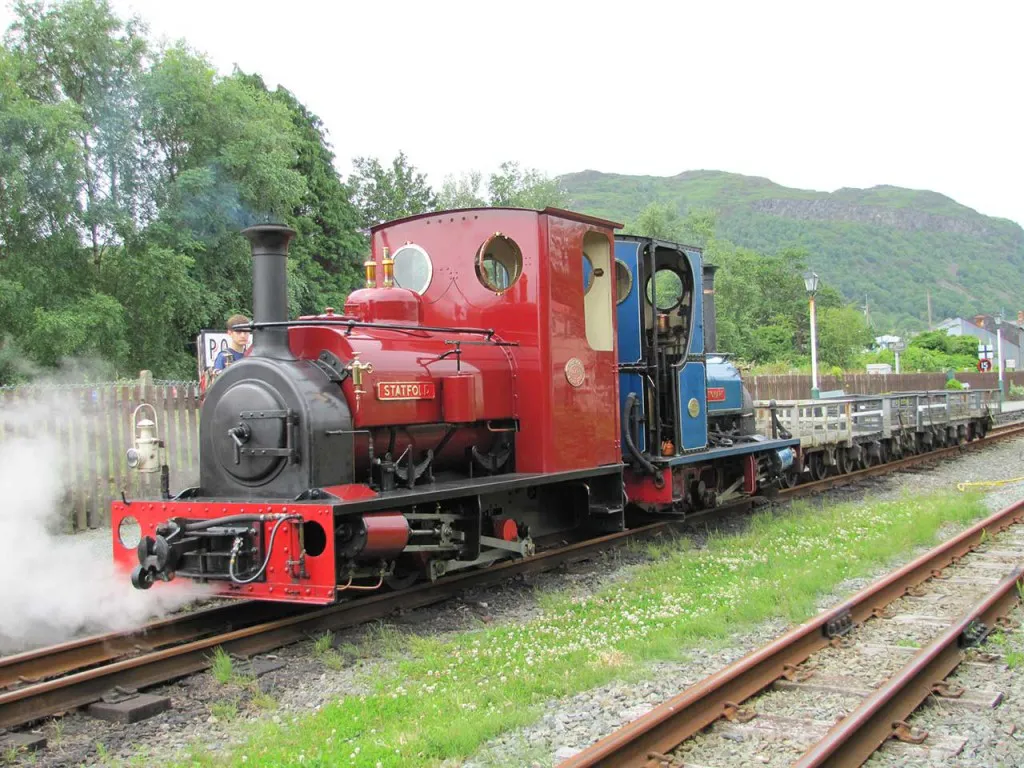
The Welsh Highland Heritage Railway – Photo © Mike Chapman
The Welsh Highland Heritage Railway formed in 1961 and is nearly entirely run by volunteers. It currently runs from March to November from their main station opposite the Network Rail station in Porthmadog (on Tremadog Road).
Trains run for half a mile (0.8 km) to Pen-y-Mount Junction, where the railway connects with the Welsh Highland Railway main line. The train stops at Gelert’s Farm halt on it’s return to allow passengers to visit a museum and a miniature-gauge railway.
The return trip lasts an hour, which includes a free guided tour around the museum.
Visit their website at whr.co.uk for more information.
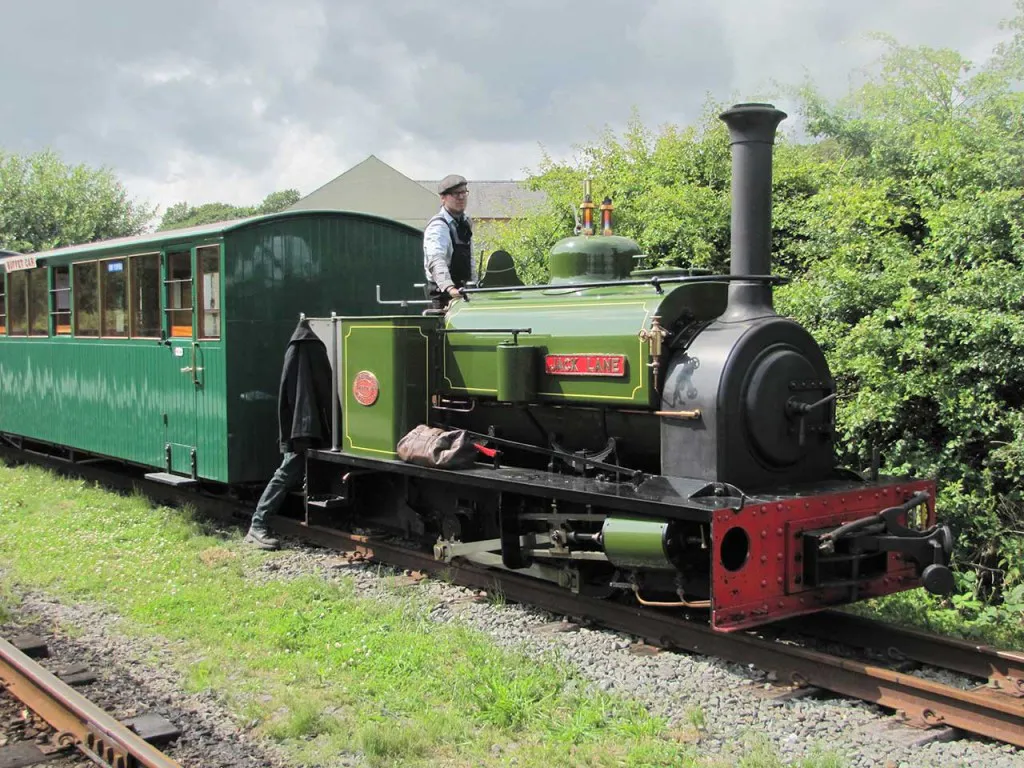
The Welsh Highland Heritage Railway – Photo © Mike Chapman
Map showing all The Great Little Trains of Wales
Castell y Bere
Distinctive remains of a native Welsh castle, probably begun by Prince Llywelyn ab Iorwerth (‘the Great’) around 1221.
Castell y Bere was a remote outpost on Llywelyn’s southern frontier, but it was vital to his security. It guarded his cattle range, protected the homeland of Gwynedd and dominated the neighbouring lordship of Meirionydd.
Llywelyn ab Iorwerth was Prince; but cattle were king! In medieval Wales cattle were as good as currency. This location was so important that Llywelyn was prepared to take it from his own son Gruffudd in 1221, so that he could begin building a castle.
After Llywelyn died his successors continued to use it. It was taken by English king Edward I, in 1283. He made alterations to the castle and hoped an English frontier town would grow here. It never happened. The English abandoned the site during an uprising against their rule in 1294.
Today Castell y Bere is as wild and remote as it was when Llywelyn first arrived. It stretches along the summit of a rocky outcrop on the eastern side of the Dysynni valley. The picturesque and remote location makes it difficult to appreciate that this sprawling stronghold once controlled an important routeway running up from the coast at Tywyn northwards through the mountains towards Dolgellau and protected the southern border of Gwynedd. Distinctive features at Castell y Bere include the characteristic Welsh apsidal – or elongated D-shaped plan of the south tower. In scale, it may be compared to examples of similar design at Welsh castles of Ewloe and Carndochan, where they served as keeps.
Another distinctively unusual feature for a Welsh castle of the 1220s is to be found in the highly elaborate defended entrance with its ditches and two gate-towers, each with its own drawbridge and probably portcullis. Such a sophisticated entrance cannot be matched in any other Welsh castle. Indeed, even by the standards of English fortification, it would have been technologically advanced for the early 1220s.
We welcome assistance dogs at our sites. Dogs on leads will also be welcome at some of our sites.
More Details on the CADW Website & CASTLES.WALES
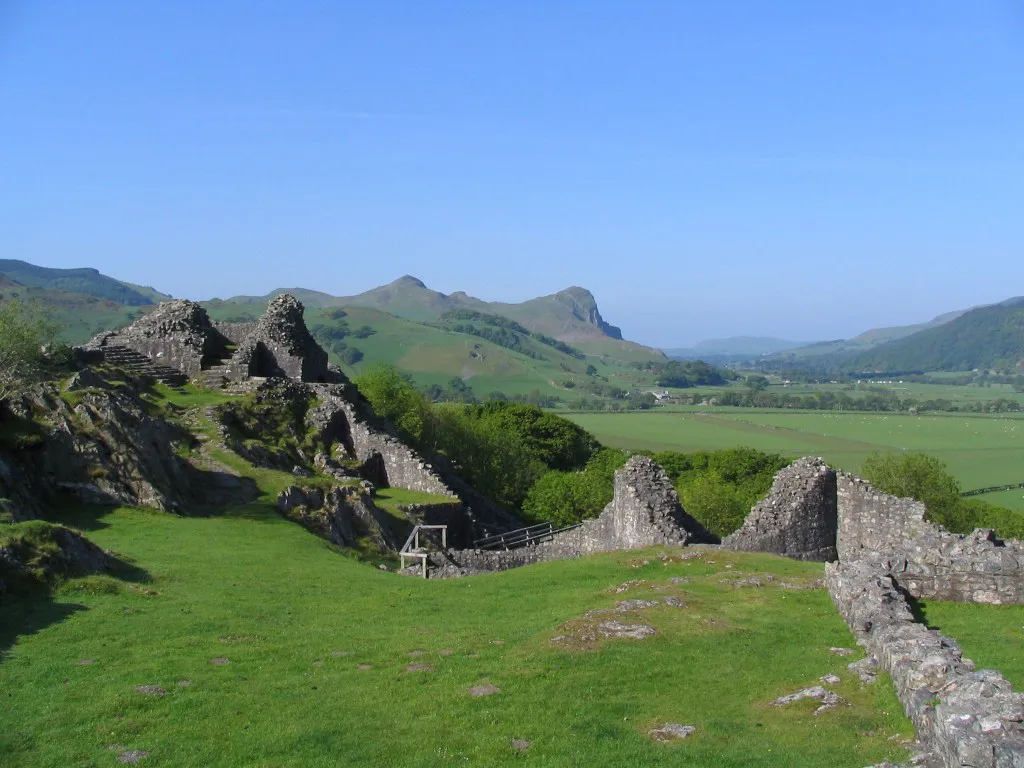
Castell y Bere Towards Craig yr Aderyn