Criccieth Castle
It is a landmark site, a true testament to the varying fortunes of war.
What a picture, what a view! Perched on a headland with the sea as its constant bedfellow. Its twin-towered gatehouse intimidates prospective attackers. So badly did the native Welsh princes and English monarchs want it, that it changed hands more often than a relay baton.
Built originally by Llywelyn the Great, this very Welsh of princes included a very English style of gatehouse. Edward I’s forces took the castle some 50 years later, undertook their own improvements and remodelled a tower for stone-throwing engines. Not as much fun for those at the bottom as it sounds for those at the top!
Owain Glyndŵr sealed Criccieth’s fate when his troops captured and burnt the castle in the early years of the 15th century. This was to be the last major Welsh rebellion against the English.
Criccieth Castle may also have given the name to the town rather than the other way round. Its suggested origins are ‘crug caeth’ – ‘crug’ (hill in Welsh), ‘caith’ (captives) – the name given to the jail on the hill, a function once held by the castle. Buy an ice-cream, there’s a lot of history to digest.
More Details on the CADW Website & CASTLES.WALES
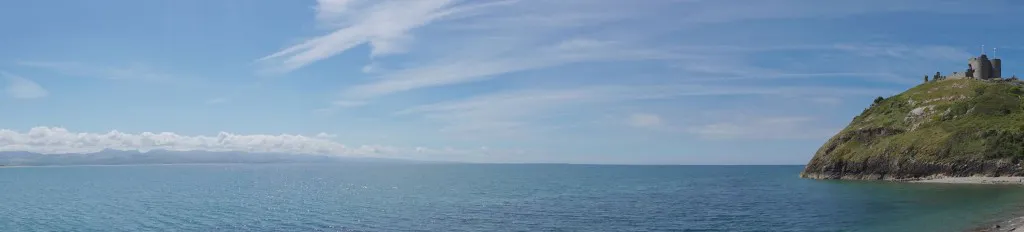
Criccieth Castle
Harlech Castle
Harlech’s battlements spring out of a near-vertical cliff-face.
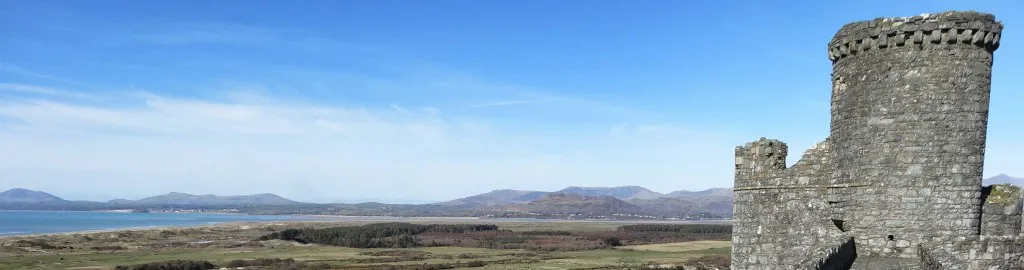
View from Harlech Castle
‘Men of Harlech.’ The nation’s unofficial anthem, loved by rugby fans and regimental bands alike, is said to describe the longest siege in British history (1461-1468) which took place here during the War of the Roses. Edward’s tried and tested ‘walls within walls’ model was put together in super-fast time between 1283 and 1295 by an army of nearly a thousand skilled craftsmen and labourers.
Edward liked to use only the best masons from Savoy and England’s finest carpenters and blacksmiths. At the time this was one of the cheapest of Edward’s castles. A snip at a mere £8,190.
The structure, overseen by Master of the King’s Works, James of St George, boasts two rings of walls and towers, with an immensely strong east gatehouse. It was impregnable from almost every angle. Its secret weapon was a 200-foot (61m) long stairway which still leads from the castle to the cliff base.
Access via the stairway to the sea and crucial supplies kept the castle’s besieged inhabitants fed and watered. When it was first built, a channel would have connected the castle and the sea. You could have sailed a boat up to the moat. Seven hundred years later, the sea has receded and you could say the castle appears almost stranded, waiting for the tide to turn once more.
Along with Caernarfon Castle, Conwy Castle and Beaumaris Castle, this monument has been part of the Castles and Town Walls of Edward 1 World Heritage Site since 1986.
More Details on the CADW Website & CASTLES.WALES
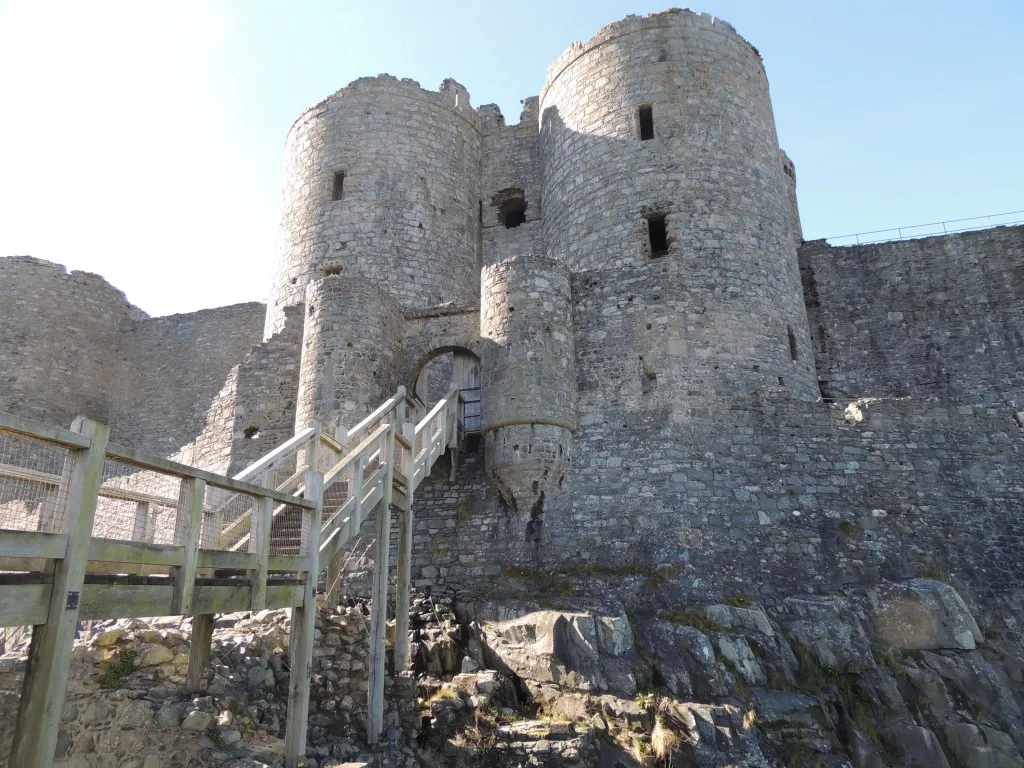
Harlech Castle
Carved Stones in the Parc
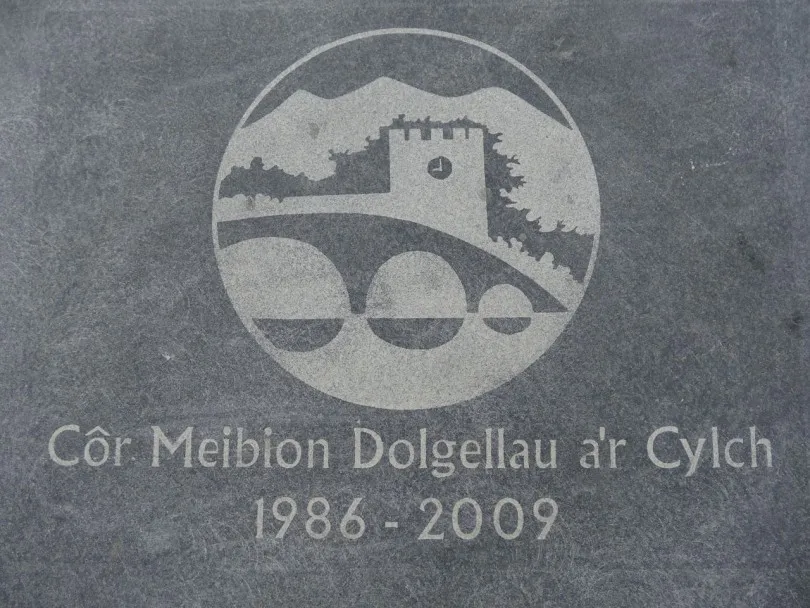
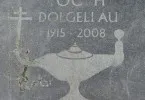
Dolgellau Parc
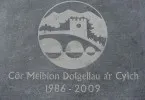
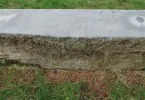
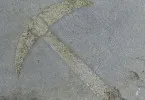
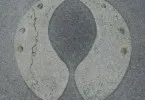
The Dolgellau Parc Committee (part of the Dolgellau Partnership) have been involved for some time in renovating the Parc and this is one of the last additions to the “Echoes of History” area. Following on from the symbols on the granite blocks around the memorial, this space has been designed to mark some of the industries of the town, including wool, cattle, railways and slate.
Colin White (chairman) had an ambition to provide Dolgellau with a definitive Artwork and contacted Alan Mantle who is a world renown sculptor, originally from Arthog, but now living in France.
Alan said he would be pleased to do something for his home area and has produced… “Roots”. The sweet chestnut tree is ideal for wet weather and should survive a long time, having fallen naturally near Bird Rock.
We hope everyone will enjoy it.
Janet Baker (Secretary of the Parc Committee)
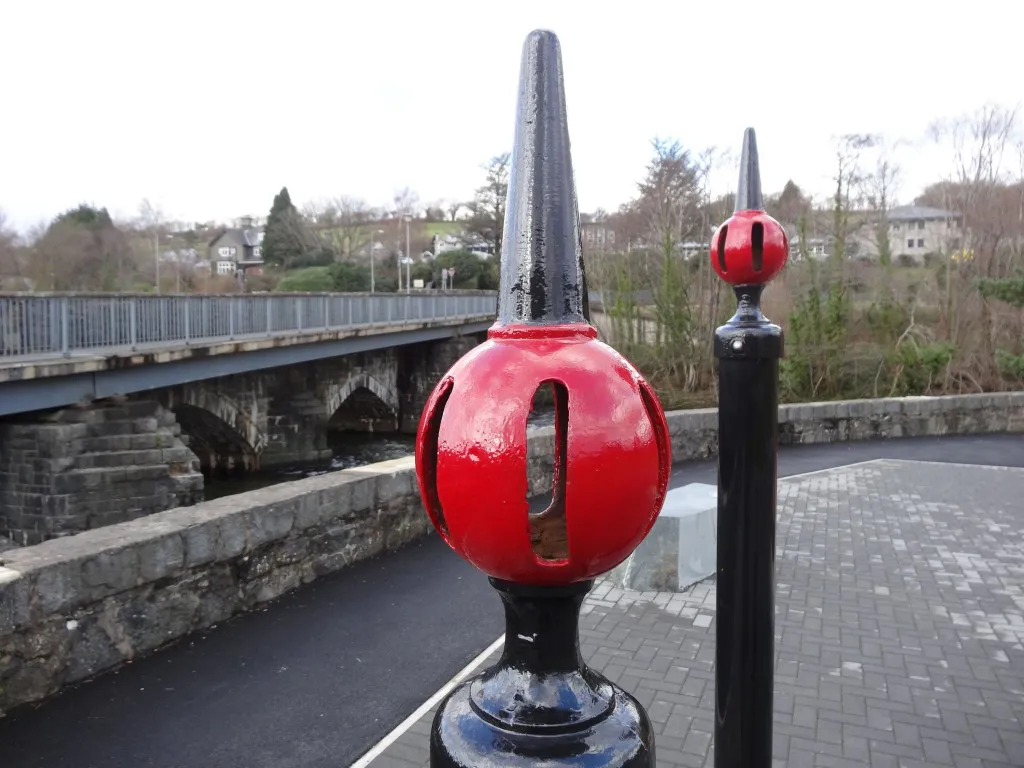
The Poles & Finials
The poles showcase four original Railway ‘Finials’. These topped the signals beside the old railway line, which is now The Mawddach Trail.
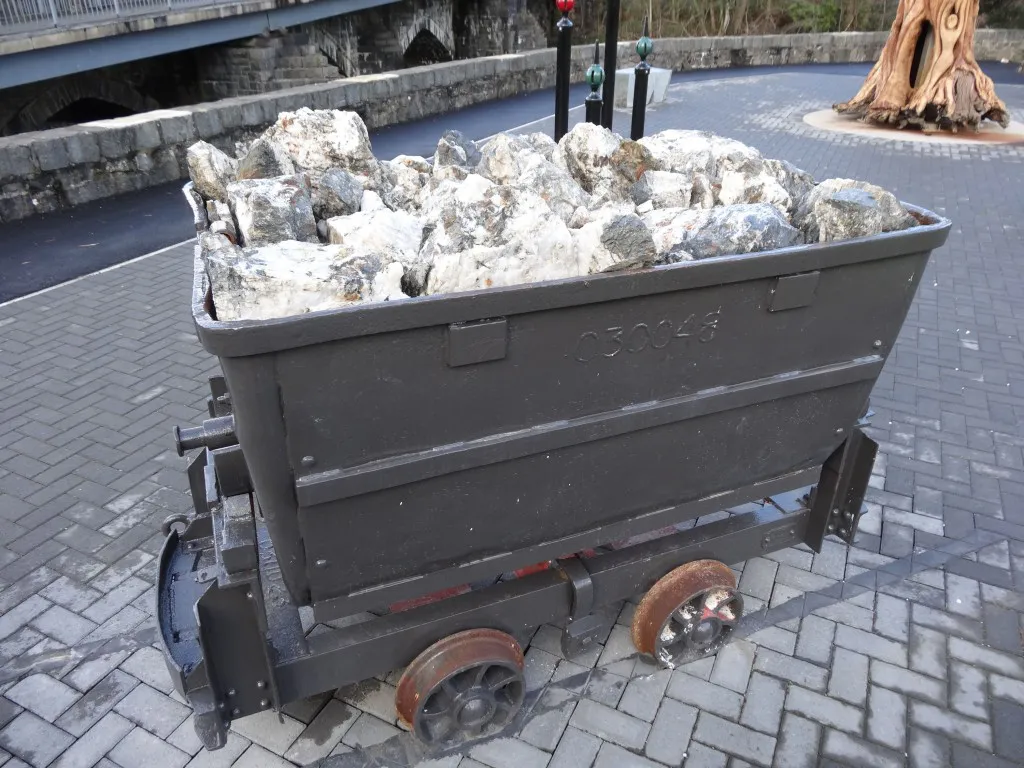
The Wagon & Real Gold Ore
The Wagon contains real Gold Ore (as well as Copper & Lead) from Clogau Gold Mine near Bontddu.
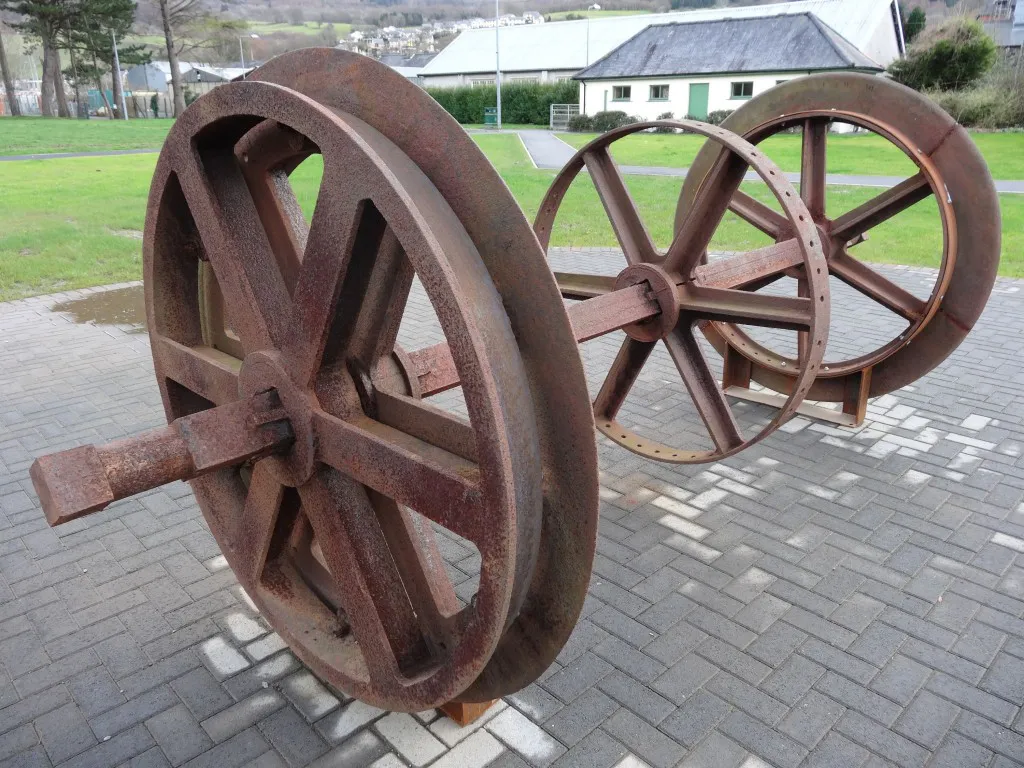
The Wheel from a Winding Drum
The cast iron wheel dates from 1871 and is the internal part of a winding drum from Ratgoed Quarry, Cymerau. It’s similar to this one at nearby Aberllefenni (below).
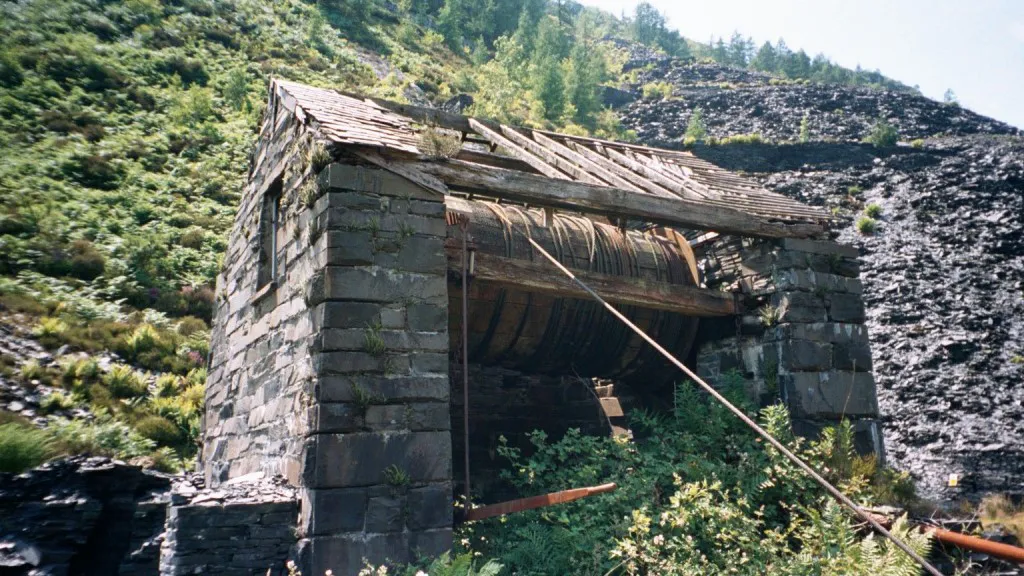
Winding House Building at Aberllefenni
The World War One War Memorial
Dolgellau And The Great War by D.T. Sheppard – Published in July 2014
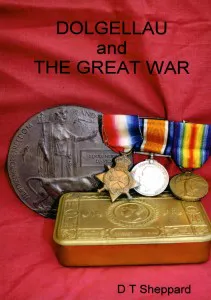
The Great War by Dai Sheppard
“Of the millions who lost their lives in the First World War, 107 of them are commemorated on the war memorial in Dolgellau. These people Weren’t statistics but individuals with their own unique stories.
This book is an attempt to tell their stories so that they are not forgotten. There is the story of the man who trekked 500 miles across North America to enlist, one who had represented Wales at football, two brothers who had been killed on the same day and a father of five children who drowned on his way to war.”
The book is available in English and Welsh versions and can be purchased direct from the author and publisher Dai Sheppard:
Email: [email protected].
Telephone (01341) 423 390
Dolgellau & Cader Idris Webcam
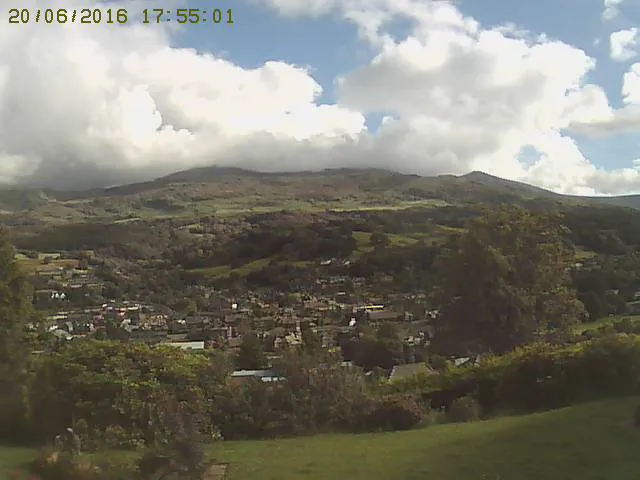
Dolgellau and Cader Idris Webcam
Dolgellau & Cader Idris Webcam. Updated every five minutes (daylight hours).
Antur Stiniog
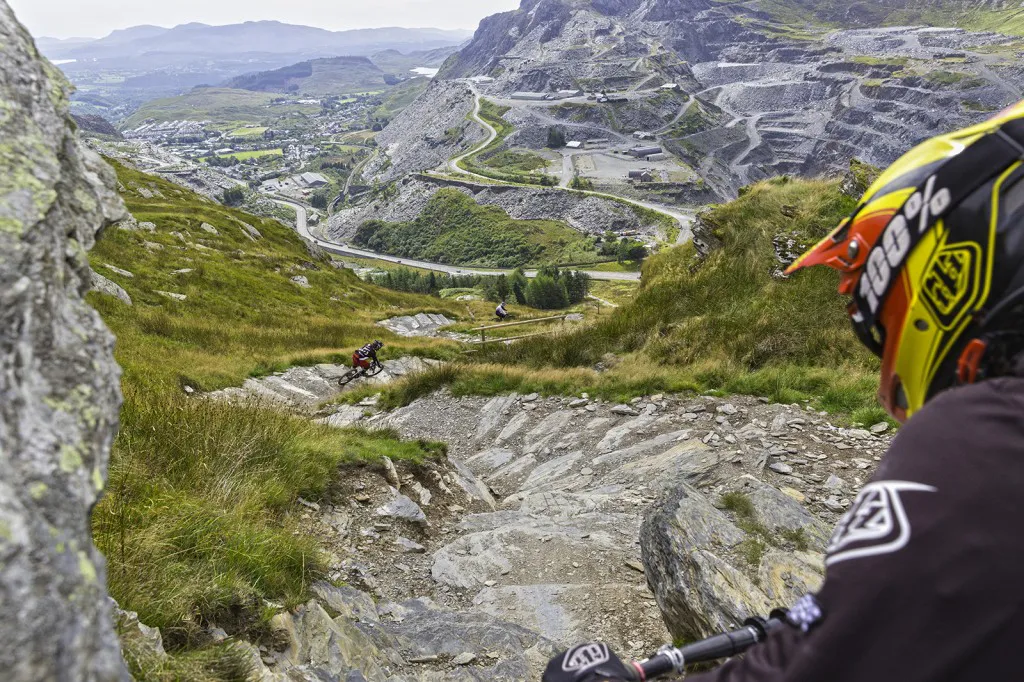
Biker at the top of a trail at Antur Stiniog – © Crown copyright (2011) Visit Wales
Mountain Biking centre near Blaenau Ffestiniog, Wales. “Come on, pull your lazy nose from the screen of your phone, computer or iPad (other tablets are available), come and enjoy a totally different and real experience in this amazing area. We can offer an unforgettably bonkers experience in activities such as walking, kayaking, history, nature, fishing, downhill mountain biking, wild camping and culture, encompassing all the uniqueness that Bro Ffestiniog has to offer! Get in touch and tell us what you want to do, and we’ll do our best to organise any activities that suit you!”
Antur Stiniog
Biker at top of trail at
Antur Stiniog,
Blaenau Ffestiniog – © Crown copyright (2011) Visit Wales
Bryn Mair House
Bryn Mair House
This Georgian townhouse is situated in the market town of Dolgellau, in the Snowdonia National Park. Formerly a rectory, it boasts free Wi-Fi and free parking, in an acre of secluded grounds at the foot of the rocky Cadair Idris mountain.
Surrounded by stunning scenery in Snowdonia National Park, Bryn Mair House is within 10 miles of sandy beaches. Numerous low-level walks go from the front door, and cyclists and climbers will find plenty of picturesque routes slightly further afield.
Rooms are elegant in design, with traditional wooden furnishings. Each room at Bryn Mair House also benefits from a flat-screen TV, iPod docking station, and tea and coffee making facilities. The guest lounge has magnificent views over the town and the mountains beyond.
View on the Booking.com Website
Coed Cae
Coed Cae
Nestled in two acres of woodland Coed Cae overlooks the Mawddach Estuary on the Southside of Snowdonia National Park. The property offers free parking and free Wi-Fi is also available in public areas. Each room has tea/coffee making facilities. Most rooms have an en suite bathroom and one of the rooms comes with the use of external, private bathroom facilities.
Made of locally sourced ingredients, breakfast is served daily and the menu includes bacon, eggs, homemade Glamorgan vegetarian sausages, and cereals. By prior arrangement, evening meals can also be catered for. Guests on a day out can order packed lunches with a flask of hot beverage.
Guests can enjoy easy access to outdoor activities, such as cycling, golf, and hill walking. The coastal town of Barmouth is 6 miles from the property.