Dolgellau Chronology 3 (1900s)
[1901] Police Sergeant Richard Owen, of Trefeglwys lived at Dolgelley Police Station, with his wife Martha and son Idris Wyn Owen
[1903] Bont Fawr Damaged by Floods
[1903] Robert Roberts and his newly married wife, moved to live at The Old Tavern (see 1868) and farm but were teetotallers. General Vaughan of Nannau (owner) agreed to take away the licence. The Inn was renamed the Hywel Dda, and mineral waters and tea replaced the beer for which the Inn was famous for years. The inventory drawn up when Robert Roberts took over was as follows: Crops, cattle, farm implements, harness etc. = £143, 7s, 6d. 400 sheep at 22s, 9d per head = £455, 0s, 0d. Barn, fences, etc. = £45, 0s, 0d. Contents of house: = £26, 13s, 0d. Total = £670, 0s, 6d
[1903] September – Football – Dolgelley South Side drew 0-0 with Dolgelley North Side in a game played on The Marian
[1903] September – Football – Dolgelley County School lost at home to Bala County School in a game played on the Cattle Showfield. The Dolgelley team was; G. Ellis, R.J. Davies, J.P. Jones, J.C. Owen, J. Jones, O.L. Evans, T. Hughes, R.R. Jones, R.E. Evans, T. Jones, J.M. Roberts.
[1904] Buffalo Bill’s Wild West Show comes to Dolgellau on 6th May 1904. It is held on The Marian.
[November 1910] A communication from Mr A. Carnegie stated he was willing to give £1,000 towards the proposed new Free Library, having approved the plans. A suitable site has already been procured and paid for by public subscription
[1911] 1911 census gives Dolgelley’s population as 2,160
[1912] H.V. Norton ‘In Search of Wales’, visited ‘Dolgelly’ stating he ‘might be in the Austrian Tyrols as the square is crowded with mountaineers’
[1913] Dolgelley Free Library and Institute opened by J. Myles Esq MD in May. The library is on the site of the Blue Lion Inn
[1914] (May) Dolgelley Cricket Club. At the AGM chaired by Arthur Roberts, the audited funds balance stood at £3 17s 6d (£3.78) and was recorded as a good start to the season. Other club officers for 1914 were Captain; Mr D. R. Meredith, Vice Captain; Arthur Roberts, Treasurer; Mr R.R. Jones, Hon Secretary; Einion Evans, Groundsman; Richard Ellis. A complete fixture list is in the course of preparation
[1918] 107 Men from Dolgellau and Llanelltyd Died in the Great War (from a Total Population of Just 2500 Men, Women and Children)
[1920’s] The Prince of Wales (the future King Edward) visited Dolgellau and the Dr. Williams School
[1920] The tenants of the Golden Lion (1920-1925) were Quellyn Roberts & Co., Wine Merchants of Chester (still there in Westgate Street). The Robert’s paid Major General John Vaughan, CB., CMG., DSO., an annual rent of £150 (25/03/1920)
[1920] Mr. E.E. Jones Dolgelley took the title in the Champion Challenge Cup Competition for the Championship of Merionethshire, beating Mr T.J. Roberts
[1920] 1920 Rail distances from Dolgelley Station; Aberdovey 22.5 miles, Aberystwyth 44 miles, Bala 18 miles Barmouth 10miles, London 243 miles, Machynlleth 31.5 miles
[1921] (June) The County Council asked the Urban Council to enter into a fresh contract for the repair of main roads for the year ending March 31st, 1922, at £280. The Urban Council declained and pressed for £400.
[1921] Fire Brigade Competitions. Dolgelley won the Hydrant drill for the ‘Byrne’ Challenge shield in a time of 14 4.5seconds. They also won the Ambulance Competition Challenge Cup in First Aid in the fire service with 16 points
[1921] Quoits. 58 competitors played for the Merioneth Silver Challenge Cup at Bala. The winner was veteran Mr. Johnson of Dolgelley, beating Mr. Evan Williams also of Dolgelley
[1922] The Town Flooded
[1922] Dame Margaret Lloyd George entertained the Old Girls of Dr. Williams School at Number 10 Downing Street, because she was an Old Girl herself as was her daughter, Lady Olwen Carey Evans
[1922] Dolgellau FC were runners up to Barmouth in the Welsh National League, Coast Section, winning 6 and losing 2 of their 8 games. Barmouth 13pts, Dolgellau 12pts, Pwllheli 5pts, Harlech 4pts and Towyn Rovers 4pts
[1923] The Angel Hotel in Eldon Square Demolished
[1923] Dolgelley has a Social Club in Lombard Street, near the Square, with baths, an excellent library, a reading room and billiard tables. Visitors 2s 6d a week or 5s a month (From a tourist handbook “North Wales Complete Edition”, published by Ward Lock & Co – circa 1925)
[1923] 1923 Dolgelley has a good cricket club, with a well-laid cricket ground and pavilion, visitors are welcomed. The tennis club has courts near the Green and issues weekly and fortnightly tickets to visitors
[1924] Mr. Dafydd Ellis Rowlands started as conductor of a mixed choir at the Tabernacle Chapel
[1924] Dolgelley can be accessed by Great Western Railway via Ruabon and the beautiful valley of the Dee or by Cambrian Railways Coast Line via Barmouth (From a tourist handbook “North Wales Complete Edition”, published by Ward Lock & Co – circa 1925)
[1924] 1924 Fishing fees in the area for the Mawddach and Wnion rivers. 1.5 miles of Wnion preserved by local association. For all kinds of fish 1s 6d a week; 2s 6d a month; 5s a season. Licences, trout and char, 1s the season; salmon 1s a day; week 5s; month 10s; season 20s (£1)
[1924] 1924 Fairbourne fishing tickets, 1s a day at Ynysfaig Hall Hotel for fishing in Llyn Cyri. Penmaenpool fishing for trout and salmon in the Mawddach – 2s 6d a day; 10s 6d a month
[1925] The Golden Lion Royal Hotel was taken over by George & Nesta Olwen Hall in 1925 from the Nannau Estate.
[1925] The town is well lighted and drained, and has an excellent water supply. The town was formerly celebrated for the manufacture of flannel and tweed, but there is now only one small mill. As Dolgelley is the resort of anglers and others during the greater part of the year, and lodging house keepers are not dependent on a short season for their livelihood, apartments may be had on moderate terms (From a tourist handbook “North Wales Complete Edition”, published by Ward Lock & Co – circa 1925)
[1925] 1925 Handbook – On the road leading to the Torrent walk is the County Intermediate School, and on the Barmouth Road is Dr Williams’s Endowed School for Girls, one of the most flourishing and successful institutions in Wales
[1926] Golf – Bala defeat Dolgelley by 6 holes to 5 in the Welshpool Challenge Bowl Competition. The winning Dolgelley golfers were H.T. Wilmott, W.R Brunton, W. Lewis, Richard Jones and R. Ellis Jones. The unsuccessful golfers were D.C. Brunton, J. Jones Williams, H.J. Owen, W. Williams, H. Morris and Llew Owen
[1927] (April) Dolgelley Union Workhouse contained an average of 30 lunatics. Total weekly cost per head was ten shilling and tenpence farthing.. The average number of casuals relieved per night was 5
[1928] Dolgellay & Llanelltyd “The Tale of Two Parishes” Published
[1929] The First Catholic Church opened in Dolgelley since the Reformation
[1929] Eight Carmelite nuns arrived from Notting Hill, London to found a new Carmel in the town, on Cader Road – The Order of the Brothers and Sisters of the Blessed Virgin Mary
[1930] Cymer Abbey Placed in State Care
[1930] 1930 November. Dolgellau FC beat Aberdovery 6-5 in the Cambrian Coast Amateur League. Weather was a strong factor in the result with driving rain and slippery conditions.The return fixture two weeks later saw Dolgellau beaten 10-2, with conditions again wet and slippery. Sandwiched between these games was a 2-1 defeat at Machynlleth. Dolgellau’s team then was (5-3-2); T. Parry; E Evans, H.P. Harris; R.W Parry, Archie Jones, E. Brown; H.P. Evans, I Jones, R.L. Roberts, R.G. Lewis, Joe Roberts
[1933] Dolgellau Tabernacle Chapel became an all male choir, raising over £7,000 for various charities during the Second World War.
[1936] Dolgelley Urban Rent increased to a rate of 6/9 (37p) in the £1 for the half year ended September, an increase of 9d
[1936] Tarspraying of 5 miles of road decreased the nuisance of dust and gave work to the unemployed
[1937] The Plaza Cinema built (Now the Police Station)
[1938] Dame Margaret Lloyd George opened the footbridge over the Barmouth road in 1938, the same year as her Golden wedding Anniversary. It was constructed by Jack Jones’s father (of the ironmongers). It was started 1936 and finished 1937
[1939] The Meredith firm closed the tanning side of their business (see c1860) but continued first as wool merchants and then as fellmongers.
[1939] George & Nesta Olwen Hall installed electric light in The Golden Lion Royal Hotel
[1939-1944] During the Second World War, the Admiralty retained 12,000 acres of land on Cader Idris for training purposes. This included the summit of Cader and districts overlooking the Mawddach Estuary on the North, and Talyllyn Lake on the South
[1939] Dolgelley Albion Football Club lost 3 v 0 to Machynlleth in the first ever final of the Gresham Cup, held at Dyffryn on Sea
[June 1939] The first baby girl was born at the Dolgelley Maternity Home. Her parents were Mr and Mrs H. Evans, Wesley Court
[1940] Among the many gifts received by the Dolgelley Maternity Home on their Pound Day were; 22 lbs of rice, packet of Vim, 2 dusters, 2 toilet rolls and 8 lbs marmalade. The proceeds of the jumble sale amounted to £3 5s 6d.
[1940] (August) Merioneth Spitfire Committee met at Dolgellau and announced that the funds raised to buy a Spitfire aeroplane stood at £4,607. District totals included Dolgellau Urban £247, Dolgellau Rural £1,235
[1946] (July) After 21 years as Headmaster at Dolgelley Grammar School, Mr John Lloyd MA retired. He succeeded the late Mr John Griffiths. During his time there, the school buildings were enlarged, providing more classroom accommodation. Mr and Mrs Lloyd were responsible for the boarding arrangements at the school
[1946] (November) Councillor Rhys D. Jones, Hafan, Dolgelley was appointed Secretary of the Merioneth Agricultural Society and recently retired from the post of Stationmaster at Dolgelley after 46 years service with the Cambrian and Great Western Railways. He was chairman of Dolgelley U.D.C. in 1942. The Society decided to resume holding their Agricultural Show which was suspended during the War
[1947] County Times 18th January. Mr Justice Sellers arrived at Dolgelley by train on Monday evening for the opening of Merioneth Assizes on Tuesday. His Lordship was greeted with the customary peel on the bells of St Mary’s Parish Church and he proceeded to the Judges Lodgings at Brynderw
[1948] The Gorsedd Circle of Stones were Built on the Marian to Herald the National Eisteddfod for Wales
[1948] A crowd of 10,000 on Marian Mawr, witnessed the proclamation of The National Eisteddfod in Dolgelley by Cynan, the Gorsedd Recorder
[1948] Thomas Matson Roberts of Dolgelley, was awarded a silver medal from the Royal Humane Society, a silver medal and bar from the R.S.P.C.A. and King’s commendation for rescuing a stranded sheepdog on Cader Idris. Mr Roberts was accompanied by Mr T. Brooks in the rescue (see 1949 entry)
[1949] Queen Elizabeth II Visited the Town
[1949] National Eisteddfod for Wales held in Dolgellau
[1949] Thomas Matson Roberts, 39, was awarded the Stanhope Gold Medal from the Royal Humane Society for the bravest deed of the year. Mr Roberts was an Ironmonger at Penmaen, Dolgelley and was awarded the medal for rescuing a soldier, Frank Campion, (stationed at Hazebrook Barracks, Allenfield near Reading) from Cader Idris. He was stranded on an inaccissible ledge, 700feet up at Craig Cae, Pen Cae. The acoustics on the mountain were so bad, he could not be found by following his cries for help. The directions for rescue were given by shouting across the valley. Also helping in the resue were Mr T. Brooks and Mr J. Fitzgerald. Mr Roberts was a part time Company Officer of the NFS (see 1948 entry)
[October 6th, 1949] Princess Elizabeth inspected the Boys Cadets of the Royal Welch Fusiliers, who formed part of the Guard of Honour on the Square at Dolgelley, on the occassion of the visit of Princess Elizabeth and Duke of Edinburgh, Earl of Merioneth, to Merioneth. The Princess also inspected the young members of the Merioneth Girl Guides
[1951] Dolgelley Cricket Club. Messers Morrison and Robinson of Dolgelley, presented the club with 2 silver cups to be awarded to the best batsman and best bowler during the 1951 season
[1951] (June) Dolgelley Cricket team consisting of D.M. James, R. Pugh, J.M.C. Meredith, R.Jones, M. Griffiths, Iorwerth Davies, R.W. Parry, EG Davies, A.W. Hill, A.E.H. Leeds, and R.W. Evans beat Towyn
[1953] Council Offices at Penarlag Opened
[1954] Post Office in Meyrick Street Built
[1956] Photographs Taken of the Dolgellau Spring Fair (See “Historic Dolgellau” Page)
[1960 ] The then ‘New’ Post Office at Meurig Street, was Officially Opened in November. William Owen Davies was the Post Master until 1970
[1960] Urdd Eisteddfod held in Dolgellau
[1960s] Hengwrt, burnt down. It belonged to the Vaughan family. Robert Vaughan collected the priceless “Hengwrt manuscripts” now in National Library of Wales, Aberystwyth
[1962] Ysgol Y Gader Opened.
[1962] (February) Police Superintendent John St. David Jones reported at the Dolgelley Licensing Sessions, that 5 convictions for drunkenness had occurred during the year, an increase of 3 on the previous year. No convictions for being drunk in charge of a motor vehicle when being incapable to drive. The previous year had 2 convictions. The Police were congratulated by Alderman E. J. Evans Chairman, as were the licensees and members of the public on a satisfactory report.
[c.1963] Wilfred Pickles presented the popular radio programme ‘Workers Playtime’ from Dolgellau
[1964] The Railway Closed (after several days of heavy rainfall) on 12th December 1964. Train services were suspended between Bontnewydd and Morfa Mawddach because of floods at Dolgellau. Due to their impending closure, they did not re-open to passenger traffic again
[1965] (County Times April 24th, 1965) – A new youth club has been formed in Dolgellau, called the ‘Top of The Pops Club’ which meets at the Band Hall. It’s aim is to keep teenagers off the streets to enjoy games, pop music, refreshments and entertainments. Chairman Dilwyn Parry, Secretary Kathleen Judkins. Club rules included putting litter in the bin and no shouting or screaming allowed.
[1965] (County Times 15th May 1965) – Glamorgan County Cricket Club will visit Dolgellau to play the local club on the 4th September. It will be captained by Bernard Hedges and all available players from the First XI will be there together, with it is hoped, two or three stars from other sports and clubs.
[1965] (County Times 11th September 1965) – RAIN MARS GLAMORGAN VISIT – The match itself was delayed due to rain. Peter Walker damaged three bats on his way to scoring 80 of Glamorgans’s 137 for 5 declared. The Dolgellau Select XI scored 12 without loss before rain curtailed play. (Autographs of the Glamorgan XI from the day can be found on the ‘Dolgellau Archive’ Collectables page)
[1966] Roman Catholic Church built – dedicated to Our Lady of Sorrows. Father Scalpell, the Priest in Charge, wrote more than 25,000 letters to people all over the world to raise money to build the new church, but very much to no avail. Sunday collections varied between only 5 shillings (25p) and 8 shillings (40p). After one mass, hearing his appeal for funds, a stranger remained behind and asked the Father how much he needed to build the church – a five figure sum was quoted. Not long after, Father Scalpell received a letter from a solicitor saying his client would pay the sum requested on two conditions. His client would always remain anonymous and the church must be a fine building, harmonising with its austere, mountainous surroundings. Work started in 1963, and was finished at a cost of £44,000. Stone was selected from four different quarries in Merionethshire and Caernarfonshire to add a variety of stone colour. There is a stone from Bethlehem and a stone from Jerusalem in the alter
[1966] The “Prince of Wales” ferry boat from Barmouth capsized after hitting the Penmaenpool bridge on 22 July 1966. Fifteen people drowned. The late John Hall rowed out his clinker built dinghy “Daisy May” against the tide and saved approximately twenty lives. His chef, the late David Osmond Jones, and barman Robert Huw Jones assisted (Both of Dolgellau). No recognition of bravery was ever made to those involved. The fare paid was 5/= a head return from Barmouth.
[1968] Popular Welsh comedians Ryan and Ronnie played the Neuadd Idris in Dolgellau on October 5th 1968 – Autographs from the day can be found on the ‘Dolgellau Archive’ Collectables page
[1969] The Plaza Cinema Closed
[1969] One of the Earliest Grammar Schools in Wales was Demolished
[1969] ‘Y Stafell Ddirgel’ by local author Marion Eames, was first published, based on the history of the Quaker Rowland Ellis and his household
[1969] December 31st – Eglwys Bethel closed. It’s last minister was Mr Tom Phillips
[1972] ‘Y Rhandir Mwyn’ a historical novel by Marion Eames published, following the history of Rowland Ellis in Pennsylvania
[1975] Dr. Williams School for Girls Closed
[1981] The By-Pass Opened (Taking thr route of the old railway line)
[1991] Quaker Centre Established in Ty Meirion
FAMOUS PEOPLE ASSOCIATED WITH THE TOWN:
• The Pop Singer Duffy attended Coleg Meirion-Dwyfor in Dolgellau and was elected president of the Students Union.
• Dr. John Thomas, 18th Century Bishop of St. Asaph, Lincoln & Salisbury was a native of Dolgellau.
• Gryffydd Owen, the first physician of the newly formed state of Pennsylvania in the 17th Century originated from Dolgellau.
• Robert Owen the Quaker lived at Dolserau Hall.
• The Archbishop of Canterbury, Frederick Temple, founded the Dolgellau cricket team-one of the oldest in Wales
• Beryl Williams – Her parents ran the dry cleaners on the corner of Plas Y Dre. She was educated at Dr Williams and later taught there before making acting her full time work. See the BBC Website for more details. She died at Ysbyty Dolgellau aged 67 in 2004.
Thanks to Ken Davies (www.penmon.org) and Gail Hall for all their help with this page.
This was brought to my attention by john Atkinson and info supplied courtesy of Wikipedia:
Marion Eames (5 February 1921 – 3 April 2007) was a Welsh novelist.
Marion was born in Birkenhead, Cheshire, of Welsh parents, but was brought up at Dolgellau from the age of 4, where she attended Dr Williams’s School. A talented musician (she played the harp and piano), she graduated from Guildhall College, London. Marion worked as a librarian in Dolgellau then at Aberystwyth University before becoming a radio producer with the BBC in Cardiff. She was an early scriptwriter for the long running Welsh soap Pobol Y Cwm and was also for a time a regional organizer for Plaid Cymru.
Her best-known work is Y Stafell Ddirgel (also translated in to English as (The Secret Room), published in 1969. This was later made into a BBC television drama series.
A follow on novel was Rhiandir Mwyn (“The Fair Wilderness”). Her autobiography was published in 1995.
This also from john Atkinson:
Joe “LLwyn” Jones also became an actor in the early days of welsh television at roughly the same time as Beryl Williams. The LLwyn was a farm near the mart which was sold and converted into a residential home in the 1970s.
Dates on this page are taken from various books and other sources, including ‘The Story of Two Parishes: Dolgelley and Llanelltyd’ by T.P. Lewis which is available to read (in full) at dolgellau.me.uk This site also includes other history of the town. Dates cannot be 100% accurate as sources vary.
If anyone can add any more, please contact me.
Llanelltyd
Llanelltyd is a pretty village a couple of miles north of Dolgellau with a beautiful bridge over the Mawddach, the historic Cymer Abbey and a lovely riverside walk.
Cwm Prysor
This walk is further afield than the others in this section as it involves a thirty-minute drive. It follows part of the old railway line that ran from Bala to Trawsfynydd, which closed in 1960/61.
The best place to start is a large layby to the east-end of the walk. You can walk from the parking area right through to Trawsfynydd, but I’ve done it here as a straight 3.9 mile linear walk (and 3.9 back, so 7.8 miles in total).
There is lots to see, but the highlight of the route is the 105 feet high, nine-arched Viaduct which was built in 1882. This is only 0.6 miles from the parking area, so if you just want to visit that, it’s worth it. The walk offers great views across the valley to the Arenigs and Rhinogs as well as passing under a lovely stone bridge and over another (which is where I chose to finish and head back). There are remnants of the railway including a red brick building, pretty impressive cuttings into the rock faces, plus a few pieces of iron work here and there. There were also a few old stone broken tiles along the way (Dennis – Made in Ruabon).
I saw quite a few butterflies and also a pair of Peregrine Falcons nesting high in the rocks. You also look across to the remains of Castell Prysor.
Most of the walk is very easy, but there are a few slightly boggy parts (and it hadn’t rained for a week before I did it), so it might be best avoided after heavy rain. The route starts at 1280 feet and only drops to 915, so it’s pretty flat.
There aren’t great views of the viaduct from this walk, unless you climb over a barbed wire fence either side and walk down a little. Plenty of people seemed to have had this idea before me and the fence was pretty bent, but I’m not not sure I should encourage this.
The line closed when part of the valley was flooded (including some of the track) and became a water supply for Liverpool (Llyn Celyn). The railway was once the only way to get between the two towns before the A4212 road was built in 1964 (as part of the deal with Liverpool).
Portmeirion
Portmeirion is one of Wales’ premier visitor attractions, welcoming 250,000 visitors every year. With free parking, complimentary guided tours and audio visual show, six cafes and restaurants, half a dozen shops, gardens and beaches it is the perfect day out for all the family. Surrounding the village are 70 acres of exotic woodlands with easy to follow woodland trails and coastal walks.
Portmeirion is open every day of the year from 9.30am to 7.30pm.
2016 is also the fourth year of their popular “Festival No.6”. This will be held on September 1st-4th, 2016.
Read more about Portmeirion at portmeirion-village.com.
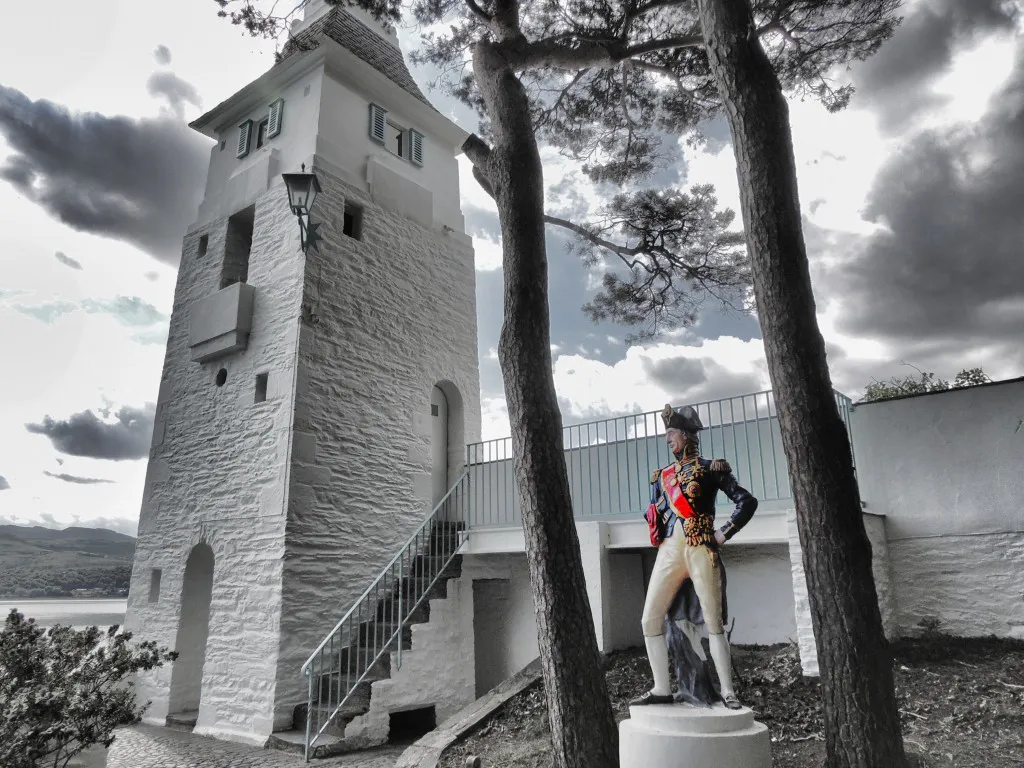
Nelson at Portmeirion
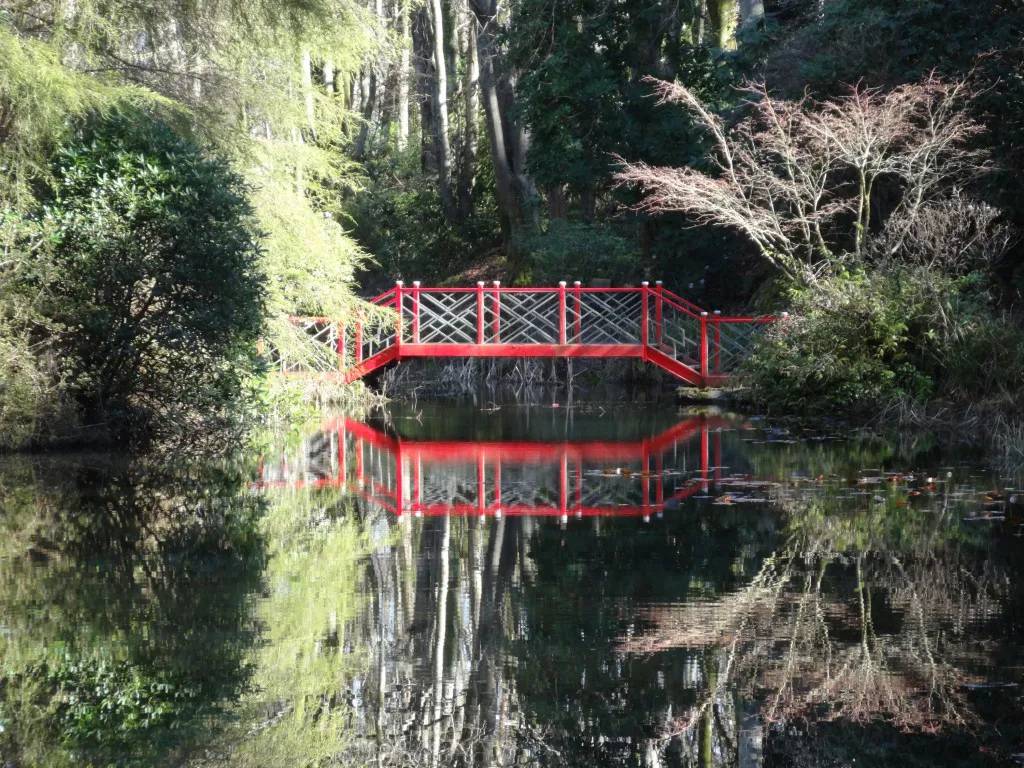
Bridge in the Japanese Garden, Portmeirion
Medi
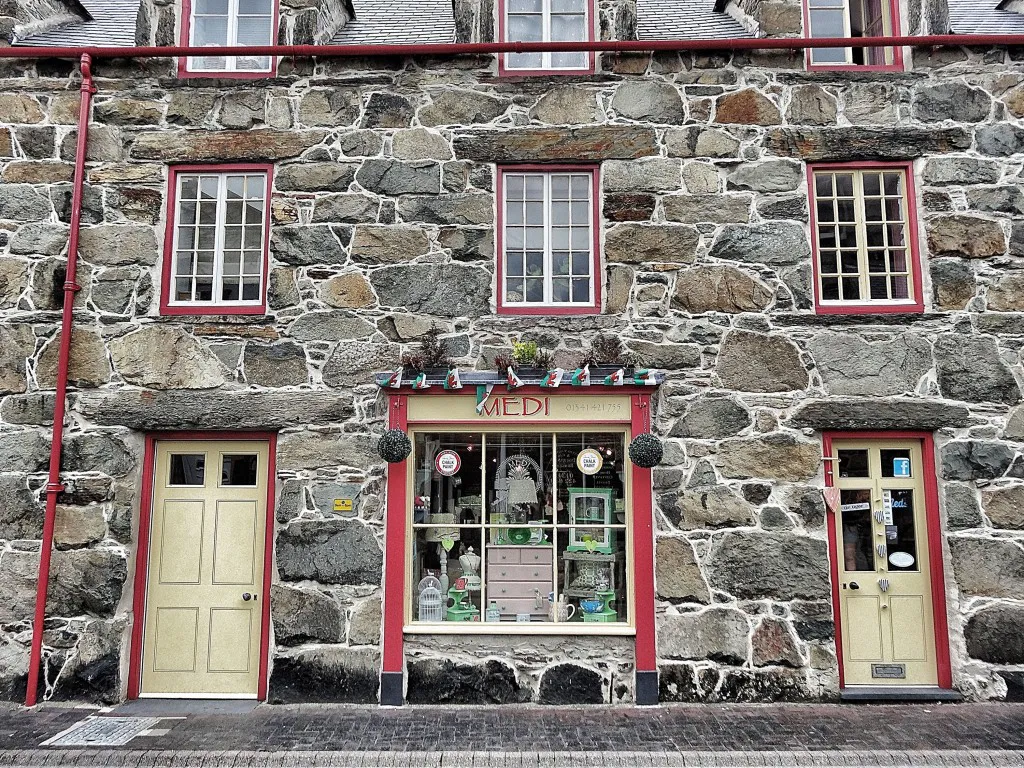
Medi, Dolgellau
A Little Piece of Heaven at the foot of Cader Idris. Design-led gifts made in Wales, France, Scandinavia and the USA.
Established by Welsh actress, author and designer Nia Medi. Nia worked on the design team of the makeover programme Real Rooms for BBC Pebble Mill for a few years, and her eye for detail, creativity and style is written all over her quirky little shop. Situated in an oak-beamed listed building in the old market town of Dolgellau in mid-Wales.
Specialising in wonderful shabby-chic, vintage and hand-made items for you and your home:
• Rag rugs • wirework • enamelware • china • earthenware • jewellery • cards • quilts • soft toys • • birth and baby christening gifts • Shaker kitchen-ware • linens • cushions •
and much, much more…
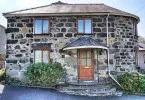
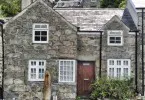
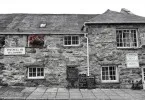
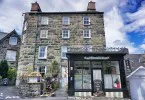
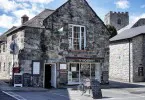
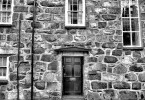
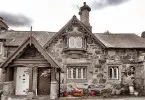
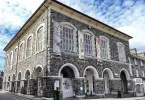
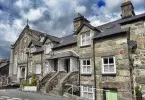
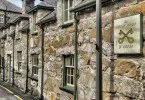
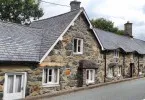
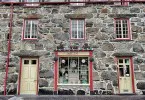
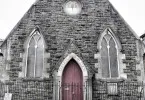
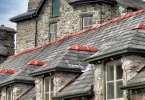
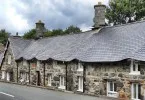
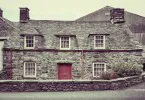
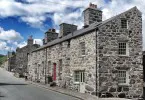
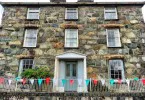
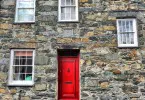
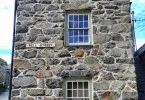
Dolgellau Buildings (Town)
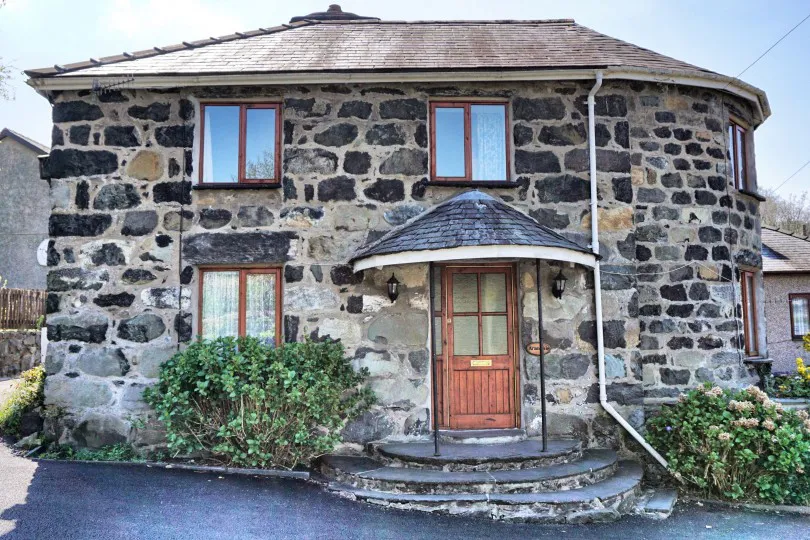
Torrent Walk
Torrent Walk runs about 1.5 miles (0.75 miles each way) along the Afon (River) Clywedog. The lowest point is 150 feet and the highest is 500 feet. It was created by the Richards family of the Caerynwch estate in the late 1800s. It has been a popular walk with locals and visitors since Victorian times.
The walk was designed and engineered by Thomas Payne who was also responsible for the embankment at Porthmadog, known as “The Cob” (he died in Dolgellau in 1934 aged 73). The walk originally ran both sides of the river, but in later years the western side had been closed. This was re-opened again in recent years, so you can now walk the full route, rather than using the quiet road.
While it is nicer to start from the bottom (northern) end, there is a lay-by at the top near the village of Brithdir, so it is more convenient to start from there. Go through the gate by the lay-by and follow the path down to the road, turn left along the road and past the cottages and over the bridge and go through the ‘official’ entrance to the original old walk which winds its way up and gives much better views (all the Victorian and Edwardian postcards were taken from this side).
The walk should take around an hour and twenty minutes.
Llanfachreth
Llanfachreth came into being when Cadwgan (son of Bleddyn ap Cynfyn, Prince of Powys) founded a small colony of serfs in the area in the early 12th century. Cadwgan was killed at Welshpool in 1111.
From the eleventh century two families, the Nanneys and later the Vaughans, controlled the area that formed the greater part of the parish of Llanfachreth. The village has been linked with these families of nearby Nannau from the eleventh to the eighteenth century when it moved away from their ownership.
The church is dedicated to Celtic Saint Machreth. The current church was built on the site of a much older one. The earliest gravestone dates back to 1721. Sir Robet Williames Vaughan was responsible for enlarging the east and south walls. The south aisle and additional pews and seating were added around 1820. Later, the South transept was pulled down and rebuilt in 1872 (the tower remained). The church was re-opened in 1873, nearly thity years after Sir Robert’s death.
St Mary’s Church
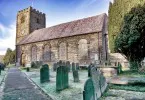
St Mary’s Church, Dolgellau, is a Grade II listed building standing on the site of a medieval one, dating back to at least 1254 when it was mentioned in records. The current church is rare (for Wales) being Early Georgian, it was built AROUND the old one, which still continued to hold services. The old church was only demolished when the new one was completed (around 1716-1723) and then the old building was removed from within it.
The font from the original church, built circa 1250, is on display near the entrance. This was placed during the time of John Ellis, who was Rector from 1646-1665 and was also founder of the Dolgellau Grammar School. A chantry alter is recorded as having been located in the church in 1558.
The church contains a 14th century Effigy of Meurig ap Ynyr Fychan, an ancestor of Hywel Sele and the Nanney/Vaughan families of nearby Nannau. This used to lay in the chancel of the old church, but was moved to one of the north windows. A piece of the wall was removed to accommodate his feet. His sword is dated 1723, when the nave was completed.
The nave was constructed using dressed slate stones and the wooden posts were brought over the hills from Dinas Mawddy using oxen. They used to have brass coffin plates nailed to them, which was a custom at the time, but these have now been removed.
The tower was probably begun around 1727. The churchyard was extended to the north-west by ten roods in 1792.
There was also major restoration in 1864 and the chancel arch dates to this time. A central window was inserted in 1901.
The upper room (on the western end) was added in 1992 by Roy Olsen of Dolgellau. It is bow-fronted with arched windows.
Welcome to Dolgellau
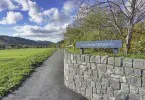
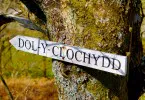
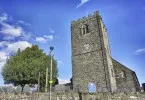
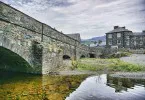
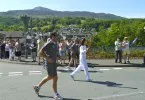
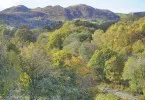
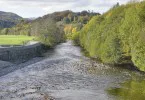
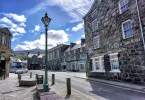
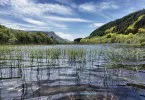
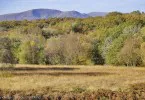
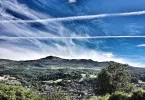
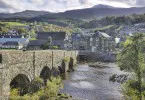
Dolgellau is set in the southern part of The Snowdonia National Park, at the foot of the Cader Idris (Cadair Idris) mountain range with three main routes to the summit.
A Blanket of Cloud Between Dolgellau and Cader Idris
The town is a great base for touring Snowdonia with many popular walks only two or three miles from the town centre. These include Torrent Walk and Precipice Walks (old and new). Another very popular walk/cycle ride starts from the town car park and runs nine miles along the old railway line to Barmouth on the coast. This is the Mawddach Trail (or “Llwybr Mawddach” in Welsh). This walk was featured on Julia Bradbury’s “Railway Walks” series on the BBC a couple of years ago. There is also a very nice pub (the George III) after three miles.
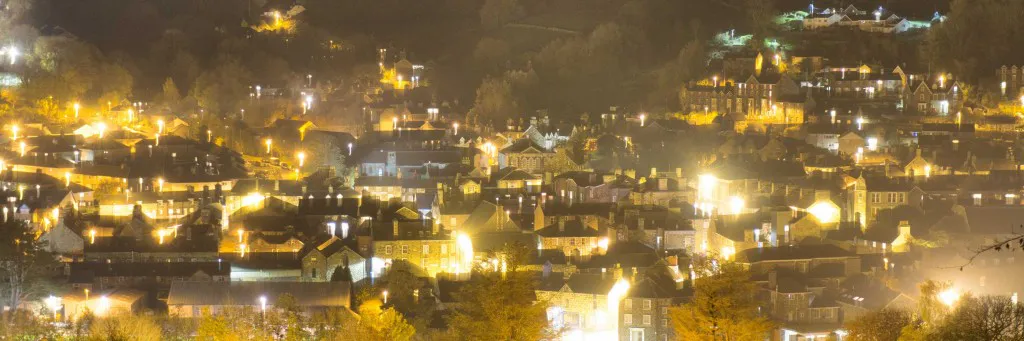
Dolgellau at Night
The area boasts abundant wildlife, including two Osprey nest sites about an hours drive away (one to the north at Glaslyn and another one to the south by the river Dyfi). There is a great deal of bird life around the Mawddach Estuary and the woods and countryside.
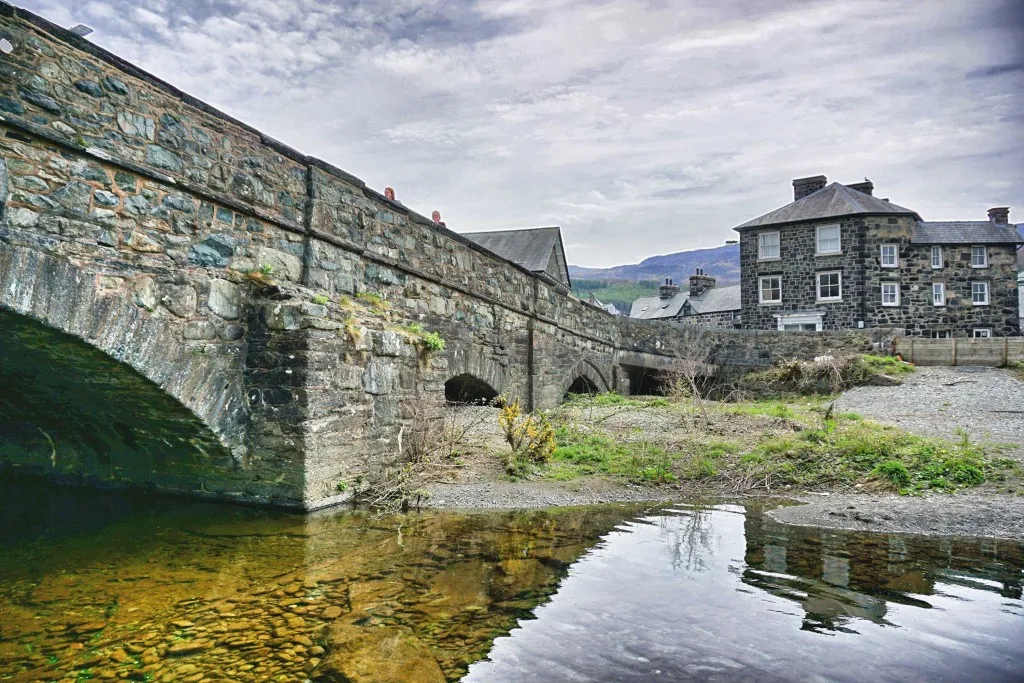
Dolgellau and Y Bont Fawr Bridge
Dolgellau is steeped in history and was formerly the county town of Merionethshire (now Gwynedd). The remains of historic Cymer Abbey (founded in 1198) can also be seen in the nearby village of Llanelltyd. This is again within walking distance of the town (being around a mile and a half away). The route also passes through the Dolgellau (nine-hole) Golf Course, which also serves tea.
Remnants of the ‘gold rush’ of the nineteenth century can still be seen and some of the gold mines can still be found, as well as a Copper Mine at Glasdir (a pleasant three mile walk/cycle ride on a nice quiet road). The town and local area was also the main focal point for the development of the Quakers who were established here after a visit by George Fox in 1657.
Other local attractions a car drive away include many of the Great Little Trains of Wales.
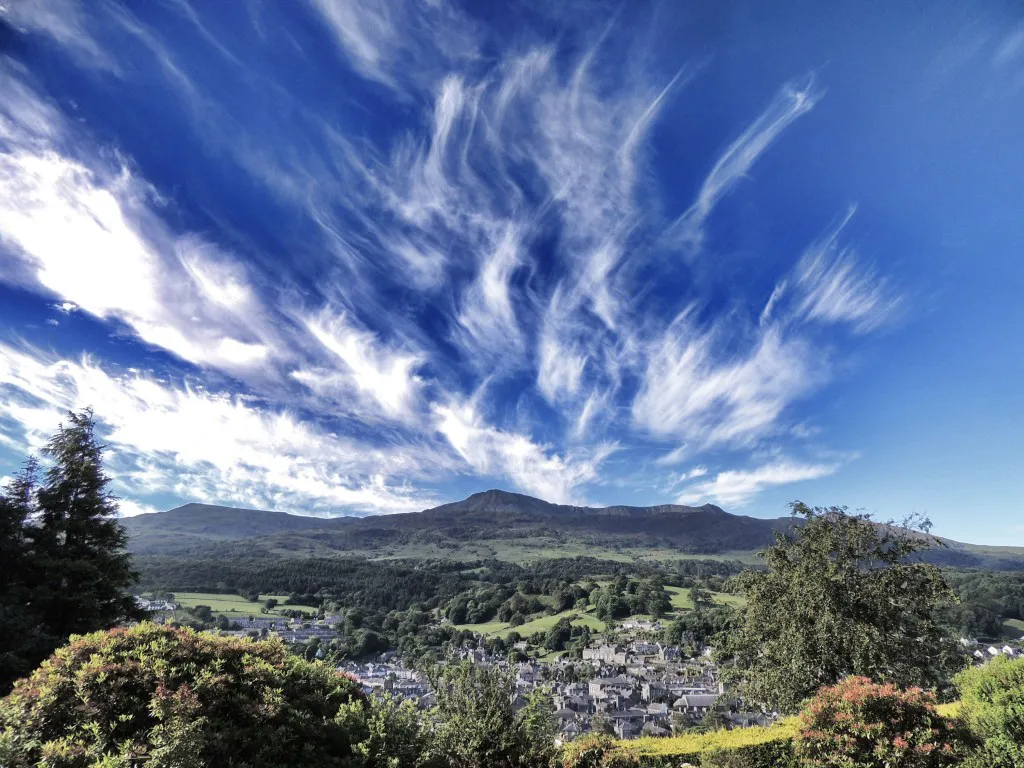
Dolgellau Skies
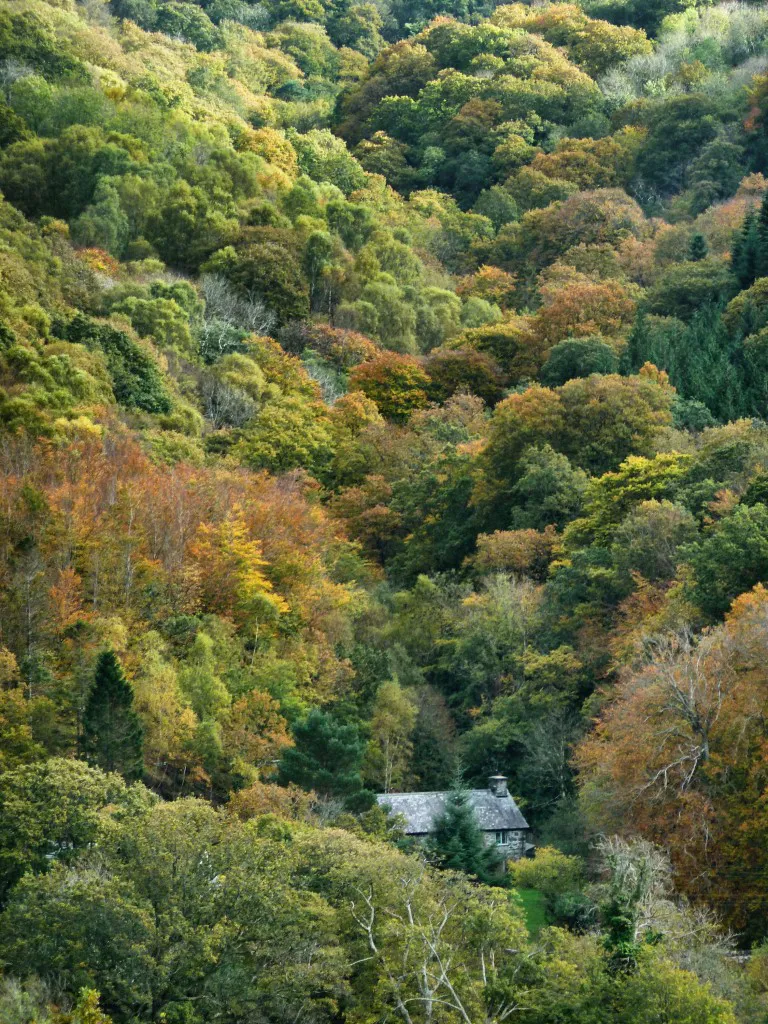
Looking Towards Torrent Walk in Autumn